Few mid-2000s Turkish dramas matched the ambition of Hacı—and few disappeared from schedules so quickly. The series came from Cüneyt Ülsever, an economist and newspaper columnist rather than a career TV writer, and it fused criminal intrigue, family conflict, and blunt political subject matter at a time when domestic screens were filled with conventional melodrama. Broadcast on Show TV during 2006 across fifteen installments, it stands as a distinctive artifact of its era.
The Premise of Hacı, Explained Without Spoilers
The drama unfolds in Kayseri, a prominent Anatolian city, and centers on Hayrullah Gesili, a prosperous and well-connected local figure addressed with the honorific that supplies the show's title. A pillar of his community, he is deeply invested in his family's standing and future.
Trouble arises through his youngest child, Ahmet Gesili, whose provocative and radical conduct brings him under the eye of Albay Zafer Atabay, an army colonel intent on suppressing what he considers a threat within the city. As the officer tightens his watch on Ahmet, tensions build until father and colonel are set on an unavoidable collision path.
The setup stages a textbook clash between two forces of authority—one rooted in religion and commerce, the other in the secular armed forces—with a rebellious son supplying the spark. The series guards its later twists, so newcomers are better off arriving with only the essentials.
Season Format and Episode Count
The show lasted one season totaling fifteen episodes, each clocking in at roughly 80 minutes. That places each installment above a typical hour-long drama yet below the two-plus-hour blocks many Turkish productions occupy once commercials are counted.
Its first broadcast arrived on March 23, 2006, and the finale followed on June 29 the same year—about three months of weekly airings in total. That compressed window produced a tight, single-arc narrative instead of the open-ended structure that allows some Turkish dramas to stretch into hundreds of episodes.
Conceived as a closed story, the fifteen chapters operate almost like one extended serialized film, every episode pushing forward the confrontation between the Gesili household and the officer monitoring them.
Cast and Key Characters
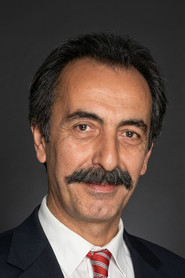
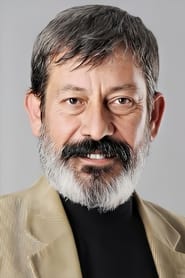
Two heavyweight performers carry the production. Tuncel Kurtiz—among the most esteemed names in Turkish film and television—embodies the title character, Hayrullah Gesili. Across decades of work, Kurtiz earned his reputation on parts demanding gravity and moral shading, and his involvement alone gave the project real stature.
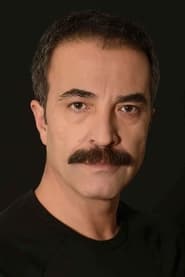
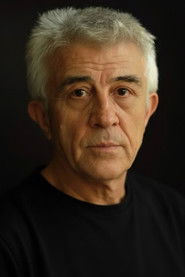
Facing him is Fikret Kuşkan as Albay Zafer Atabay, the colonel whose drive to eliminate what he sees as dangerous activity powers much of the narrative. Kuşkan had already made his name on stage and screen, and the matchup between these two gave the central rivalry genuine marquee weight.
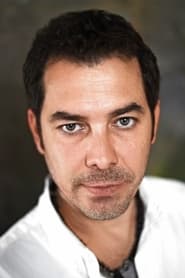
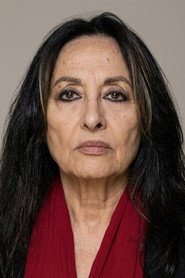
Rounding out the ensemble are Alp Emre Kököz, Sevda Ferdağ, Ayşe Şule Bilgiç, Sema Öztürk, Mehmet Akif Alakurt, Faik Ergin, Yasemin Balık, and Erdinç Akbaş. Within this group, Ahmet Gesili—the son whose behavior triggers everything—functions as the story's engine, while the wider cast populates the family, social, and institutional circles of Kayseri.
Who Made Hacı and How It Was Produced
Credit for creating the series goes to Cüneyt Ülsever, whose public profile in Turkey rests more on economics and newspaper columns than on screenwriting. That background is telling: the show carries an authorial viewpoint informed by firsthand observation of Turkish politics and religion and the friction between them, rather than the habits of a standard writers' room.
It was made for Show TV, a leading national broadcaster, and its material—the clash between religious communities and the secular state—was strikingly bold for prime time in that period.
By merging crime-drama mechanics with overtly political content, it occupied a narrow corner of Turkish television that treated live social tensions as the story itself rather than mere scenery. That ambition likely explains both its uniqueness and its brief lifespan on air.
Broadcast Details, Status, and Where It Stands
The series ran on Show TV in Turkey, launching in the final days of March 2006 and wrapping up in late June of that year. It is formally listed as Ended, with no further seasons or continuation past the original fifteen episodes.
For American audiences, access is scarce: the show never secured wide placement on mainstream streaming platforms, and its brevity and age have kept it outside the international licensing wave that has carried newer Turkish dramas worldwide.
Viewers who come across it now generally do so out of retrospective curiosity about the era's more politically engaged shows, or on the strength of Kurtiz's and Kuşkan's reputations.
Themes, Tone, and Visual Approach
Underneath everything, Hacı examines power in its many forms—religious, military, familial, and financial—and what happens when rival versions of it share one city. The friction between a devout, influential community patriarch and a secular officer mirrors a persistent divide in Turkish public life, and the show frames it as a personal battle as much as an ideological one.
The register is sober and grounded, leaning closer to political thriller than to the family melodrama ruling Turkish prime time in the mid-2000s. Crime and institutional maneuvering intertwine, and the War & Politics label in its genre listing reflects how much of the plot turns on state authority and surveillance rather than ordinary criminal schemes.
In stylistic terms, the leads do heavy lifting: Kurtiz lends the title role a calm authority laced with moral uncertainty, while Kuşkan portrays the colonel as a man of unbending conviction who sees himself as the state's shield. Their shared scenes land with the force of two worldviews colliding.
Is Hacı Right for You?
This series suits viewers drawn to Turkish dramas that tackle politics and society head-on instead of leaning on romance. Anyone who enjoys family conflict used as a window into institutional struggles will find it squarely in that tradition.
It should also interest fans of Tuncel Kurtiz and Fikret Kuşkan, two performers whose filmographies extend well beyond their best-known credits. Since the story completes itself in fifteen episodes, it delivers a fully contained experience with no multi-season obligation.
Those after breezy entertainment or rapid-fire action should adjust expectations; this is a measured, dialogue-driven drama anchored to a particular chapter of Turkish social history.
Streaming Options for Hacı
In the United States, the series is not broadly listed on major subscription platforms, and no sweeping international release has been announced. Access differs by region and by time, so it pays to review the current catalogs of services you already subscribe to in case the title has joined a Turkish drama collection.
Having aired in 2006 and lasted a single season, it never benefited from the global distribution campaigns that newer Turkish hits receive. Anyone hoping to watch should stick to legitimate, licensed sources and confirm availability in their own region rather than expecting it in every platform's library.
Frequently asked questions
How many episodes does Hacı have?
The show spans one season of 15 episodes, each about 80 minutes long. It aired weekly on Show TV in Turkey between March 23, 2006, and June 29, 2006, and was not extended beyond that run.
Who stars in Hacı?
Tuncel Kurtiz plays Hayrullah Gesili, the prominent religious figure addressed as the Hacı, while Fikret Kuşkan appears as Albay Zafer Atabay, the colonel whose scrutiny of the Gesili family fuels the main conflict.
Who is behind the creation of Hacı?
The series was created by Cüneyt Ülsever, an economist and columnist whose politically grounded outlook shaped the show, which aired on Show TV in 2006.
Can I stream Hacı in the United States?
US availability is limited, since this brief 2006 series never gained broad international distribution. Look through the current offerings of licensed streaming platforms that feature Turkish content to check whether it has appeared.
What kind of series is Hacı?
It falls under the crime, drama, and political genres, combining a family-driven narrative with themes of state authority, religious communities, and institutional conflict set in Kayseri, Turkey.















Comments (0)
Log in or create a free account to comment, rate and write reviews.