
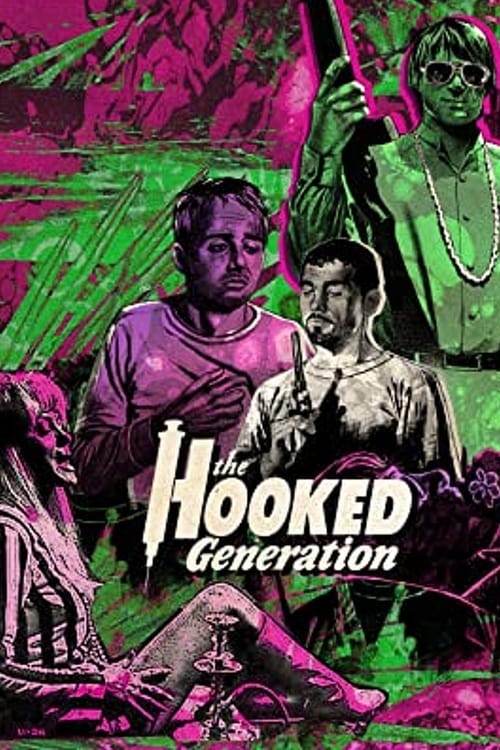


American genre cinema has always had its regional corners, and the Florida of the late 1960s was among the most productive. The Hooked Generation, which hit screens in 1968, stands out among them: a crime drama soaked in the era's worries about drug culture, filmed on location across the Sunshine State and populated by figures whose monikers alone sketch their personalities. It endures as a vivid record of a filmmaking world that thrived well beyond the studio system.
A Snapshot of 1968 Exploitation Cinema
The film landed at a time when drug culture both gripped and alarmed American moviegoers, and producers wasted no time turning that anxiety into ticket sales. As an exploitation picture, it was cheap, quick, and willing to lean on sensational material to fill seats.
Yet writing it off as simple grindhouse fare misses much of its value. The strongest regional exploitation titles function as cultural time capsules, preserving the textures and fears of their moment. Here, Florida is more than scenery; the state's shores and harbors shape the story's geography in ways studio pictures of the day seldom attempted.
For today's audiences, that mix of period texture and pulp drive is the whole point. Few films announce their era so openly, and that honesty is why it still draws viewers all these years later.
The Premise: From Addiction to Smuggling
The plot centers on three addicts who resolve to move from the consuming side of the drug trade to the supplying side. Their scheme depends on a precarious and hazardous deal that involves the Cuban Navy as their source.
Predictably for a crime drama of this kind, everything goes wrong. A quick-money scheme swells into kidnapping and killing, and the mounting violence brings police scrutiny. FBI agents appear on the scene as the trap tightens, and much of the film's suspense comes from watching the characters' circumstances collapse.
The picture builds to the sort of consequence-heavy finale the genre demanded, though its resolution won't be spoiled here. The lesson is spelled out early: this lifestyle devours anyone who enters it.
Standout Cast and Performances
Jeremy Slate leads the cast as Daisy, the courier whose dealings make him a prime target for the authorities. Slate brings an edgy intensity to the part, and Daisy sits at the center of the film's most perilous episodes.
Steve Alaimo appears as Mark, John Davis Chandler plays the colorfully named Acid, and ex-boxer Willie Pastrano turns up as Dum Dum. The names themselves hint at the picture's pulp roots. Socrates Ballis takes the part of the Cuban Leader, a figure bound to the smuggling scheme's central wager.
Genre fans may spot familiar players as well. William Kerwin, a veteran of Florida exploitation fare, plays an FBI man, and Milton "Butterball" Smith appears as Book Everett. The ensemble draws on performers who made their livings in regional genre work, and that experience shows in performances that are rough around the edges but fully committed.
William Grefé Behind the Camera
William Grefé is the driving force here, pulling triple duty as director, producer, and co-writer, sharing the screenplay with Quinn Morrison and Ray Preston. Grefé was a cornerstone of Florida's exploitation industry, known for lean, location-based genre films that stretched modest budgets a long way.
His fingerprints are all over the picture. It moves at a clip, exploits its authentic settings, and favors action over refinement. Allied Artists Pictures handled distribution, which gave the film broader exposure than most of its regional rivals could manage.
Anyone tracing the history of independent American genre movies will find Grefé's output a fascinating offshoot of 1960s cinema, made far from Hollywood yet echoing many of the same cultural currents.
Themes, Tone, and Style
The picture deals in the familiar currency of its genre and decade: addiction's grip, the lure of fast money, and the inevitability of ruin. The tagline, "Their bag - Supplying," gives the game away at once. Consequence is the watchword; the story functions essentially as a morality tale in modern dress.
In tone, it blends cautionary drama with crime thriller. The locations carry real grit, and the FBI thread adds a procedural backbone. As is typical of regional work from the era, the execution is rough-hewn, but that rawness lends an urgency that slicker productions often can't match.
The Florida backdrop counts for a great deal. The state's reputation as a smuggling gateway was already entrenched, and the film exploits that identity, weaving water, shoreline, and port-town mood into the fabric of the plot.
Who Will Enjoy It
This one speaks to a specific audience. Devotees of exploitation movies, regional American genre filmmaking, or late-1960s crime pictures will find plenty to appreciate, and anyone following William Grefé's career will consider it required viewing.
Those expecting modern pacing, glossy production, or layered characterization should recalibrate. The rewards here are period authenticity, pulp vigor, and a look back at a film culture that has vanished.
It also pairs nicely with other cautionary and crime-minded pictures of the period for anyone studying how American movies of the time grappled with drug culture.
Where to Watch
Audiences in the United States have several routes to the film. Tubi TV carries it with ad support, and ARROW includes it in its subscription lineup.
For digital ownership or rental, it can be purchased or rented via the Apple TV Store, Google Play Movies, Amazon Video, and YouTube. For a picture of this age, access is unusually convenient.
Similar Titles Worth Exploring
Viewers intrigued by this slice of film history have obvious next stops. Grefé's other Florida-made pictures share the same location-heavy, shoestring vitality and are often discussed in the same breath as this one.
Further afield, 1960s American exploitation crime and drug pictures offer a rich vein, as do the later Florida-set crime films that followed the geographic trail this movie helped blaze. Diving into Allied Artists' genre catalog from the same era is another fruitful avenue for those craving more of this flavor.
Frequently asked questions
When was The Hooked Generation released?
It reached theaters on November 12, 1968. The American crime drama runs roughly 92 minutes and was distributed by Allied Artists Pictures.
Who directed The Hooked Generation?
William Grefé both directed and produced the film, and he co-authored the screenplay with Quinn Morrison and Ray Preston.
What is The Hooked Generation about?
Three addicts try to break into drug smuggling, relying on the Cuban Navy as their source. The doomed venture escalates into kidnapping and murder, drawing law enforcement into the picture.
Where can I watch The Hooked Generation in the US?
Stream it free with ads on Tubi TV or via a subscription on ARROW, or buy and rent it digitally through Apple TV Store, Google Play Movies, Amazon Video, and YouTube.
Who stars in The Hooked Generation?
Jeremy Slate plays Daisy, Steve Alaimo appears as Mark, John Davis Chandler as Acid, and Willie Pastrano as Dum Dum, with William Kerwin on board as an FBI agent.







Comments (0)
Log in or create a free account to comment, rate and write reviews.