
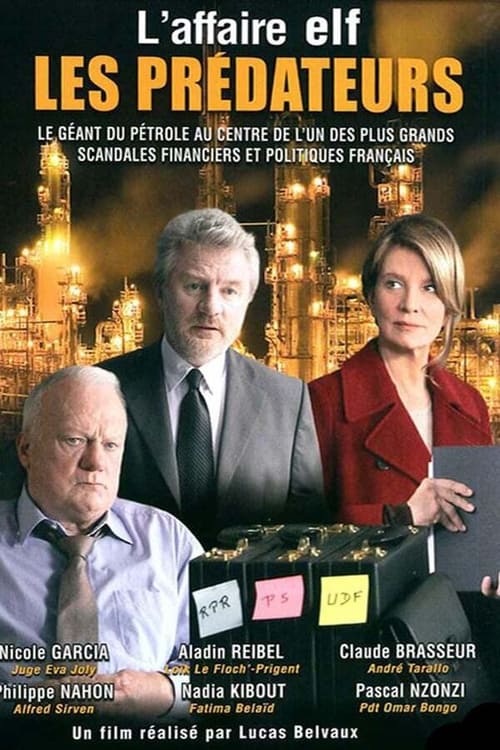
The most absorbing courtroom dramas are sometimes drawn straight from real life, and The Elf Case makes that case convincingly. Directed by Lucas Belvaux, this French made-for-television film transforms one of France's most infamous corporate affairs into intimate, tension-filled storytelling. Instead of replaying newspaper headlines, the film centers on the individuals caught up in events: the oil company's executives, the investigators, and the judge determined to see the matter through. As the second installment of a two-part cycle, it also works independently as a portrait of powerful people finally facing consequences.
What The Elf Case Is About (No Spoilers)
The story unfolds in the wake of the Elf Aquitaine affair, the enormous corruption scandal that engulfed France's state-owned oil company. Philippe Jaffré, having recently taken charge of the company, lodges a complaint against his predecessor Loïk Le Floch-Prigent, hoping to put distance between himself and the misconduct that preceded his tenure. That complaint triggers an official judicial inquiry.
Eva Joly, the investigating judge assigned to the matter, scrutinizes the financial dealings of the Bidermann company and its links to Elf. Her interrogation of Fatima Belaïd opens paths that result in several of the affair's most influential figures being formally placed under investigation, while Le Floch-Prigent, in a striking turn, departs to head the SNCF, France's national railway. The tension comes from the question of how deep the inquiry will dig and which prominent names it will take down along the way.
As the tagline — "Elf Predators Part 2" — indicates, this film completes a larger narrative. The earlier installment chronicles the executives' ascent and the company's slush-fund operations; this one delivers the day of judgment.
Standout Cast and Performances
A lineup of accomplished French actors anchors the film. Nicole Garcia takes the role of Eva Joly, the investigating judge whose resolve propels the story; Garcia lends the character weight and understated toughness, elevating what might otherwise have been a purely procedural part. Aladin Reibel plays Loïk Le Floch-Prigent, the former Elf boss whose composure is strained as the net tightens.
Claude Brasseur, a longtime presence in French film, appears as André Tarallo, and Philippe Nahon — recognized by genre audiences for his commanding intensity — portrays Alfred Sirven, a key player in the scandal. Nadia Kibout is cast as Fatima Belaïd, a crucial figure in the inquiry.
The supporting cast widens the film's reach past the courtroom walls. Michel Voïta appears as Philippe Jaffré, Wladimir Yordanoff as Maurice Bidermann, and Robert Castel as André Guelfi. Notably, Pascal N'Zonzi portrays Gabon's president Omar Bongo while Alex Descas plays Congolese leader Pascal Lissouba — a reminder that the scandal's tentacles stretched from French boardrooms into African political circles.
Director, Writers, and Production
At the helm is Lucas Belvaux, among France's most adaptable directors, whose restrained, almost documentary approach fits the subject well. With a career spanning political drama and formal experimentation, Belvaux grounds the film in interrogation rooms, offices, and hallways — the spaces where influence is genuinely exercised. Jacques Maillot wrote the screenplay, molding the sprawling real-world affair into a unified dramatic structure while steering clear of excess.
Canal+, the French premium broadcaster known for backing ambitious television cinema, was involved in the production. The film aired as a TV movie in 2007 and clocks in at a lean 114 minutes — an economical length for a narrative with so many characters and storylines. Its companion piece, the first film of the "Elf Predators" cycle, recounts the scandal's earlier chapters, and the two were designed as a matched set.
Themes, Tone, and Style
Accountability lies at the heart of The Elf Case — how it is achieved, how slowly it arrives, and how readily rank and connections can postpone it. The film depicts the inner workings of a judicial investigation: the summonses, the formal examinations, the procedural maneuvering. It favors subdued palettes and measured dialogue over theatrical flourishes.
The mood is grave and procedural, resembling a political thriller with the glamour stripped away rather than a showy courtroom piece. Belvaux's concern is institutional: how a state-owned enterprise could function as a private cash reserve, and how one judge could summon the courage to unravel it. The African side of the affair — the web of payments linked to oil concessions — surfaces through the political figures in the cast, lending the film a geopolitical breadth rarely seen on television.
Since this is the second half of a two-part cycle, the emotional payoff differs from that of a standalone feature: the reward lies in watching consequences finally take shape.
Who Will Enjoy It
Anyone fascinated by real-world political and financial scandals — viewers who gravitate toward the soberer end of films like The Big Short, or toward French judicial dramas — will find much to engage with here. It also appeals to those curious about Eva Joly, whose real investigation stands as a landmark in French legal history.
Admirers of Lucas Belvaux's wider body of work, or of French television cinema more broadly, will value the film's craft. Those after action or easy entertainment should look elsewhere; the film asks for patience and focus, and it helps to bring some familiarity with the Elf affair.
Where to Watch
In the United States, The Elf Case can be found on streaming services; viewers should verify current listings on major platforms. As a French-language television production from 2007, its availability may shift across platforms and over time, so checking where it's streaming beforehand is advisable. The film plays in French with its original audio.
Similar Titles Worth Exploring
If this film lands well, the natural follow-up is its companion piece — the first entry in the Elf Predators cycle — which recounts the executives' rise and the mechanics of the company's payment networks.
Beyond that, French cinema offers abundant judicial and political drama, and viewers may also enjoy other fact-based films about corporate wrongdoing and those who investigate it. For anyone wanting the real story, extensive documentation exists on the Elf Aquitaine scandal and Eva Joly's investigation, providing useful background for the film's many characters and plotlines.
Frequently asked questions
Is The Elf Case based on a true story?
Yes. The film dramatizes the actual Elf Aquitaine corruption scandal in France, including judge Eva Joly's judicial investigation and the prominent figures examined in the case, among them Loïk Le Floch-Prigent, André Tarallo, and Alfred Sirven.
Do I need to watch the first Elf Predators film first?
It's useful but not essential. The Elf Case is the second installment of a two-film cycle; the first covers the executives' ascent and the company's slush-fund practices, whereas this film concentrates on the judicial aftermath.
Who plays judge Eva Joly in The Elf Case?
Nicole Garcia, a prominent French actress and filmmaker, plays Eva Joly, the investigating judge tasked with probing the Bidermann company's finances and its connections to Elf.
Who directed The Elf Case and when was it released?
Lucas Belvaux directed the film, working from a screenplay by Jacques Maillot. It premiered in 2007 as a French television movie made with the participation of Canal+.
How long is The Elf Case?
The film runs 114 minutes and is a French-language work spanning the drama, history, and television movie genres, with the narrative driven chiefly by the judicial investigation.














Comments (0)
Log in or create a free account to comment, rate and write reviews.