
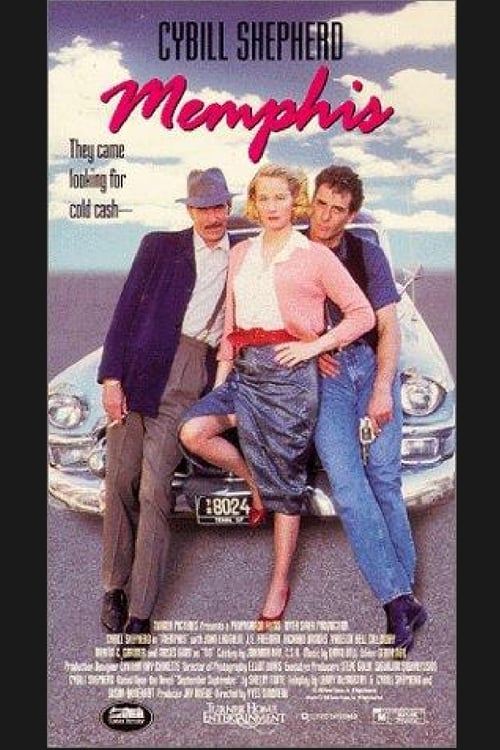
During the early 1990s, a number of ambitious American pictures bypassed cinemas and premiered directly on television, and Memphis stands out among them. Helmed by Yves Simoneau and Elliot Davis, this 1992 crime drama builds on a novel by the renowned historian and novelist Shelby Foote, unfolding a suspenseful, mood-soaked tale in the segregated South of the 1950s. Though it never became famous, it remains a rewarding piece of that decade's television filmmaking.
A Crime Story Rooted in the 1950s South
The action unfolds in a Southern American city in the 1950s, an era when racial boundaries were strictly enforced and society ran on unspoken codes that all were expected to obey. Within that world, the story centers on three individuals who hatch a kidnapping they are convinced cannot fail.
Their victim is a boy from a well-off Black household, and the schemers rest on the deadly belief that no one will come to the child's defense. That error in judgment propels the narrative, transforming a calculated crime into something with stakes far beyond what the perpetrators imagined.
Rather than dwelling on how the abduction is carried out, the film concerns itself chiefly with the moral and communal aftermath. It is a story of repercussions, and of a community that refuses to act as its attackers anticipated.
Cybill Shepherd Leads a Strong Ensemble
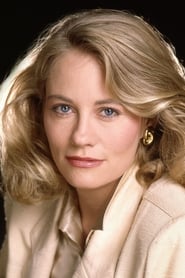
Cybill Shepherd, by then a familiar face from both big-screen and television work, takes on Reeny Perdew, one of the key players caught up in the abduction plot. The part pushes against the polished persona audiences often linked with her, and her involvement gives the picture its center of gravity.
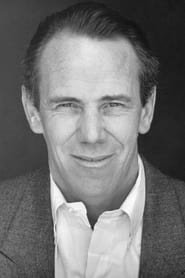
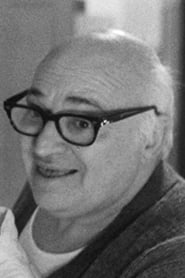
John Laughlin portrays Rufus Hutton, while J.E. Freeman plays Podjo Harris, completing the trio driving the story. The supporting players lend the film real richness: Richard Brooks and Vanessa Bell Calloway appear as Eben and Martha Kinship, members of the family whose world is shattered, and the seasoned character performer Moses Gunn lends weight as Tio Wiggins.
Rounding out the company are Martin Garner as Teddy Kinship, Chino 'Fats' Williams as Fat Bobby, Tothany Reynolds as Sister Baby, and John Sullivan as Dude. Collectively they sketch a convincing picture of a Southern community, supplying much of the film's texture and authenticity.
Behind the Camera: From Shelby Foote's Page to the Screen
The source material is a novel by Shelby Foote, the author whom many readers know for his sweeping chronicle of the American Civil War. His fiction, saturated with Southern history and character, supplies a literary grounding that most crime dramas cannot claim.
The film was co-directed by Yves Simoneau and Elliot Davis, and Davis additionally handled the cinematography. Wearing both hats helps account for the picture's unified look, one that favors period mood over showy flourishes.
Production was mounted by Propaganda Films, the era's influential outfit responsible for many stylish features and music videos, in partnership with River Siren Productions Inc. and Turner Pictures. The executive producer roster featured Steve Golin, Sigurjón Sighvatsson, and Shepherd herself, while Jay Roewe produced and Debra Neil-Fisher handled the editing. The credits speak to the risk-taking energy of independent-leaning filmmaking at the start of the 1990s.
Themes, Tone and Style
Beneath the surface, Memphis examines hubris and what it costs. The criminals at the story's heart operate on a prejudiced conviction: that the child of a prosperous Black family is defenseless and that the surrounding community will say nothing. The film proceeds to shatter that belief, and much of its suspense lies in watching the plotters grasp the depth of their mistake.
The mood is bleak and unadorned, in keeping with its crime and drama classification. Made for television, it operates within certain bounds, yet those constraints arguably strengthen the material by concentrating attention on character and aftermath instead of spectacle.
Visually, the 1950s backdrop is put to strong use. The period detail, paired with Davis's photography, evokes a society bound by inflexible codes, where one reckless deed can unleash forces beyond anyone's command. The finished film is a slow-burn work that repays attentive watching.
Who Will Enjoy Memphis
Audiences who favor crime dramas with historical substance will find much to admire. The picture fits viewers seeking moral ambiguity and atmosphere rather than action, along with anyone drawn to fiction that confronts the segregated history of the American South.
Admirers of Cybill Shepherd interested in her less conventional parts will discover a revealing turn here, and devotees of Shelby Foote may be particularly keen to watch his fiction make the jump to film. The movie also suits anyone fond of hunting down early-1990s television movies, a category that produced some genuinely daring work.
Conversely, those anticipating a standard thriller may bristle at the measured pace. The film earns its impact slowly, through character and setting rather than surprise.
Where to Watch
Audiences in the United States can access Memphis via streaming and rental services. As a 1992 television production from Turner Pictures, its availability may shift from time to time, so checking current listings on major platforms is the surest way to confirm where it can be seen.
Since it is a modest title rather than a broadly released theatrical picture, it may not surface prominently in platform suggestions, but searching the title directly on popular services should reveal the present viewing options.
Similar Titles Worth Exploring
If Memphis works for you, look for other crime dramas situated in the mid-century American South, a setting where race, class and justice collide. Adaptations of Southern literary fiction offer a comparable mix of mood and moral tension.
It may also be worth sampling other Propaganda Films titles from the same stretch of years, which spanned many genres but consistently favored striking visuals and distinctive stories. Those curious about the source author can turn to Shelby Foote's Civil War writings for a fuller sense of the historical world that shapes his fiction and, in turn, this adaptation.
Early-1990s television crime dramas, a form that routinely drew notable directors and performers at the time, form another rewarding vein to mine.
Frequently asked questions
What is the movie Memphis about?
The story unfolds in the 1950s American South, where three people abduct a boy from an affluent Black family on the false assumption that nobody will step in. Adapted from a Shelby Foote novel, the crime drama follows the grave fallout of their scheme.
When was Memphis released and how long is it?
It premiered on January 27, 1992, with a running time of 100 minutes. The picture was made as an American television movie, counting Propaganda Films and Turner Pictures among its production companies.
Who stars in Memphis?
Cybill Shepherd heads the cast in the role of Reeny Perdew, joined by John Laughlin as Rufus Hutton and J.E. Freeman as Podjo Harris. Richard Brooks, Vanessa Bell Calloway, Moses Gunn, Martin Garner and Chino 'Fats' Williams appear in supporting roles.
Is Memphis based on a book?
Yes. The film adapts a novel by Shelby Foote, the Southern author and historian celebrated for his Civil War scholarship. His fiction supplies both the storyline and the picture's strong grounding in a particular time and place.
Where can I watch Memphis in the US?
Viewers in the United States can stream or rent Memphis on major digital platforms. Since older television movies sometimes change services, it is wise to verify current listings on popular streaming platforms before settling in.













Comments (0)
Log in or create a free account to comment, rate and write reviews.