
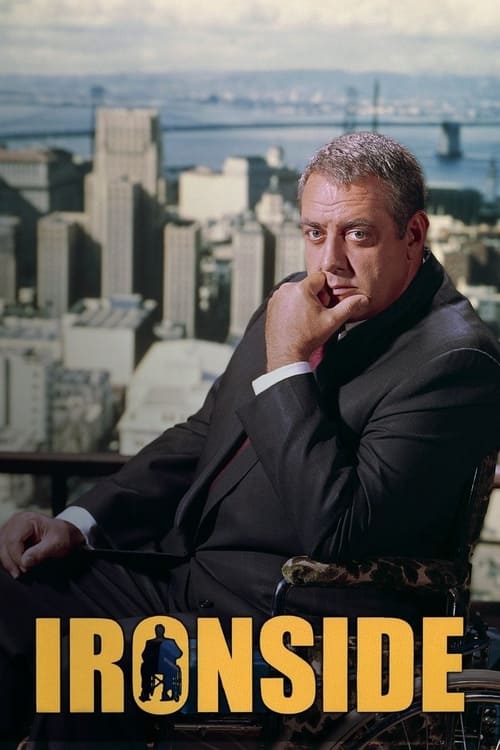


Every so often, a TV character emerges so complete that audiences can't picture the medium without them. Yet before the series turned Chief Robert Ironside into a small-screen staple, the character first had to prove himself in a feature-length pilot helmed by James Goldstone. This 1967 picture presents a wounded lawman, a San Francisco setting, and a concept that transformed the conventional crime drama into something genuinely fresh.
A Cop Shot Down — and a New Kind of Detective Born
The story begins with a brutal burst of violence: Robert Ironside, the tough-minded chief of detectives for San Francisco, is wounded by gunfire while visiting the rural home of his close friend, Police Commissioner Dennis Randall. He survives the attack, but the bullet severs his spinal nerves, and when he regains consciousness in a hospital bed, he must confront a life without the ability to walk.
Rather than dwelling in tragedy, the narrative turns this loss into the foundation for a transformation. When his return to active duty is refused, Ironside strikes a deal that lets him keep working cases as a volunteer, running his investigations from a custom-built office. In effect, the shot that finished his official career only strengthened his determination.
Instead of centering the plot on tracking down the man who shot him, the film constructs its central mystery around a kidnapping that Ironside agrees to handle from his chair — demonstrating to his old colleagues, and to himself, that his intellect remains as sharp as ever.
Raymond Burr and the Team Around Him
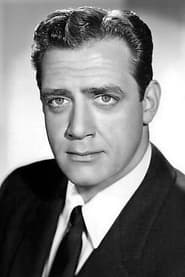
Raymond Burr carries the picture with the forceful screen authority that would soon make him a fixture of American television. His Ironside is irritable, demanding, and razor-sharp — someone who regards his disability as a problem to manage, not a definition of who he is. Burr conveys both fury and sorrow without slipping into melodrama, and that restraint is exactly what makes the performance work.
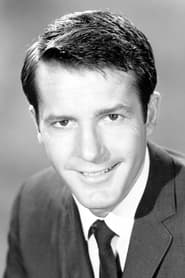
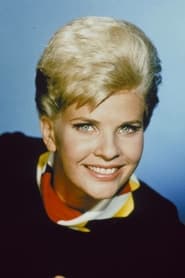
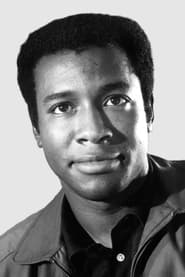
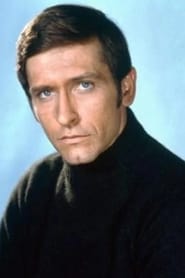
Surrounding him is the ensemble that would sustain the franchise for seasons to come. Don Galloway appears as Det. Sgt. Ed Brown, a one-time protégé of the chief, and Barbara Anderson plays Eve Whitfield, another devoted former subordinate. Don Mitchell completes the trio as Mark Sanger, the assistant and chauffeur Ironside brings on board, whose presence becomes central to how the chief manages daily life.
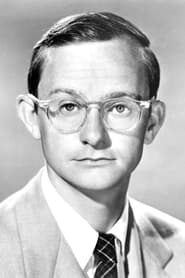
Smaller parts lend the film additional color: Geraldine Brooks as Honor Thompson, Kim Darby as Ellen Wells, Lilia Skala as Sister Agatha, David Sheiner as the physician who breaks the devastating medical news, Wally Cox as a scoutmaster, and Gene Lyons as Commissioner Randall, whose conscience over the shooting shadows the entire story.
Behind the Camera: Goldstone, Jones, and Universal's Ambition
James Goldstone, seasoned from years of episodic TV work, directs with a brisk assurance that keeps the investigative machinery humming while still making space for the hero's personal reckoning. Collier Young handled both the story and production duties, developing the idea for Universal Television through Harbour Productions Unlimited — an undertaking plainly intended to spin off into a full series.
Among the film's lasting legacies is its soundtrack. Quincy Jones wrote the original score, supplying a driving, funky signature theme that ranks among the most iconic pieces of TV music from that period. Cinematographer John F. Warren renders San Francisco in sharp, appealing tones, while editor Edward Williams keeps the 98-minute picture lean and focused.
Themes and Tone: Disability, Determination, and Justice
The film's distinguishing feature among contemporary crime dramas is its core premise: a detective measured not by what was taken from him but by what remains. The wheelchair is never played for novelty; the story instead examines how an exceptional mind adjusts when the body gives out, and how a support team grows around that adjustment.
The mood blends gritty police procedure with real emotional depth. Ironside's rage — at his condition and at those responsible for it — is present throughout, yet so is the warmth of the bonds he forms with his new staff. The finished drama feels both rooted in its era and ahead of it, mixing action, mystery, and character study in a combination that clearly struck a chord with viewers and paved the way for a full series.
Who Will Enjoy Ironside
Admirers of vintage television and old-school police procedurals will find much to like here, especially viewers who know Raymond Burr's earlier roles and want to watch him portray a darker, more physically exposed character. The film also appeals to anyone curious about how TV storytelling shifted in the late 1960s, as character-centered concepts started to overtake plain episodic crime fare.
It likewise suits anyone drawn to tales of perseverance and second acts. Ironside's arc — from hospital bed to self-sufficient investigator — is fundamentally an underdog story, and it works perfectly well without any prior knowledge of the series that followed.
Where to Watch
Audiences in the United States can stream the film at no cost with ads on The Roku Channel. Since availability shifts over time and differs by region, it's a good idea to search your streaming platform directly if the title doesn't appear right away.
Similar Titles Worth Exploring
If the pilot leaves you wanting more, the obvious follow-up is the series it launched, which continued Ironside's caseload with the same principal cast. Viewers fond of detectives who investigate from a wheelchair may also appreciate later crime dramas centered on investigators with disabilities — a niche this film essentially created.
Beyond that, fans of 1960s crime stories set in San Francisco can seek out other procedurals staged in the city, and anyone interested in Quincy Jones's television compositions will find this score a compelling early chapter in his screen-music career.
Frequently asked questions
What is the 1967 movie Ironside about?
It centers on Robert Ironside, San Francisco's chief of detectives, who survives a shooting but is left paralyzed. Barred from returning to his post, he keeps investigating crimes as a civilian volunteer supported by a small staff, taking on a kidnapping as his first case.
Who plays Ironside in the 1967 film?
Raymond Burr takes the title role of Robert Ironside. The supporting cast features Don Galloway as Det. Sgt. Ed Brown, Barbara Anderson as Eve Whitfield, Don Mitchell as Mark Sanger, and Gene Lyons as Police Commissioner Dennis Randall.
Is Ironside a movie or a TV series?
The 1967 Ironside is a feature-length TV movie that doubled as the pilot for the series that followed. It clocks in at roughly 98 minutes and was produced by Universal Television together with Harbour Productions Unlimited.
Who composed the music for Ironside?
Quincy Jones wrote the original score, including the iconic main theme. His music is often cited as one of the production's highlights and played a major role in shaping the character's screen identity.
Where can I watch Ironside (1967) in the US?
In the United States, the film streams on The Roku Channel, free of charge with commercial interruptions. Streaming lineups change frequently, so confirm current availability on the platform.











Comments (0)
Log in or create a free account to comment, rate and write reviews.