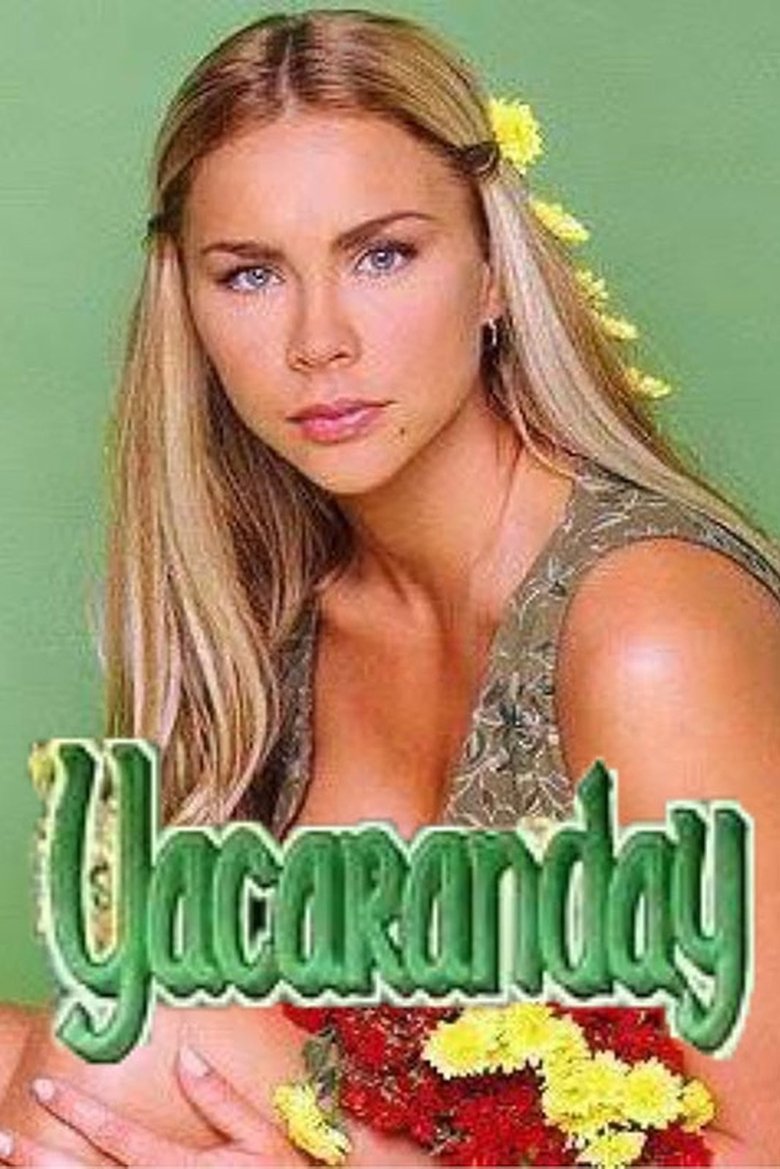
The closing years of the 1990s were a busy stretch for Mexican primetime drama, and among the titles from that stretch is Yacaranday, a telenovela that reached screens via Azteca Trece starting in January 1999. Conceived as a one-season, 70-episode story, it put a heroine whose name doubles as the show's title at the center of the action. What follows is an overview of the series, its people, and its broadcast history.
A Drama Named for Its Heroine
Where many serials borrow their titles from settings or incidents, this one takes its name directly from its leading character. As a telenovela, it works within a genre defined by heightened emotion, complicated relationships, and protagonists tested by love and duty.
The show also holds interest as part of TV Azteca's 1990s slate, a period when the network worked to establish itself against Televisa's dominance. For anyone exploring that broadcasting era, Yacaranday serves as a concise specimen of Azteca's take on the format: a bounded run, one clear protagonist, and a plot built to conclude within its scheduled episodes.
The Story in Broad Strokes
The central figure is Yacaranday, brought to life by Aylín Mújica, an actress of Cuban and Mexican background. Her path crosses with Adrián, played by Jorge Luis Pila, and the bond between them forms the backbone of the narrative from the first installment to the last.
Surrounding the couple is a circle of relatives whose pasts and allegiances complicate matters. Claudio Obregón, a seasoned performer, appears as Don Eugenio, while Martha Verduzco takes the role of Mercedes — two members of an older generation whose choices reverberate through the plot. True to telenovela form, hidden truths, crossed signals, and realigning loyalties sustain the tension until the finale ties everything together.
No spoilers are included here; part of the genre's appeal is watching the pieces shift, and the writing was crafted to keep daily audiences coming back.
Format and Broadcast Schedule
The show aired as one season of 70 episodes, each close to 42 minutes in length. These are hallmarks of the telenovela model: weekday slots, short and emotionally loaded chapters, and endings engineered to hook viewers into the next day's installment.
Its first broadcast fell on January 18, 1999, and the concluding chapter ran on April 23 that same year — a span of about three months. That timeline mirrors the classic telenovela blueprint: an arc mapped out beforehand, delivered on a daily cadence, and closed out definitively rather than stretched open-endedly. Officially listed as ended, the show offers a narrative with a clear start, middle, and finish.
Audiences used to brief streaming seasons may find a 70-episode daily schedule unfamiliar, yet that rhythm is exactly what lends vintage telenovelas their immersive, serial-novel feel.
Principal Cast and Their Roles
Heading the ensemble is Aylín Mújica in the title role. At the time she was establishing herself in Mexican television, and she later sustained a lengthy career in telenovelas and series on both sides of the US–Mexico border.
Across from her stands Jorge Luis Pila as Adrián, the male lead whose connection to the heroine powers the storyline. Pila, like his co-star, went on to become a recognizable presence in the genre.
The supporting players flesh out the family web. Claudio Obregón features as Don Eugenio and Martha Verduzco as Mercedes — elder figures whose decisions steer the younger characters' destinies. The lineup is completed by Carmen Delgado as Cecilia, Monserrat Ontiveros as Rosaura, and Fabiana Perzabal as Berenice, together forming the interconnected ensemble at the show's emotional core.
Behind the Scenes: Creation and Production
Patricia Romani created the series, developing it for Azteca Trece, TV Azteca's main evening channel. The late nineties marked a growth phase for the network, which poured resources into original drama to challenge its bigger competitor, and telenovelas of this kind were a pillar of that effort.
Production adhered to the genre's usual practices: writers following a preplanned arc, rapid filming schedules to meet daily airings, and a cast chosen to sustain a story that would wrap within its fixed run. The show subsequently reached US audiences through Azteca América, the network's stateside channel.
Broadcast History and Current Status
In Mexico, the series aired on Aztece Trece — Azteca Trece — with further exposure in the United States via Azteca América. Its run stretched from January 18 through April 23, 1999, fulfilling its full 70-episode plan before concluding as scheduled.
Since it was conceived as a closed narrative, the show carries no renewal history of the kind associated with open-ended prime-time serials. Its present status is simply ended — a completed work from a particular moment in Mexican broadcasting. For curious viewers, that closure is a plus: there are no dangling cliffhangers or abandoned storylines, only a finished tale that can be evaluated as a whole.
Tone, Themes and Style
Working within the telenovela tradition, the series trades in the genre's familiar materials: romantic strife, family duty, buried secrets, and the pull between individual wants and social demands. Characters like Don Eugenio and Mercedes point to a plot in which the older generation's authority and history weigh on the young — a dependable engine of telenovela drama.
In tone, expect elevated emotion, clear moral contrasts among characters, and a brisk pace driven by the daily broadcast schedule. The 42-minute chapters favor tight scenes and charged confrontations rather than gradual build-up. Stylistically, the show is a product of late-1990s Mexican TV drama, lending it period appeal for audiences looking back at that decade.
Who Should Watch and How
The series suits devotees of classic telenovelas and anyone curious about TV Azteca's 1990s programming. Viewers drawn to romance, family conflict, and a heroine-centered plot will find plenty to like, and it makes sense viewing for those tracking the early careers of Aylín Mújica or Jorge Luis Pila.
In the United States, the show was linked to Azteca América, the Spanish-language channel that aired it following its Mexican broadcast. Availability shifts by region and over time, so the surest route is checking current Spanish-language streaming catalogs and on-demand listings. At 70 episodes of roughly 42 minutes each, it demands a real but reasonable commitment for a complete, self-contained story.
Frequently asked questions
What is the plot of Yacaranday?
It is a Mexican telenovela centered on its title character, Yacaranday, played by Aylín Mújica, and her bond with Adrián, played by Jorge Luis Pila, as family allegiances and hidden truths shape their story.
What is the episode count for Yacaranday?
One season comprising 70 episodes of roughly 42 minutes each, broadcast between January 18 and April 23, 1999.
Who was behind the creation of Yacaranday?
Patricia Romani created the telenovela, which was produced for TV Azteca and debuted on the network's Azteca Trece channel in Mexico.
How can US audiences watch Yacaranday?
The series was shown in the United States on Azteca América. Because availability varies over time, viewers should check current Spanish-language streaming platforms and on-demand listings.
Does Yacaranday continue today?
No. The show is officially ended, having finished its planned 70-episode run in April 1999 as a self-contained story with a definitive ending.











Comments (0)
Log in or create a free account to comment, rate and write reviews.