
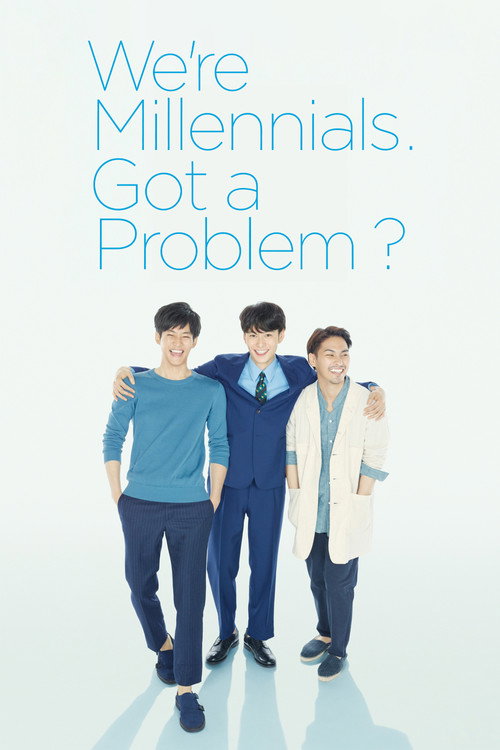


Labels follow generations everywhere, and in Japan few have been heavier than "yutori" — the name given to students schooled under a deliberately relaxed curriculum, a group often dismissed as lacking drive. We're Millennials. Got a Problem? (titled Yutori desu ga nani ka in Japanese) confronts that prejudice directly, charting the careers, romantic entanglements, and friendships of three young men with a mix of comedy and sincerity.
What the Series Is About
The show centers on three men, all born the same year and all products of the yutori era of Japanese schooling, when reforms aimed to ease academic pressure. The world around them, though, has already made up its mind, branding their cohort as idle and aimless.
The three leads refuse that verdict. Across their working lives, love lives, and friendships, they push back against the absurdities they encounter. Their daily battles — workplace annoyances, romantic fumbles, family pressures — serve a larger question: what does it mean when a whole generation is judged and dismissed before getting a fair shot?
The writing mixes light satire with real warmth. It is fundamentally a story about being underestimated, and about carving out a life when the one society scripted for you doesn't fit.
Season Structure and Episode Format
The drama aired as one season totaling ten episodes on Nippon TV, with new installments each week. At roughly an hour per episode, it follows the standard length of a Japanese commercial broadcast drama.
Its run stretched from mid-April to mid-June 2016, landing in the spring slot Japanese networks typically fill with their most anticipated new shows. The weekly cadence lets each episode explore one strand of the characters' lives while the overall season arc moves forward.
The series has wrapped, with its status listed as ended — meaning newcomers can watch knowing the ten episodes deliver a complete story.
The Cast and Their Characters
Three well-known young Japanese actors form the core of the show. Masaki Okada plays Masakazu Sakama, Tori Matsuzaka takes the part of Kazutoyo Yamaji, and Yuya Yagira — a former award-winning child performer — appears as Maribu Michigami. The rapport among them makes the trio's friendship feel genuine despite their distinct personalities.
A deep supporting cast fills out the world around them. Sakura Ando plays Akane Miyashita, Taiga Nakano appears as Hiromu Yamagishi, and Haruka Shimazaki takes the role of Yutori Sakama. Riho Yoshioka is Etsuko Sakura, while Yo Takahashi (Munetaka Sakama) and Sayaka Aoki (Midori Sakama) round out the Sakama household, grounding the show's family-drama side. Toru Tezuka finishes the credited main cast as Michiro Hayakawa.
The ensemble mirrors the show's blend of comedy, drama, and family storytelling: as much attention goes to how these men interact with parents, siblings, and colleagues as to their bond with each other.
Behind the Camera: Creators and Production
Nobuo Mizuta directed the series, bringing experience with Japanese ensemble television and a talent for balancing humor with sharp dialogue. His approach keeps the social commentary from feeling like a lecture, letting the characters and comedy make the case.
Yoshihisa Hirano wrote the score, supporting the show's movement between wry comedy and quieter, more thoughtful scenes. Nippon Television Network Corporation handled production, and the series aired on Nippon TV itself — a network home that gave it broad national reach during its original broadcast.
Themes, Tone, and Style
"Yutori" names the low-pressure educational approach Japan once adopted, and the generation raised under it has frequently been stereotyped as passive or spoiled. The series grabs that label — the Japanese title translates roughly to "I'm from the relaxed generation, so what?" — and wields it as both a joke and a badge of honor.
Among its themes are workplace culture, romantic expectations, and the divide between generations, handled with comedy that hardens into drama at the right moments. The show avoids cheap cynicism: its characters may be exasperated by an irrational world, yet they keep striving to live well inside it.
In style, it belongs squarely to the Japanese ensemble dramedy tradition — built on character, rich in dialogue, and generous with both laughs and understated emotional moments.
Who Will Enjoy It
Anyone drawn to character-driven comedy-dramas with a social edge will find plenty here. People who have felt misjudged by generational stereotypes — whether in Japan or elsewhere — will recognize the frustration fueling the three leads.
It also works well as a first step into Japanese television: the hour-long episodes are easy to settle into, the tone is welcoming rather than insular, and the family and workplace plots travel across cultures. Lovers of ensemble acting and dry humor will feel at home.
Where to Watch
US audiences can stream the series on Amazon Prime Video, available both with a regular subscription and via the ad-supported plan. Since it consists of one finished season, it makes for a straightforward binge.
Streaming rights differ by country, so viewers elsewhere should check their local catalog.
Frequently asked questions
What does the title We're Millennials. Got a Problem? mean?
The Japanese original, Yutori desu ga nani ka, points to the yutori generation — Japanese millennials educated in a low-pressure school system. The title cheekily challenges the clichés attached to them.
How many episodes are there and is the series finished?
There is one season of ten episodes, each close to sixty minutes. It ran from April to June 2016 and is listed as ended, so the narrative is fully resolved.
Who are the main actors in the series?
The leads are Masaki Okada as Masakazu Sakama, Tori Matsuzaka as Kazutoyo Yamaji, and Yuya Yagira as Maribu Michigami. Supporting roles are filled by Sakura Ando, Taiga Nakano, Haruka Shimazaki, and Riho Yoshioka, among others.
Where can I watch We're Millennials. Got a Problem? in the US?
In the United States, the show streams on Amazon Prime Video, both on the standard subscription and through the ad-supported tier.
Is the show a comedy or a drama?
Both. It is classified as a comedy-drama with family elements, pairing comic takes on generational stereotypes with earnest stories about work, love, and friendship.

















Comments (0)
Log in or create a free account to comment, rate and write reviews.