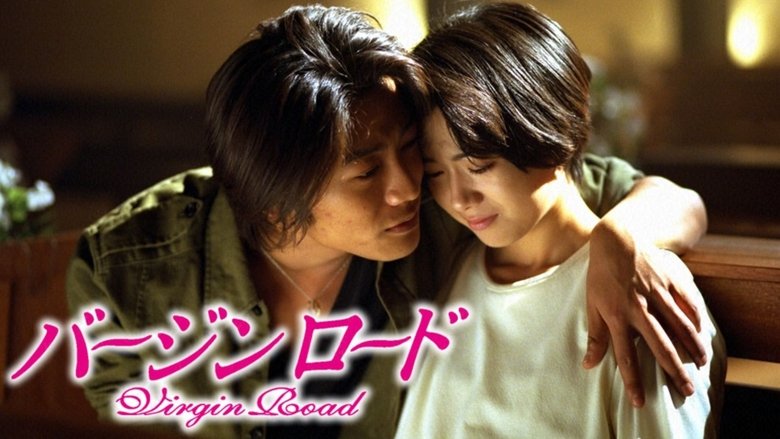
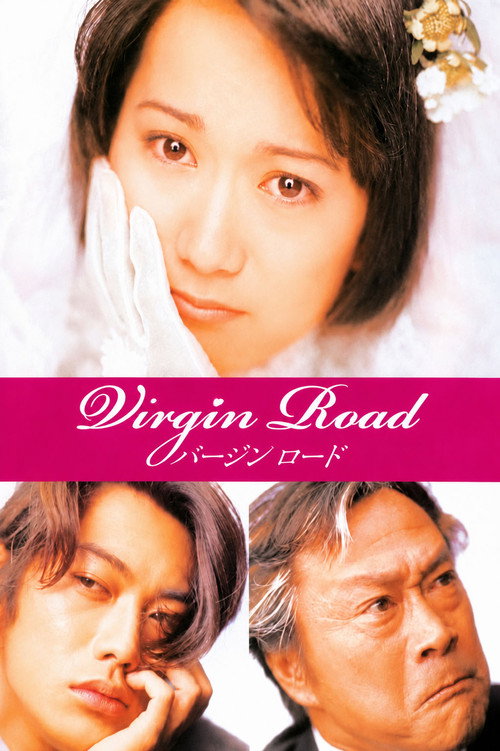
Not every memorable Japanese drama announces itself loudly, and Virgin Road proves the point. Broadcast on Fuji TV during the first months of 1997, the show ran for eleven installments and combined family drama with romance, anchored by performances from Emi Wakui and Takashi Sorimachi. Its premise relies on a familiar but enduring trick of the genre: an engagement invented for convenience that develops a life of its own. For viewers fond of vintage Japanese television, it remains a title worth tracking down.
What Is Virgin Road About?
At the center of the story is Sakurai Kazumi, portrayed by Emi Wakui. Against her father's wishes, she had once walked away from her household and her job to pursue her goals overseas. Much later, a message from her brother brings her back to Japan under troubling circumstances: her father's health has taken a serious turn.
Her homecoming carries an awkward burden. In correspondence with her family, she had given the impression that she was involved with someone and heading toward marriage. With that relationship now over, she cannot face walking through the door unattached while her father lies ill. Her solution is impulsive and a little ridiculous: she recruits a complete stranger to impersonate her intended husband.
That stranger is Yoshimi Kaoru, a freelance writer played by Takashi Sorimachi, and he consents to the charade. From there, the drama traces how a manufactured romance slowly turns into feelings neither party anticipated, all unfolding while the family confronts a genuine crisis.
Season Structure and Episode Format
The show consisted of one season totaling eleven episodes, with each installment running close to sixty minutes. This was the typical shape of Japanese commercial dramas at the time, which were generally planned as finite seasonal offerings instead of indefinitely continuing productions.
The limited episode count lends the narrative a defined trajectory. A fabricated engagement comes with its own internal deadline, and the compact format lets the writers progress logically from the original lie toward the romantic and emotional fallout of sustaining it. Audiences get a finished tale with a clear beginning, middle, and conclusion rather than a premise diluted across several seasons.
Episodes aired once a week on Fuji TV between January and March 1997, holding a fixed position in the network's winter drama schedule.
Main Cast and Characters
Heading the ensemble is Emi Wakui as Sakurai Kazumi, a woman caught between the existence she created for herself overseas and the relatives she departed. By the time she took this part, Wakui was already a seasoned performer, and the role calls for both comedic skill, given the awkwardness of the staged engagement, and real dramatic depth in the scenes involving family.
Takashi Sorimachi appears as Yoshimi Kaoru, the freelance journalist drawn into posing as the fiancé. Sorimachi would go on to become one of the defining television personalities of the late 1990s in Japan, and this part counts among his early notable screen credits.
The Sakurai household supplies the show's emotional foundation. Tetsuya Takeda takes the role of Kazumi's father, and Masaki Kitahara plays her brother Taku. Kimiko Yo appears as Michi, while the supporting lineup features Mai Hosho as Onda Kiri, Masato Furuoya as the man who runs a bar, and Yasufumi Terawaki as Arikawa Jun. Musician Masanori Sera also makes an appearance.
Creators and Production
Yukari Tatsui penned the screenplay, bringing her experience as a writer for Japanese television. Behind the camera, Michio Mitsuno and Tatsuaki Kimura split directing responsibilities, and Miwako Kurihara handled producing duties.
The finished product carries the refined look characteristic of Fuji TV's drama slate in the 1990s, an era in which the network turned out many of the programs now associated with the golden age of Japanese screen romance. The show weaves together household drama and romantic-comedy beats, asking the production to shift smoothly between somber domestic and hospital moments and the lighter, more mischievous material generated by the central ruse.
Network and Broadcast Status
Fuji TV, among Japan's leading commercial broadcasters, carried the series from its January 1997 debut through its finale that March. Its status is recorded as Ended, indicating it was planned and transmitted as a complete, self-contained run with no continuation.
As a one-season program from the late nineties, it hails from a stretch when Fuji TV's drama slots functioned as significant cultural occasions, regularly elevating their leads to stardom and producing chart-topping theme songs. For audiences outside Japan, shows of this vintage are often difficult to access, giving the series an almost collector's-item quality among enthusiasts of the era.
Themes, Tone and Style
Beneath the surface, Virgin Road examines the distance between the story we present to our relatives and the reality we live. Kazumi's fabrication about her engagement springs from affection rather than malice, and the show weighs what it costs to shield loved ones from painful realities.
Two tonal registers coexist throughout. The invented-engagement premise generates abundant gentle, uncomfortable humor, while the father's declining health anchors everything in authentic familial stakes. The title points to the walk down the wedding aisle, linking the staged-marriage storyline to deeper questions about what marriage and commitment truly signify.
In stylistic terms, the series follows the blueprint of 1990s Fuji TV romantic dramas: metropolitan backdrops, a focus on coincidental meetings and destiny, and an ease with letting comedy and melodrama share the screen.
Who Will Enjoy Virgin Road
The series will resonate most with viewers drawn to Japanese television of the 1990s, a decade frequently celebrated as a peak for the nation's romantic dramas. Those partial to fake-dating and pretend-engagement plots, a device still thriving in contemporary romance, will discover here an early and skillfully handled instance of the trope.
It also makes sense for fans of Takashi Sorimachi, whose subsequent fame lends his early work particular appeal, and for anyone who likes family-oriented stories in which love and domestic duty overlap. Viewers hoping for rapid-fire plotting should calibrate accordingly: this is a weekly, character-focused drama in the classic Japanese broadcast tradition, suited to unhurried viewing.
Where to Watch
The series originally ran on Fuji TV in Japan and is categorized as viewable in the United States. For a program this old, streaming access can shift from one moment to the next, so anyone hoping to see it should consult current streaming libraries and digital shops offering licensed Japanese television for the latest regional options.
Frequently asked questions
When did Virgin Road originally air?
It debuted on Fuji TV in January 1997 and broadcast its last episode in March of that year. The show consisted of a single season of eleven hour-long episodes and was never revived for further seasons.
What is the basic premise of Virgin Road?
A woman traveling home to her gravely ill father persuades a man she has just encountered to pose as her betrothed, because her family had been led to believe she was on the verge of marriage. Over time, the arrangement matures into something sincere.
Who stars in Virgin Road?
Emi Wakui heads the cast as Sakurai Kazumi, joined by Takashi Sorimachi as the freelance journalist Yoshimi Kaoru. Supporting roles are filled by Tetsuya Takeda, Masaki Kitahara, Kimiko Yo, Mai Hosho, Yasufumi Terawaki, and Masato Furuoya.
How many episodes of Virgin Road are there?
The total comes to eleven episodes, each lasting roughly an hour. The entire narrative fits within that lone season, so audiences receive a complete arc without having to follow multiple seasons.
Is Virgin Road available to watch in the US?
The title is listed as accessible in the United States. Given that it dates to 1997, viewing options may shift over time, so checking current streaming platforms and digital services that carry Japanese television is advisable.


















Comments (0)
Log in or create a free account to comment, rate and write reviews.