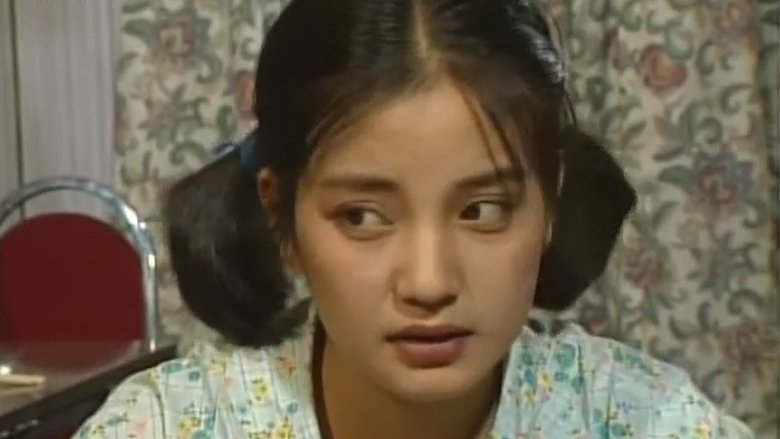
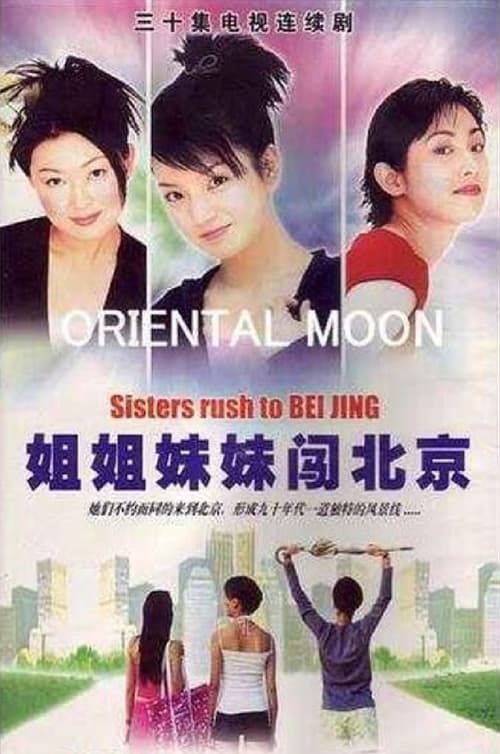
Before streaming platforms made Chinese dramas a global phenomenon, mid-1990s domestic television was turning out grounded, character-focused tales of everyday people striving for a better future. 姐姐妹妹闯北京 — commonly translated into English as Sisters Take Beijing — belongs to that tradition. Broadcast in 1995, this thirty-part drama centers on women who abandon their hometowns to gamble on the capital, and it stands today as a revealing snapshot of its moment.
What the Series Is About
At heart, 姐姐妹妹闯北京 examines relocation, aspiration, and getting by. The title lays out the premise plainly: a band of women, framed warmly as sisters, head to Beijing hoping to forge new lives. Like many dramas of its kind, the show treats that journey as a way of looking at the sweeping social shifts of 1990s China, when vast numbers of people were relocating to major cities in pursuit of jobs and opportunity.
As a drama rather than a comedy or romance, the series keeps its focus on hardship, difficult decisions, and the ties that hold the women together as they face an unfamiliar, frequently harsh city. Without spoiling anything, the story traces how its central figures adjust, falter, and lean on each other as their situations change across thirty episodes.
Season Structure and Episode Format
The show ran for one season of thirty episodes, beginning in early 1995 and wrapping up with its final broadcast on July 23, 1995. A run of that length was standard for Chinese serialized dramas of the era, which favored extended formats that let storylines unfold at a deliberate, unhurried rhythm.
Compared with the compact ten-episode seasons common now, a thirty-episode framework gives the writers space to develop characters gradually. Each installment adds only a small piece to the larger arcs, and the full resolution arrives near the end of the run. Anyone used to modern pacing will find this a series best enjoyed by settling in rather than rushing through.
The Cast and Their Roles
A large ensemble anchors the series. Credited performers include Shi Yi, Yan Qingyu, Zhao Wei, Li Yuanyuan, Zhang Dali, Ding Zhicheng, Zhaobei Zhang, An'an Zhang, and Wang Kuirong. The size of the cast mirrors the show's ensemble design, with several storylines woven together over the season.
For today's audiences, the standout name is Zhao Wei, who later rose to become among the most famous actresses in Chinese entertainment. Watching her in a 1995 television role makes for a striking contrast with the work that made her famous. The remaining cast members came from the ranks of seasoned television and stage performers active in China at the time, giving the production an earthy, naturalistic quality.
Behind the Camera: Creators and Production
Jianfeng Zeng directed the series, with the script supplied by Xiaoxiong Yang — a collaboration that defined the show's tone and narrative shape. Delivering a thirty-episode ensemble drama within a single production year was a demanding job, requiring steady pacing across a long broadcast run.
Production was a joint effort among several backers: 中国天平经济文化发展公司 (China Tianping Economic and Cultural Development Company), 云南省红河卷烟厂 (the Honghe Cigarette Factory of Yunnan Province), and 北京实力影视咨询公司 (Beijing Shili Film and Television Consulting Company). A regional tobacco manufacturer serving as a production partner is an odd detail, but it reflects how mid-1990s Chinese television was financed — frequently through a blend of media firms and outside corporate sponsors.
Broadcast History and Status
姐姐妹妹闯北京 first aired on January 1, 1995, and finished its run on July 23 that same year. It is listed as Ended, indicating a complete, self-contained story with no follow-up. Its one-season, thirty-episode shape matched the norm for Chinese network dramas of the period.
Made in Chinese and originating in China, the series formed part of the decade's wave of urban-themed dramas on domestic television. As a product of its era, it carries both the stylistic conventions and the social preoccupations of mid-1990s Chinese broadcasting.
Themes, Tone, and Style
The core themes flow from the premise itself: female friendship, the magnetism of a big city, and the tension between conventional expectations and modern ambition. Beijing operates almost as a character — a place of both promise and pressure, where newcomers have to demonstrate their worth. The drama classification points to a serious, emotionally invested handling of these subjects rather than a breezy comedic one.
In style, the series sits within the realist tradition of 1990s Chinese television. Expect a grounded visual sensibility, period-accurate urban settings, and plots built on ordinary struggles rather than melodramatic flourishes. The tone mixes difficulty with warmth, especially in the bonds among the central women, whose loyalty to one another carries much of the show's emotional weight.
Who Will Enjoy It
A few audiences will get the most out of this series. Those curious about Chinese television history will see in it a representative slice of mid-1990s domestic drama, produced while the industry was growing quickly and turning toward stories of urban migration. Admirers of Zhao Wei may be intrigued to catch her in an early role, long before her later stardom.
It also suits viewers who like ensemble dramas about friendship and perseverance, or anyone drawn to tales of people making a fresh start in a new city. Those anticipating the polished look and quick tempo of today's streaming series may have to recalibrate; the rewards here are subtler and tied to the period.
Where to Watch
Access for viewers outside China is limited. As a series roughly three decades old, 姐姐妹妹闯北京 is not broadly available on major US streaming services, and American viewers may need to look through specialized catalogs that license classic Chinese television.
Since the show is finished and no longer airing, any legitimate platform that picks it up would carry the complete thirty-episode run. Interested viewers should keep an eye on drama-focused streaming platforms and digital stores specializing in Asian television, where classic catalog titles appear and rotate fairly often.
Frequently asked questions
What is 姐姐妹妹闯北京 about?
It is a 1995 Chinese drama about a group of women who head to Beijing looking for opportunity, showing how their friendship and resolve are tested as they build lives in the capital.
How many episodes does the series have?
One season of thirty episodes. It began airing on January 1, 1995, and the last episode was broadcast on July 23, 1995.
Who stars in the show?
The ensemble includes Shi Yi, Yan Qingyu, Zhao Wei, Li Yuanyuan, Zhang Dali, Ding Zhicheng, Zhaobei Zhang, An'an Zhang, and Wang Kuirong. Zhao Wei later became one of China's best-known actresses.
Who created the series?
Jianfeng Zeng directed and Xiaoxiong Yang wrote the drama. It was produced by China Tianping Economic and Cultural Development Company, a Yunnan-based partner, and Beijing Shili Film and Television Consulting Company.
Is 姐姐妹妹闯北京 still airing or has it ended?
It has ended. The series aired as a complete single season in 1995 with no continuation, so the full thirty-episode story can be watched from start to finish.











Comments (0)
Log in or create a free account to comment, rate and write reviews.