
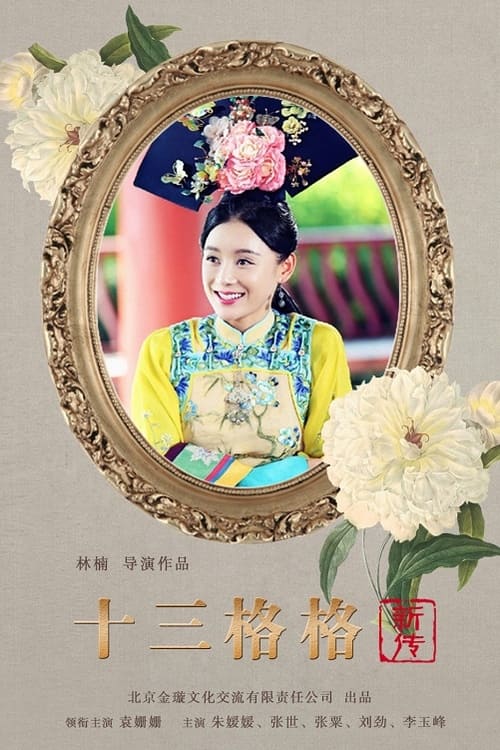
Few genres blend politics and personal drama as effectively as Chinese historical television, and The New Legend of Princess Thirteen (十三格格新传) stands as a worthy entry in that tradition. Directed by Lin Nan and arriving in 2013, the show tracks a bold young noblewoman whose existence within the palace walls is far from peaceful. Yuan Shanshan fronts a cast across a full 30-episode season, giving period-drama fans a complete storyline to sink into.
A Princess With a Story of Her Own
Royal women in period fiction are frequently pushed to the margins, yet this production makes its young princess the focal point of everything. Her story revolves around a determined woman of high birth whose circumstances force her to juggle family obligations, palace maneuvering, and personal ambitions.
The show, without spoiling developments, uses her viewpoint to reveal how even an elevated rank leaves a woman with remarkably limited command over her destiny. It is her decisions, bonds, and errors that propel the plot, grounding the historical setting in a genuinely personal journey.
Those unfamiliar with the title should expect a drama driven by characters rather than spectacle. Conflict emerges through dialogue, shifting loyalties, and deception instead of combat, making it well suited to audiences who favor talk-driven period pieces.
Season Structure and Episode Format
One season of 30 episodes makes up The New Legend of Princess Thirteen, with broadcasts starting April 24, 2013. This length matches the norms of Chinese television at the time, where a lone extended season delivers a full narrative unlike the brief seasons typical in the West.
Since the whole run aired without interruption, the show works best as one continuous story. Each episode builds on the last, with palace relationships and personal stakes accumulating, so starting from episode one is the way to go.
The rhythm follows the habits of Chinese period television: unhurried scene-building, lengthy exchanges between characters, and storylines that resolve many episodes later. Audiences accustomed to brisker Western formats might need time to adjust, though the reward is a deeper immersion in the setting and its figures.
Main Cast and Characters
Heading the ensemble is Yuan Shanshan, playing the princess whose journey forms the spine of the show. She balances stubbornness with fragility in a role that demands she portray someone constantly being pushed into molds by others, and her work provides the series' emotional backbone.
The surrounding players enrich the palace world considerably. Zhu Yuanyuan, Chang Shih, Wan Siwei, and Liu Jin complete the main lineup, each embodying characters whose motives and allegiances influence the princess's path. Chang Shih, an experienced performer with commanding presence, adds weight to the proceedings, while the younger members bring vitality to a tale of a woman finding her own footing.
Relationships between characters power the whole enterprise. Pacts form and dissolve, rivalries smolder, and virtually every major figure stands to win or lose depending on how the princess's story unfolds, keeping group scenes lively throughout.
Behind the Camera: Direction and Writing
Lin Nan directs, a name connected with Chinese TV drama, and his handling here prioritizes interpersonal dynamics and period ambiance rather than grand visuals. The script belongs to Fachun Zhang, whose writing merges palace power plays with a personal growth narrative.
Beijing Jinxuan Culture Exchange Co., Ltd. (北京金璇文化交流有限责任公司) served as the production house behind the series, a mainland Chinese company. The show was created for the domestic market and mirrors the standards and storytelling habits of mainland dramas from its period.
For those watching from abroad, this creative approach translates into a series that relies on acting and dialogue instead of expensive set pieces, keeping attention fixed on the people and the decisions they make.
Network, Broadcast, and Current Status
Nanjing Broadcasting System carried the series, with its first airing on April 24, 2013. It carries the designation of Returning Series, suggesting the narrative was intended to extend past its original 30-episode season.
That initial season nonetheless forms a self-contained block for new viewers. Regardless of whether more episodes ever arrive, what exists already delivers plenty of material for anyone discovering it today.
Audiences in the United States will find the series listed as streamable, opening it up to the expanding English-speaking viewership for Chinese period drama.
Themes, Tone, and Style
The heart of the show is autonomy. A privileged young woman learns that noble status provides no defense against scheming, pressure, and sorrow, and the series draws much of its drama from that paradox. The tug-of-war between obligation and longing recurs constantly, expressed through family ties and court connections.
In tone, the drama mixes tenderness with intrigue. Humor and affection appear in lighter beats, yet an undercurrent of political calculation runs throughout, where one ill-chosen remark can trigger serious fallout. The effect is a story that swings between closeness and conspiracy.
Visually, it adheres to the conventions of Chinese historical productions: traditional costume, formal speech patterns, and framing that underscores rank and standing. Admirers of that look will feel immediately comfortable.
Who Will Enjoy This Series
Lovers of Chinese historical and palace-intrigue television are the natural audience here, especially those drawn to female-centered narratives about women carving out space in constrained environments. The 30-episode span suits viewers who enjoy committing to a long, unbroken story.
Anyone seeking rapid action or unconventional storytelling may find the tempo slow, but those who prize character growth, historical texture, and ensemble interplay will have much to keep them engaged. It also serves as a friendly gateway into Chinese TV for beginners, given its straightforward premise and universally relatable emotional stakes.
Where to Watch
Viewers in the United States can find The New Legend of Princess Thirteen listed as streamable. As is true of any foreign title, access differs depending on platform and territory, so checking the latest listings where you live is advisable.
The show never received a prominent international rollout, so most people encounter it through catalogs specializing in Chinese drama. Genre enthusiasts who add it to their queue will get a straightforward way to sample a 2013 production fronted by an actress who has since become a recognizable name in Chinese entertainment.
Frequently asked questions
When did The New Legend of Princess Thirteen premiere?
Its debut came on April 24, 2013, via the Nanjing Broadcasting System in China. The full 30-episode season launched that day and aired as a single uninterrupted run.
How many episodes does the series have?
One season comprising 30 episodes, matching the typical length of Chinese dramas from that era and presenting one extended, continuous tale.
Who stars in The New Legend of Princess Thirteen?
Yuan Shanshan takes the lead, supported by Zhu Yuanyuan, Chang Shih, Wan Siwei, and Liu Jin in significant roles across the season.
Who directed and wrote the show?
Lin Nan directed, with the screenplay by Fachun Zhang. Beijing Jinxuan Culture Exchange Co., Ltd., a Chinese production firm, handled production.
Is The New Legend of Princess Thirteen available in the US?
Yes, it is listed as streamable for American audiences, though platform availability can shift, so verifying current streaming options is a good idea.










Comments (0)
Log in or create a free account to comment, rate and write reviews.