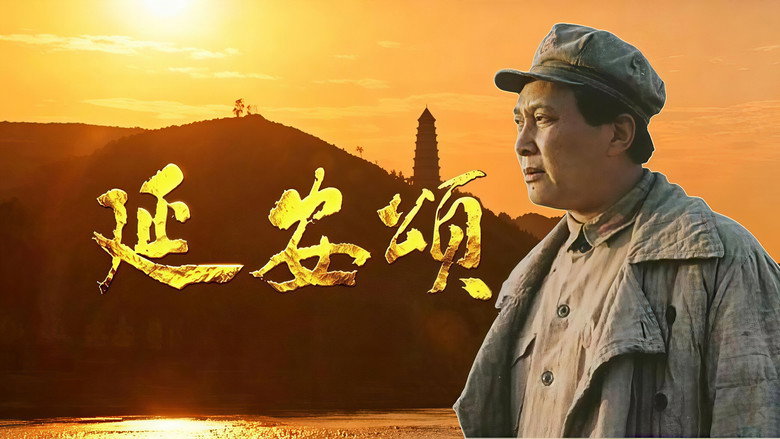

Few Chinese productions have tackled their subject on as grand a canvas as Yan'an Song (延安颂), also rendered in English as Song of Yan'an. Debuting in December 2003, this sweeping drama devotes its entire run to a pivotal stretch of twentieth-century Chinese history, assembling a huge roster of political and military personalities on screen. Its depth of detail has kept it appealing to audiences drawn to this era long after its original broadcast.
What Yan'an Song Is About
The drama takes as its setting the years when China's revolutionary leadership made its headquarters in Yan'an, the northwestern town that came to stand for the movement through the wartime and turbulent years the show depicts. Instead of tracking one central figure, the story interlaces strategy sessions, military operations and private interludes across a broad web of leaders and their opponents.
Viewers follow the leadership as it confronts dangers from outside while managing disagreements within, all while consolidating its position in the region. The action shifts among command posts, bargaining tables and daily life in the base area, presented in the measured, dialogue-heavy manner characteristic of dramas about China's revolutionary years.
Since the show dramatizes events that are well recorded in the historical record, much of its draw comes from seeing recognizable personalities hash out strategy and ideology on screen. This is a story built on discussions, choices and their fallout rather than on cliffhanger suspense.
Season and Episode Structure
The series runs as one season totaling 40 installments, each roughly 45 minutes in length. It was first broadcast in China starting December 19, 2003, and finished its run on January 30, 2004, after which it was marked as ended — so the whole story can be watched without any wait for further seasons.
The lengthy format allows the production ample room. Historical dramas of this scale generally progress in chronological fashion, letting events develop at an unhurried tempo. Those new to the genre should anticipate a gentler rhythm than Western prestige TV, where political conferences and strategic exchanges weigh as heavily as combat scenes.
Being a complete, standalone season, the show works well either as an episode-by-episode commitment or as a multi-week binge.
The Main Cast and Characters
Tang Guoqiang heads the production as Mao Zedong, a role with which he has long been linked in Chinese historical television. His work provides the show's dramatic core and stands among the chief reasons the series continues to earn respect from genre enthusiasts.
Liu Jin appears as Zhou Enlai, a figure whose diplomatic finesse and political acumen figure largely across the narrative. Representing the rival camp, Ma Xiaowei portrays Chiang Kai-shek, supplying the drama's central adversary and enabling it to show both sides of the period's political conflict.
Beyond the leads, the ensemble is rich in talent. Guo Lianwen features as Liu Shaoqi, Wang Wufu as Zhu De, Yang Junyong as Chen Yun, Zhang Zaixin as Liu Bocheng, and Yao Jude as Peng Dehuai. Wang Bozhao takes the part of Pan Hannian, while Bi Yanjen completes the principal lineup as Wang Yizhe. Such a wide spread of characters lends the series the feel of an ensemble epic, with numerous threads unfolding at once.
Production and Broadcast History
Made in China and first shown there, the series began airing December 19, 2003 and wrapped up January 30, 2004. It forms part of the lineage of Chinese revolutionary historical dramas — a genre blending careful adherence to the record with staged scenes, and frequently casting performers who have become strongly identified with legendary historical figures.
The scale of the undertaking shows in the production. Covering 40 episodes with actors embodying dozens of genuine historical personalities demanded elaborate sets, wardrobe and period craftsmanship to bring the Yan'an years believably to life. The 45-minute running time matches standard Chinese primetime practice and lets each episode advance a considerable portion of the story.
The show has since been made available to audiences abroad, including viewers in the United States keen to explore this chapter of Chinese television.
Themes, Tone and Style
Leadership, endurance and ideological commitment form the drama's central concerns. It explores how a political movement endured and expanded through a national emergency, highlighting strategy, sacrifice and the personal ties binding the leadership together. Moments of debate and decision sit alongside portrayals of hardship in the base area, lending the show both political weight and human warmth.
In tone the series is sincere and composed, true to its genre. Expect formal speech, era-accurate dress and a narrative stance that handles its historical figures with seriousness. The tempo is unhurried, and the drama repays patience and close attention — especially from those who bring some knowledge of the era with them.
Stylistically, the show belongs firmly to the Chinese mainstream historical epic tradition: broad in reach, carried by its ensemble, and devoted to presenting history as a sequence of consequential decisions reached by a small group of leaders.
Who Will Enjoy Yan'an Song
Anyone drawn to historical dramas rooted in actual events — particularly twentieth-century Chinese history — will find this series a natural choice. Admirers of extended political sagas, military-strategy storytelling and large ensemble casts have 40 episodes' worth of material to dig into.
The show also appeals to those curious about Chinese television itself, offering a look at how the country stages its own revolutionary past on screen, with Tang Guoqiang's portrayal often singled out as a genre highlight. Viewers who favor brisk thrillers or modern settings may find it slow, but those prepared to commit to a methodical epic will discover a complete and rewarding story.
Where to Watch Yan'an Song in the US
Audiences in the United States can access the series via licensed streaming channels, with all 40 episodes offered in the original Chinese. Since availability shifts between platforms and over time, checking current regional listings is advisable.
As the show aired as one finished season that left the airwaves in 2004, there is no weekly release schedule to keep up with — the full story is there to watch whenever you like.
Frequently asked questions
How many episodes does Yan'an Song have?
It runs one season of 40 episodes at roughly 45 minutes apiece. Broadcast in China between December 19, 2003 and January 30, 2004, the story is fully complete.
Who plays Mao Zedong in Yan'an Song?
Tang Guoqiang takes the role of Mao Zedong, supported by Liu Jin as Zhou Enlai, Ma Xiaowei as Chiang Kai-shek, and a large ensemble that includes Wang Wufu as Zhu De.
Is Yan'an Song based on real history?
Yes. The drama depicts the era when China's revolutionary leadership was headquartered in Yan'an, staging well-known figures in dramatized versions of documented events and political struggles.
Is Yan'an Song finished or ongoing?
It is listed as ended. The original broadcast wrapped in January 2004 and no further seasons followed, so the complete story is available to watch.
Where can I watch Yan'an Song in the US?
US viewers can find the series on licensed streaming platforms carrying Chinese historical dramas; check current listings for availability in your region.






Comments (0)
Log in or create a free account to comment, rate and write reviews.