
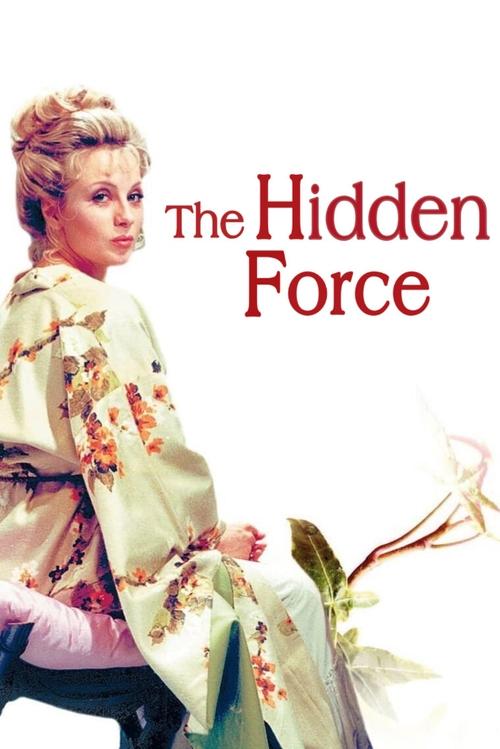
Not every drama needs raised voices to create dread. De Stille Kracht, known in English as The Hidden Force, builds its tension through quiet accumulation rather than open confrontation. Aired in 1974, this three-episode dramatization of Louis Couperus's famous novel stands out as a model of literary television, fusing a colonial-era story with a steadily deepening current of the uncanny.
A Colonial Drama with an Unseen Edge
The story unfolds on Java during the final years of the nineteenth century, when the Dutch East Indies were still under European rule. The central figure is Otto van Oudijck, a resident administrator who runs his district with self-assurance and an unshakable faith that rational governance can hold everything together.
What he cannot perceive is that other laws govern the world he inhabits. Underneath the ordered surface of colonial existence, older powers are stirring, and the Javanese people recognize realities that their European overlords write off as superstition. Without spoiling the plot's direction, Van Oudijck and those around him watch their certainties steadily dissolve, as fractures inside his household and administration echo the invisible pressure mounting outside his office.
The production keeps its focus on human relationships. The drama's power comes not from spectacle but from mood: the growing impression that a family, and an entire colonial order, are being eroded by something they refuse to name.
A Compact Three-Part Structure
The series ran for one season of only three installments, each roughly seventy-five minutes long. That amounts to a modest commitment of just under four hours, more like a feature film divided into chapters than an ongoing program.
The miniseries shape fits the source material admirably. Instead of stretching the narrative over many weeks, the makers pace their adaptation with care, letting the atmosphere grow denser with each installment. The broadcast took place in September 1974, wrapping up later that same month, and the work was designed as a finished whole rather than a returning show.
For modern audiences, that brevity is a virtue. There is no padding, no cliffhanger apparatus, and no multi-season obligation. The narrative advances toward its ending with the assurance of a story that knows its destination.
The Cast and Their Characters
Bob de Lange heads the ensemble as Resident Otto van Oudijck, the Dutch official whose grip on authority anchors the story. Pleuni Touw portrays his spouse, Léonie van Oudijck, whose role in the household's inner tensions drives much of the drama.
Surrounding the couple, a carefully chosen ensemble populates the colonial community. Willem Nijholt plays Theo van Oudijck, with Ton Kuyl as Paul van Hove. Petra Laseur appears as Eva Eldersma, and Hans Dagelet takes on Adrien "Addy" de Luce. Caro van Eyck performs the part of the Raden-Ajoe Pangéran, a figure whose standing links the Dutch administration to the Javanese world it rules without truly comprehending.
Rounding out the company are Elly Ruimschotel as Mevrouw Van Does, Ingeborg Elzevier as Mevrouw Van Doorn, and Cisca Triezenberg as Ida van Helderen. Collectively, these seasoned Dutch performers lend the production the stage-trained solidity typical of serious television drama from that era.
From Couperus's Novel to the Screen
The series adapts De stille kracht, the novel by Louis Couperus, a towering presence in Dutch letters. His book, saturated with the atmosphere of the colonial Indies, is celebrated for scrutinizing the Dutch imperial enterprise and the boundaries of European comprehension of the societies they governed.
Walter van der Kamp directed the adaptation and also took producer duties, working alongside René Solleveld and Hugo Heinen. Frits Paeper served as editor. The broadcaster AVRO, one of the Netherlands' long-established public broadcasting associations, both created the series and transmitted it.
Such literary dramatizations were a signature of Dutch broadcasting in the 1970s, when public channels funded ambitious, faithful renderings of national classics. The Hidden Force remains a distinguished specimen of that tradition.
Broadcast History and Availability
AVRO transmitted the series across the Netherlands, opening on September 9, 1974, and showing the concluding episode on September 23, 1974. The whole run therefore lasted barely two weeks, in keeping with its three-part design. The show is recorded as ended, with no additional seasons ever made.
Audiences in the United States may face limited access, a common situation for vintage foreign-language television of this period. Anyone hoping to see it should consult current streaming libraries and digital shops specializing in international classic drama, since catalogs shift over time. As the dialogue is in Dutch, viewers without the language should seek out subtitled editions.
Themes, Tone, and Style
Beneath everything, The Hidden Force is a study in incomprehension. The Dutch officials at its center cannot perceive the culture enveloping them, and their failure to recognize or honor the powers moving through Javanese society proves fatal. The series offers a critical view of colonialism, depicting a ruling class whose assurance rests on ground it cannot see.
The mood is slow-burning and steeped in atmosphere. The frequently cited keyword, black magic, does not imply horror theatrics; the paranormal threads enter as suggestion and ambiance rather than showmanship. What emerges is a drama in which the supernatural and the psychological merge, and the tropical setting itself appears to bear down upon the European characters.
Formally, the series bears the marks of 1970s European television: dialogue-led, performance-driven, and unhurried. Those used to today's visual style may find it measured to a fault, yet that very deliberateness supplies its creeping strength.
Who Should Watch It
Several audiences will find much to admire here. Admirers of literary adaptations will value seeing a pillar of Dutch fiction translated to the screen with evident care. Viewers drawn to colonial history and its depiction in European art will discover a compelling period piece, created near enough to the colonial age to carry genuine gravity.
It also merits attention from anyone fond of slow-burn mysteries tinged with the uncanny, or of classic European television more broadly. Its brief runtime makes it a convenient doorway into Dutch television history, and its subjects—the limits of power, the blindness of privilege, and the endurance of the unseen—still speak clearly today.
Frequently asked questions
What is The Hidden Force about?
It is a Dutch drama miniseries located in the colonial Dutch East Indies during the late nineteenth century, centered on a resident administrator in Java whose household and authority are progressively weakened by mysterious, invisible forces arising from the culture around him.
How many episodes does The Hidden Force have?
It comprises a single season of three episodes, each about 75 minutes long. Dutch broadcaster AVRO aired it in September 1974 as a complete, self-contained narrative.
Is The Hidden Force based on a book?
Yes, it adapts the novel De stille kracht by Louis Couperus, a major voice in Dutch literature. Set in colonial Java, the book is regarded as a classic of Dutch fiction.
Who directed The Hidden Force?
Walter van der Kamp directed the miniseries and also worked as one of its producers, together with René Solleveld and Hugo Heinen. Frits Paeper edited it, and AVRO produced the show.
Where can I watch The Hidden Force in the US?
Access in the United States may be restricted for this vintage Dutch miniseries. Look into current streaming platforms and digital stores carrying international classic drama, as offerings change over time. Non-Dutch speakers should seek subtitled versions.









Comments (0)
Log in or create a free account to comment, rate and write reviews.