Decades before video conferencing became an everyday tool, a CBS broadcast managed to make the world feel smaller for its viewers. Titled Small World and anchored by the renowned Edward R. Murrow, the program assembled leading thinkers of the mid-1900s for discussions that crossed oceans as they happened. The lineup of participants alone secures its place as a remarkable piece of television history.
A Talk Program That Spanned the Planet
Small World was, at its core, an interview and discussion series distinguished by an approach unlike anything else on the airwaves. Every installment was built around a filmed, intercontinental exchange, with Murrow stationed in New York and three world-renowned personalities joining from separate locations around the globe.
The central conceit was straightforward yet clever: guests communicated by telephone and radio, so each voice was audible while every face stayed hidden. At a time when television was still defining itself, the program chose to foreground speech and ideas instead of imagery, banking on the stature of its participants and the depth of their dialogue.
Looking back, the concept feels strikingly ahead of its time. Set aside the black-and-white footage and the fuzzy sound, and the setup anticipates the conference call and the panel podcast by many years.
The Shape of Each Episode
The program followed a steady blueprint throughout its life. Murrow, in the moderator's chair, steered the discussion as three guests, dialing in from distinct spots on the map, tackled subjects of worldwide importance. Since everyone depended on telephone and radio links, the production team had to juggle schedules across multiple time zones — a coordination challenge that counted as a genuine technical accomplishment in its day.
One curious consequence of the audio-only design was that it erased television's usual visual pecking order. A politician, a researcher, and a philosopher could meet on level ground, measured solely by their words rather than their screen presence. For the audience, tuning in felt less like watching a studio show and more like eavesdropping on a private summit spanning the Atlantic.
Over the course of two seasons, the series amassed 57 installments — an impressive output for such an ambitious undertaking.
A Roster of Guests Worthy of a Textbook
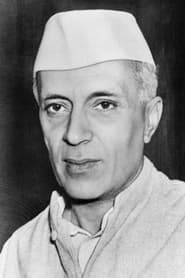
The people who agreed to appear are what make Small World truly memorable. India's Prime Minister Jawaharlal Nehru, the philosopher Bertrand Russell, and the writer Aldous Huxley all joined in, alongside physicist Willard F. Libby and nuclear scientist Homi J. Bhabha.
The series also drew figures from politics and civic life, among them Thomas E. Dewey, the former governor and presidential contender, and Eric Johnston. British commentator Malcolm Muggeridge lent his pointed, questioning voice to the discussions as well.
Cinema had a place on the guest list too, thanks to Lauren Bacall, among the most admired actresses of her era. That one program could attract a sitting head of government, a philosopher of world renown, and a Hollywood legend testifies to the format's prestige and Murrow's own pull.
Murrow and Friendly: The Minds Behind the Program
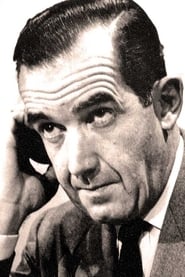
Fred W. Friendly and Edward R. Murrow created and produced Small World, continuing one of the most influential collaborations in American broadcast journalism. Having already transformed television news together, the pair used this series to further their conviction that the medium could achieve more than mere diversion.
Murrow's presence as moderator defined the show. With his commanding manner, careful phrasing, and preference for substance over flash, he was the natural choice to guide exchanges among forceful intellectuals and statesmen. Friendly's production skill, in turn, kept the demanding technical arrangement running smoothly week after week.
The series was mounted under the CBS name via CBS Productions, bearing the network's hallmark of ambitious, serious-minded programming.
Its Run on CBS
CBS began airing the series in autumn 1958 and carried it through spring 1960 — two seasons and 57 installments in total before the show concluded. Its broadcast life overlapped with an era when American television was trying out formats that imagined audiences as members of a global community.
Though chiefly recalled today by broadcast scholars and devotees of vintage television, the program filled a unique slot in its own time. It was neither fiction nor a standard studio interview show; it was an experiment in worldwide dialogue, mounted while the technology for such an endeavor was still in its infancy.
Its current status is recorded as ended, indicating that no further episodes followed the close of its two-season run.
Tone, Themes, and Approach
Consistent with its talk-show genre and the stature of everyone involved, Small World carried a weighty, cerebral tone. Conversations gravitated toward the major questions of the moment — world affairs, science, and ideas — rather than breezy celebrity small talk.
In stylistic terms, the series shows how limitation can spark invention. Removing the visual link between participants put the spotlight on listening, reasoning, and the give-and-take of thought. The filmed intercontinental setup also lent each broadcast a sense of occasion: every episode played as a gathering of minds that geography had once made unthinkable.
For today's audiences, the program opens a window onto the intellectual preoccupations of the late 1950s and recalls how far-reaching television journalism once dared to be.
Who Will Appreciate It
Small World will resonate most with those drawn to broadcast history, mid-century politics and thought, and Edward R. Murrow's career. Anyone curious about how the talk show format took shape will find it an instructive example: a program that foresaw the worldwide, voice-centered conversations we take for granted now.
Fans of its guests will also find much to enjoy. Seeing Nehru, Russell, Huxley, or Bacall in unscripted exchange is a rare treat, and the invisible format lends their conversations an air of candor rather than performance.
Viewers seeking quick entertainment may find the rhythm unhurried, but those willing to settle in will be repaid with discussions of real depth.
Viewing Options
Audiences in the United States can access Small World via US-based services. As a relic of television's early golden age, its availability can shift, so it pays to consult current streaming listings or classic television collections for particular episodes.
With two seasons and 57 installments behind it, the series offers ample material, and episodes built around specific guests often make the best entry point for newcomers.
Frequently asked questions
What was the TV series Small World about?
It was a CBS talk program in which moderator Edward R. Murrow, broadcasting from New York, held filmed discussions with three internationally famous figures joining from separate corners of the world, addressing subjects of global importance.
How did guests communicate if they couldn't see each other?
They heard each other over telephone and radio links. Keeping the participants out of sight of one another was an intentional design choice, prioritizing the exchange of ideas over appearances.
Who created and hosted Small World?
Fred W. Friendly and Edward R. Murrow created and produced the series, and Murrow additionally acted as the on-air moderator throughout its run.
Who were some notable guests on Small World?
Among those who appeared were Jawaharlal Nehru, Bertrand Russell, Aldous Huxley, Thomas E. Dewey, Lauren Bacall, Willard F. Libby, Homi J. Bhabha, Malcolm Muggeridge, and Eric Johnston.
How many seasons and episodes did Small World have?
The program aired for two seasons on CBS, totaling 57 episodes before coming to an end.







Comments (0)
Log in or create a free account to comment, rate and write reviews.