
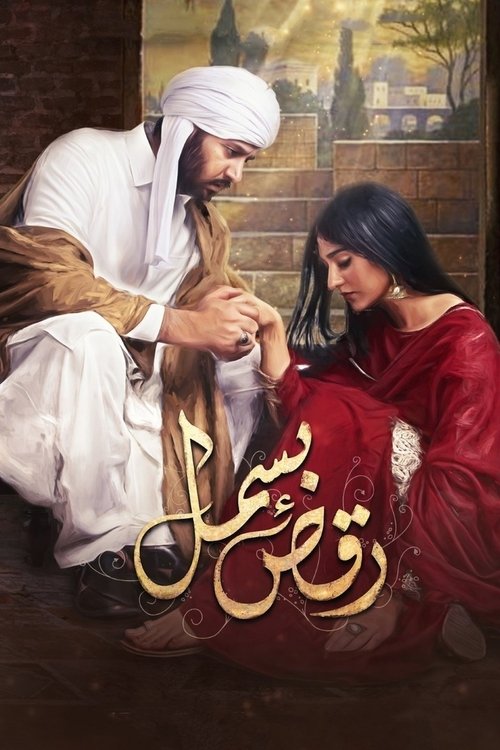
During its broadcast window, few Pakistani serials drew as much attention as Raqs-e-Bismil, a family drama on Hum TV that ran weekly from the end of 2020 into the middle of 2021. With Imran Ashraf and Sarah Khan heading the ensemble, the show mixes domestic conflict with love stories and matters of belief, sparking discussion both at home and online.
What Raqs-e-Bismil Is About (Spoiler-Free)
The Urdu title Raqs-e-Bismil is frequently rendered in English as 'Dance of the Wounded.' The story follows Moosa, a young man brought up in a pious home led by his father, a revered religious figure. Everything shifts when Moosa meets Zohra, a woman whose background stands in stark contrast to his protected upbringing.
The serial traces the consequences of that meeting inside the family and beyond it. True to the conventions of Pakistani family dramas, it intertwines love, parental pressures, and the clash between individual wishes and religious or societal obligations. Steering clear of spoilers, the show can be summed up as an emotional household saga where affection and faith tug the characters in opposing directions.
Season Structure and Episode Format
Raqs-e-Bismil aired as one season made up of 28 episodes. It first aired on 25 December 2020 and wrapped up on 2 July 2021, sticking to the weekly schedule typical of Pakistani serials.
Because of that rhythm, newcomers should expect an extended narrative rather than a short limited series. The plot develops step by step, allowing the ensemble to build relationships and tensions across many weeks, in line with Hum TV's usual approach to drama programming.
Main Cast and Characters
Imran Ashraf heads the cast as Moosa, the son of a spiritually devoted family whose path takes an unforeseen direction. Ashraf, often cited among Pakistan's most adaptable TV performers, bears much of the drama's emotional burden in this part.
Across from him, Sarah Khan portrays Zohra, the woman whose entrance alters Moosa's course. Anoushay Abbasi takes the role of Sakina, whose arc ties into that of her mother Khadija, played by Javeria Abbasi. Zara Sheikh completes the principal lineup as Laila.
The senior generation features prominently as well: Mehmood Aslam appears as Pir Qudrat Ullah Shah, Moosa's father, and Nida Mumtaz plays Hajra, Moosa's mother. The dynamic between the young leads and their parents anchors the show's family drama.
Creators, Writer, and Production
Momina Duraid and Shazia Wajahat, both seasoned figures in Pakistani television, created Raqs-e-Bismil. Duraid's outfit, Momina Duraid Productions, handled production together with Shazia Wajahat's Showcase Productions.
Hashim Nadeem, a writer recognized for bringing a literary sensibility to TV drama, penned the screenplay, while Wajahat Rauf directed. Pairing a novelist's script with a director recognized for sleek, modern production standards gave the serial its particular flavor during its Hum TV broadcast.
Network and Broadcast Status
Hum TV, among Pakistan's foremost entertainment channels and one with an extensive history of family serials, carried the series. Its broadcast stretched from the Christmas Day launch in 2020 to the concluding episode in July 2021.
Raqs-e-Bismil now carries the status Ended, indicating the narrative wrapped up within its lone 28-episode season. Audiences can view the entire story without any further episodes pending.
Themes, Tone, and Style
Although Raqs-e-Bismil is fundamentally a family drama, its subject matter extends into spirituality, social class, and the price of inflexible expectations. The friction between a devoutly traditional home and the outside world drives the central conflict, while the love story between Moosa and Zohra provides the emotional momentum.
In tone, the serial favors gravity and sincerity over levity, consistent with Hashim Nadeem's writing. Viewers should anticipate gradual pacing, dialogue-rich scenes, and acting that repays patience. The staging and direction lend the serial a refined appearance matching Hum TV's leading dramas of that era.
Who Will Enjoy It
Audiences drawn to character-focused Pakistani serials, especially those built around family, belief, and romance, will find much to appreciate. Admirers of Imran Ashraf's earlier roles will enjoy another demonstration of his versatility, and Sarah Khan's involvement adds further draw.
The serial also works for overseas viewers venturing into Urdu-language television, as its weekly format and finished single-season run make it simple to watch from beginning to end. Anyone seeking rapid plotting or thrillers might find the tempo measured, but those who favor emotionally rich storytelling will come away satisfied.
Where to Watch
Audiences in the United States can stream Raqs-e-Bismil online via Hum TV's official YouTube channel, where the network publishes its drama library for viewers abroad.
With the broadcast run finished, every one of the 28 episodes is ready for on-demand playback. Locating the show's playlist on the channel is the easiest route to watch from the opening episode to the last.
Frequently asked questions
How many episodes does Raqs-e-Bismil have?
The serial comprises 28 episodes across one season. It aired weekly on Hum TV between 25 December 2020 and 2 July 2021, and it is now marked as Ended.
Who plays Moosa and Zohra in Raqs-e-Bismil?
Moosa, the son of a pious spiritual household, is portrayed by Imran Ashraf, while Sarah Khan plays Zohra, the woman whose appearance transforms his life. Both are among Pakistan's most prominent television actors.
Who wrote and directed Raqs-e-Bismil?
Hashim Nadeem wrote the serial and Wajahat Rauf directed it. Momina Duraid and Shazia Wajahat created it, with Momina Duraid Productions and Showcase Productions serving as production companies.
Where can I watch Raqs-e-Bismil in the US?
American viewers can stream the serial on Hum TV's official YouTube channel, which carries the full set of episodes for on-demand watching.
Is Raqs-e-Bismil worth watching?
For devotees of Pakistani family serials, it is a solid choice, owing to the lead turns from Imran Ashraf and Sarah Khan and a screenplay by novelist Hashim Nadeem. Be prepared for a gradual, emotion-led narrative rather than quick-moving action.
















Comments (0)
Log in or create a free account to comment, rate and write reviews.