


Certain comedic duos seem destined to keep collaborating no matter what. Michael & Michael Have Issues landed on Comedy Central in summer 2009 and paired two longtime figures from the alternative comedy world in an unusual double experiment: one part sketch program, one part backstage sitcom, featuring both men as quarrelsome caricatures of themselves. Though the run lasted just seven installments, its cocktail of vanity and absurdity has preserved its appeal as a cult favorite among devotees of that particular comedy scene.
Premise and Setup
The concept works on two levels at once. Michael Ian Black and Michael Showalter appear as themselves—or rather, as funhouse-mirror enlargements of themselves—fronting an invented sketch series. Viewers watch both the finished segments meant to represent the fictional program and the chaotic work that goes into producing them.
Away from the stage, the two Michaels are their own biggest obstacle. Envy, self-doubt, and constant scorekeeping push them into sly acts of mutual sabotage even as they struggle to keep their shared project alive. The running gag is that two seasoned professionals with years of shared history act like squabbling brothers the moment recording stops.
The show never attempts real drama; all the friction stays in farcical territory. The hosts' rivalry powers the narrative, and the sketch pieces they create serve simultaneously as their output and their battleground.
Structure and Episode Format
All seven episodes clock in at approximately 22 minutes, matching the compact half-hour slots Comedy Central favored for its evening lineup in that era. The format shuttles between two registers: the sketch pieces framed as part of the hosts' invented show, and the behind-the-cameras storylines that wrap around them.
The sketch segments represent the pair's stage work, staged with a rotating ensemble of players, while the linking narrative tracks the Michaels through creative arguments, hosting disagreements, and steadily escalating sabotage. This dual-layer construction was the series' signature device, allowing it to send up both the sketch format itself and the fragile egos imagined to drive such shows.
With only one season of seven episodes, it makes for a quick binge, and thanks to its modular structure, almost any installment can be watched cold with the dynamic becoming clear within minutes.
Cast and Characters
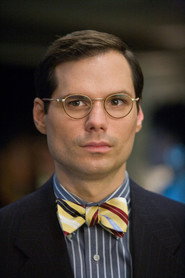
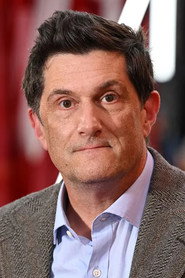
At the center is the genuine long-running partnership between Michael Ian Black and Michael Showalter, collaborators since their early sketch comedy years. Both are credited as "Self," playing inflated takes on their public images, with Black's deadpan smugness colliding with Showalter's nervous, put-upon energy.
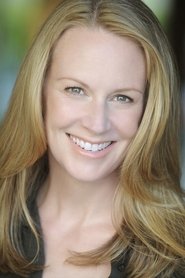
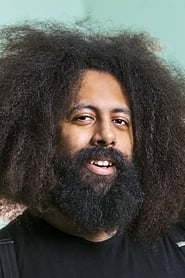
The supporting lineup features Kumail Nanjiani in one of his first television parts, playing a character also named Kumail, well before he reached wider fame. Josh Pais appears as Jim Biederman, and Jessi Klein, who later became a prominent comedy writer and performer, plays Marla. The sketch ensemble includes Andrea Rosen and Randy Pearlstein as performers, while Matt Bennett, who would later gain recognition on Nickelodeon's Victorious, plays Greg the Intern.
Jim Biederman and Jennifer Biederman both appear as themselves, deliberately muddying the boundary between the show-within-the-show and the actual production—a fitting touch for a series with a mockumentary flavor.
Creative Team and Production Details
The series was created jointly by Michael Ian Black and Michael Showalter, who also executive produced together with Lou Wallach. By 2009 the pair had accumulated years of shared comedic history, and the show essentially constructed a vehicle around their proven chemistry and their readiness to satirize their own images.
Music came from Ludwig Göransson, Chris Maxwell, and Phil Hernandez—a notable credit, since Göransson later rose to prominence as a major film composer. Daniel Shulman served as director of photography, and Marla Ratner took producing duties. The staging was built to resemble a functioning sketch production, with the backstage footage shot to feel like a genuine glimpse behind the scenes.
For audiences familiar with the duo's earlier projects, the series reads as another entry in a creative friendship that has long fed on gently mocking its own members.
Broadcast History and Network
The series aired on Comedy Central, which in 2009 was assembling a lineup of shows built around stand-up and alternative comedy talent. Its debut came on July 15, 2009, and the seven-episode run wrapped up on August 26 of the same year.
Even with its creators' reputations and a supporting cast containing several future names, the show was not renewed beyond its lone season. It remains a standalone experiment in both men's catalogs. While brief runs for sketch hybrids on the network were hardly rare, the short life has granted the series a small but devoted following among its creators' fans.
Tone, Style, and Recurring Themes
The comedic register is dry, self-referential, and often cruelly playful. Ego is the driving theme: two comedians who supposedly get along cannot resist competing for attention, recognition, and the final word. The fictional sketch program hands them one stage, and the off-camera scenes hand them another.
Formally, the series contrasts slick sketch material with rougher backstage interludes, and that contrast is itself part of the humor. The sketches are framed as the hosts' finest output, while everything surrounding them exposes vanity and ineptitude. In effect, it satirizes collaboration, implying that comedic partnerships survive on stubbornness and mutual denial.
Since both leads portray warped versions of themselves, the comedy leans on their established personas, which resonates most strongly with audiences who appreciate deadpan, self-mocking humor.
Is It Worth Watching?
This is deliberately niche material. Devotees of Michael Ian Black and Michael Showalter's past collaborations will recognize the rhythms immediately, as will anyone fond of the era's alternative comedy movement. Fans tracking Kumail Nanjiani's early career may also want a look at one of his first screen appearances.
Viewers who favor conventional sketch programs or plot-heavy sitcoms may find the backstage feuding repetitive. But anyone drawn to meta-humor, self-serving narrators, and comedians happily ridiculing their own frailties will find seven brief episodes a painless, low-stakes watch.
Viewing Options
For audiences in the United States, the series can be bought digitally. The Apple TV Store and Amazon Video both carry it for purchase, which remains the primary route to revisit this short-lived Comedy Central title.
Digital availability shifts over time and differs by region, so checking your preferred storefront for the latest listing is a good idea.
Frequently asked questions
How many episodes were made?
The show consisted of one season totaling seven episodes, each roughly 22 minutes. Comedy Central broadcast it between July 15 and August 26, 2009, and it was not picked up afterward.
Are the two Michaels playing themselves?
They portray heightened, fictionalized doubles of themselves as hosts of an invented sketch program. The off-camera scenes show them as insecure, envious rivals constantly working against one another.
Did Kumail Nanjiani appear on the show?
Yes. He plays a character named Kumail in one of his earliest television roles, long before his later mainstream fame. Jessi Klein and Matt Bennett also feature in the supporting cast.
What led to the show's cancellation?
No specific official explanation was made public, but the series completed only its original seven-episode order on Comedy Central in 2009 and was not extended into a second season, despite its creators' comedy credentials.
How can US viewers watch it?
American audiences can buy the series digitally via the Apple TV Store or Amazon Video. As a canceled single-season title, it is not consistently available on subscription streaming platforms.




















Comments (0)
Log in or create a free account to comment, rate and write reviews.