Not every television program makes a loud entrance, yet some still manage to win over audiences and remain fondly remembered decades later. DuDu is one such show. Shown to viewers between April and July 1980, this French-language production combined humor, vehicle stunts, and easygoing adventure in a package that stayed with audiences well beyond its original broadcast window.
What DuDu Is About
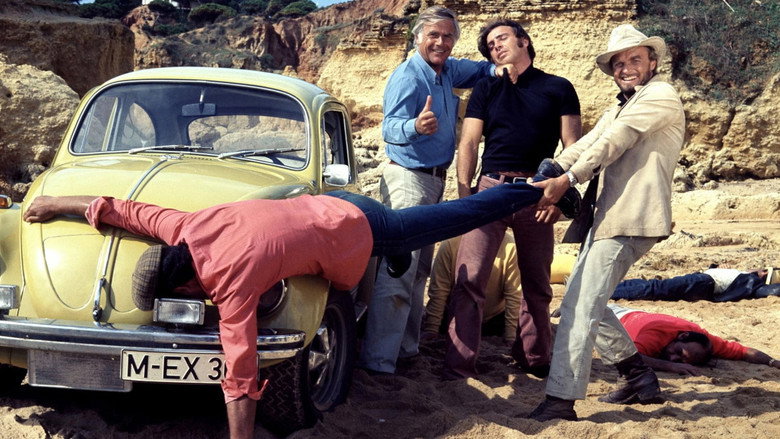
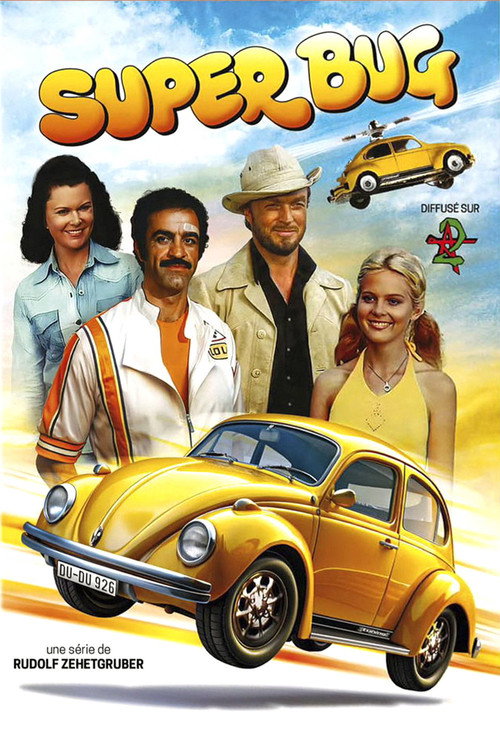
At the heart of DuDu are two stuntmen whose lives become a chain of misadventures, mostly unfolding inside a striking yellow automobile fitted out with a remarkable collection of gadgets. The car itself functions almost like a third character, delivering timely solutions to the duo's predicaments and lending each installment a whimsical, inventive spirit.
Rather than depending on complicated storylines, the program builds its appeal around physical humor and stunt sequences. Each episode stands on its own, so newcomers can jump in at any point without needing prior context, and the pleasure comes from seeing the two leads talk, drive, and improvise their way out of each mess.
Season Structure and Episode Format
The show ran as one season totaling twelve installments, each clocking in at about 22 minutes. This brief format gives the series a snappy rhythm, more akin to a short-form adventure program than an hour-long drama, and lends itself well to casual, bite-sized viewing.
Broadcast stretched across close to three months in 1980, launching in April and wrapping up in the first days of July. Such a schedule was standard practice for European channels of the period, where a twelve-part run could comfortably occupy a summer slot.
Main Cast and Characters
Among the credited talent are the show's three creators, Rudolf Zehetgruber, Joachim Fuchsberger, and Kathrin Oginski, joined by Sal Borgese, Gerd Duwner, Brad Harris, Heidi Hansen, Evelyne Kraft, Ricardo Palacios, Constanze Sieck, Walter Giller, Harry Fuß, Karl-Otto Alberty, and Walter Roderer.
A number of these performers had roots in European genre film, especially action and comedy pictures, which goes a long way toward explaining the production's reliance on stunts and comic timing. The relationship between the two stuntman characters anchors the series emotionally, and their interplay supplies much of its comedic charge.
Creators and Production
Creation credits go to Rudolf Zehetgruber, Joachim Fuchsberger, and Kathrin Oginski, while the scripts came from Alexander De Callier and Jacques Nova. The project was a truly international undertaking: produced in Germany yet delivered to viewers in French, a reflection of how freely genre entertainment crossed European borders during that period.
The multinational flavor is evident in the credits too, with contributors hailing from various countries and film backgrounds. The finished program stands as a snapshot of a particular era in European broadcasting, when stunt-driven comedies could move between markets and reach fresh audiences in different languages.
Network and Broadcast Status
The series was broadcast on Antenne 2, France's national channel, debuting on April 12, 1980 and presenting its last episode on July 5 of that year. Its status is now listed as ended, and no seasons beyond the original twelve installments were ever made.
Though short-lived, the program retains a devoted niche audience, and its mix of automotive gadgetry and comedy continues to draw attention from enthusiasts of vintage European television.
Themes, Tone, and Style
The overall mood is upbeat and suitable for all ages, prioritizing cleverness over aggression and cooperation over confrontation. The gadget-equipped yellow car works as a recurring symbol of ingenuity: instead of meeting trouble with brute strength, the heroes turn to a switch, a lever, or some ingenious modification.
In visual terms, the show follows the European stunt-comedy tradition, relying on genuine driving sequences and hands-on gags rather than elaborate effects. This practical approach lends the action a tangible feel that still sets it apart from many newer productions.
Who Will Enjoy It
Fans of vintage television, classic automotive culture, and comedy grounded in stunts and practical tricks will feel right at home with DuDu. It also works well as shared family viewing, since its comedy springs from situations and visual gags rather than anything adult-oriented.
Television historians and curious first-time viewers alike may appreciate it as a glimpse of late twentieth-century collaboration between the German and French entertainment sectors. With its complete single-season run, it delivers a self-contained experience that demands no long-term commitment.
Where to Watch
Audiences in the United States can find DuDu on streaming services, which makes this 1980 offering simpler to revisit or discover than many shows from the same period. Since availability shifts by region and platform, checking current listings is the best way to confirm where it can be viewed.
Given that the program was originally broadcast in French, it is wise to verify subtitle availability on whichever platform you choose so that the dialogue and comedic rhythm land as intended.
Frequently asked questions
How many episodes of DuDu are there?
One season of twelve episodes, each running roughly 22 minutes. The installments aired on Antenne 2 between April 12 and July 5, 1980, and no additional seasons followed.
What language is DuDu in?
Although the show came out of a German production, it was broadcast in French on Antenne 2. Viewers outside French-speaking areas may require subtitles depending on the platform.
Who created DuDu?
Rudolf Zehetgruber, Joachim Fuchsberger, and Kathrin Oginski are credited as its creators, with screenplays by Alexander De Callier and Jacques Nova.
Is DuDu suitable for children?
Yes. It is a family-oriented adventure comedy built on stunts, gadget-driven gags, and a modified yellow car, with humor drawn from situations rather than mature material.
Was DuDu ever renewed for a second season?
No. After its lone twelve-episode season in 1980, the series concluded, and its status is recorded as ended, leaving a complete and self-contained run.
Comments (0)
Log in or create a free account to comment, rate and write reviews.