
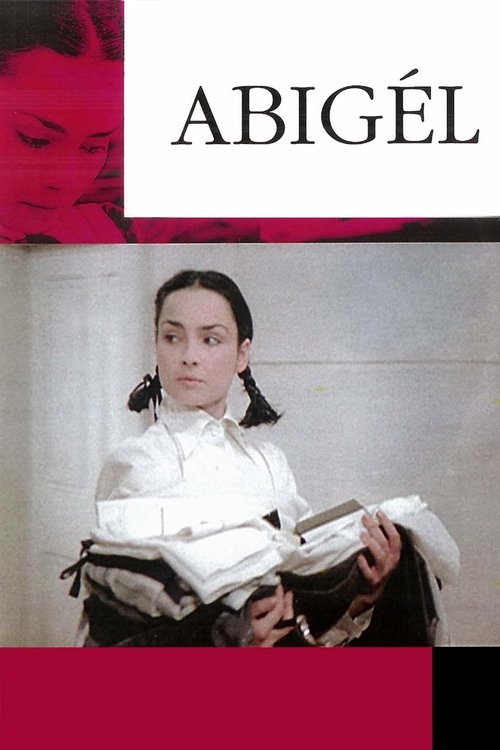
Certain screen works manage to reach audiences far outside the nation that produced them, and Abigel stands among them. Drawing on a novel cherished by Hungarian readers, this four-episode drama debuted on Magyar Televízió in 1978 and has held a special place in the nation's television heritage since. It pairs a coming-of-age tale with the gathering storm of World War II, and its blend of classroom rivalries, concealed intentions, and understated bravery keeps drawing in fresh viewers generations later.
What Is Abigel About? The Spoiler-Free Premise
Abigel (original title Abigél) follows Vitay Georgina, a well-off adolescent growing up in Hungary during the war, whose father—a general—abruptly and without explanation places her in a rigidly disciplined Calvinist boarding school for girls in a provincial town. He refuses to share his motives, and that secrecy forms one of the narrative's key puzzles.
Georgina, known as Gina, enters the Matula institute as a stranger. Accustomed to the comforts of the capital, she finds it hard to connect with her peers, and an early mistake leaves her alone precisely when companionship matters most. While she comes to understand the hidden codes of dormitory routines, bonds, and feuds, the world outside the school grounds grows steadily more perilous.
Drama is the series' primary register, yet the wartime era lends every schoolyard dispute a heavier significance. Without spoiling anything, prospective viewers should be aware that the story eventually uncovers the true reason Gina was sent away, and that disclosure reshapes the whole tale.
Season Structure and Episode Format
Abigel aired as one season totaling four episodes, each running about seventy minutes. This format allows the adaptation ample space: instead of squeezing Magda Szabó's novel into one film, the story unfolds in several installments, letting both school relationships and historical pressures mature together.
Broadcasting took place in April 1978, beginning on April 14 and concluding on April 23. The brief, tightly packed run makes it feel like a serialized novel enjoyed over a handful of evenings, and it is frequently regarded as a mini-series rather than a continuing program. Its status is listed as ended, meaning audiences receive a finished story with a clear resolution.
Main Cast and Characters
Éva Szerencsi heads the ensemble as Vitay Georgina, the general's daughter around whom the plot revolves. Her portrayal carries the series, tracing Gina's evolution from disoriented newcomer into a person transformed by adversity and devotion.
The supporting cast fills the boarding school with memorable figures. Ildikó Piros portrays Zsuzsanna, while Ágnes Bánfalvy appears as Torma Piroska and Kati Egri as Bánki Anna—classmates who make up part of Gina's world of friends and adversaries. Nóra Tábori embodies Truth Gertrúd, the imposing director of the institute, whose firm Calvinist convictions shape every aspect of institutional life. Éva Schubert takes the role of teacher Gigus, and Hédi Temessy plays Sister Erzsébet.
The adult sphere is covered by Dezső Garas as the teacher Kőnig, Lajos Básti as Torma Gedeon, and Lajos Balázsovits as Kalmár Péter. Each of these characters contributes to the story's larger design, though spelling out their purposes would venture into spoilers.
Creators, Writer, and Production
Éva Zsurzs created and directed Abigel; she was a leading name in Hungarian television drama whose output helped shape the medium's celebrated period in the country. Her version is commonly considered among the finest adaptations of a literary work for the small screen in Hungarian broadcast history.
Magda Szabó penned the screenplay, adapting her own book. The author's hands-on participation is frequently pointed to as the main reason the series preserves the mood and moral depth of the novel so faithfully. Hajnal Sellő served as editor.
The production was mounted for Magyar Televízió, with MTVA listed among the companies behind it. As a state-broadcaster venture of the late 1970s, it exemplifies the refined, literature-oriented style of drama typical of Hungarian television in those years.
Network, Broadcast Status, and Availability
Magyar Televízió, the country's national public broadcaster, both produced and first aired the series. Every episode reached the airwaves inside a ten-day window in April 1978, a compressed schedule typical of high-prestige literary adaptations of that time.
The program concluded its original broadcast long ago and exists as a finished, one-season work. Audiences in the United States face limited but real options: the series occasionally surfaces via streaming catalogs and home-video editions devoted to classic international television, so checking current regional listings pays off.
Since it originates from 1970s broadcast production, viewers should anticipate standard-definition visuals and the narrative rhythms of its day—qualities that now form part of its vintage appeal.
Themes, Tone, and Style
Fundamentally, Abigel examines loyalty, hidden truths, and bravery in matters of conscience. The boarding-school backdrop lets the series show how young people construct private codes of conduct, how confidence is gained and lost, and how a community of girls under strain can behave with both cruelty and fierce protectiveness.
The wartime setting contributes a further dimension. As Nazi Germany's shadow spread over Europe and Hungary became entangled in the fighting, the school's sheltered realm turned into a fragile refuge. Terms linked with the series—among them Calvinism, wonder, and a statue—point toward the symbolic touches that lend both novel and adaptation their singular character, though their significance is best experienced directly.
In tone, the show balances tenderness with seriousness. Dormitory scenes and classroom politics carry real humor, yet the drama never overlooks the threat building beyond the gates. Its rhythm is unhurried and literary, true to its source material.
Who Will Enjoy Abigel?
Audiences drawn to literary adaptations, coming-of-age narratives, and period pieces set during World War II will find plenty here to savor. Devotees of boarding-school stories—whether classic girls' school fiction or newer series in that lineage—will know the genre's familiar delights: bonds tested by hardship, formidable headmistresses, and secrets whispered along corridors.
The program also speaks to anyone curious about Hungarian culture and broadcasting history, as it is regularly cited among Magyar Televízió's most treasured productions. Readers of Magda Szabó, whose books have gained a broad international readership in recent years, may be particularly keen to see how closely the novelist adapted her own prose.
Those after rapid-fire thrillers or modern production polish should recalibrate their expectations; this is a measured, conversation-heavy drama from 1978 that repays patience.
Where to Watch Abigel
Abigel first aired on Magyar Televízió and is distributed via MTVA. Access differs by region, and American viewers should review current streaming options to determine whether a platform carrying classic international drama offers the series.
Given that it is a finished four-episode work, it makes for a manageable weekend watch. Reputable streaming services specializing in European film and television are the most dependable places to look, and Hungarian public broadcasters have in the past made the program available to home audiences.
Frequently asked questions
How many episodes of Abigel are there?
Abigel comprises one season of four episodes, each lasting roughly seventy minutes. The series is finished and self-contained, with every episode first shown by Magyar Televízió during April 1978.
Is Abigel based on a book?
Yes. The series adapts the novel Abigél by Magda Szabó, one of Hungary's most renowned writers. Szabó herself wrote the screenplay, a fact often credited with keeping the original book's spirit and tone intact.
When was Abigel first broadcast?
The premiere took place on April 14, 1978, and the concluding episode aired on April 23, 1978, on Hungary's national public service, Magyar Televízió.
What is Abigel about without spoilers?
It centers on Vitay Georgina, a general's daughter dispatched without explanation to a strict Calvinist girls' boarding school in provincial Hungary amid World War II. As she copes with loneliness, friendship, and schoolyard conflict, the reason behind her placement slowly comes to light.
Who directed Abigel?
Éva Zsurzs both created and directed the series and is counted among the foremost directors of Hungarian television drama. The screenplay came from novelist Magda Szabó, with editing handled by Hajnal Sellő.

















Comments (0)
Log in or create a free account to comment, rate and write reviews.