
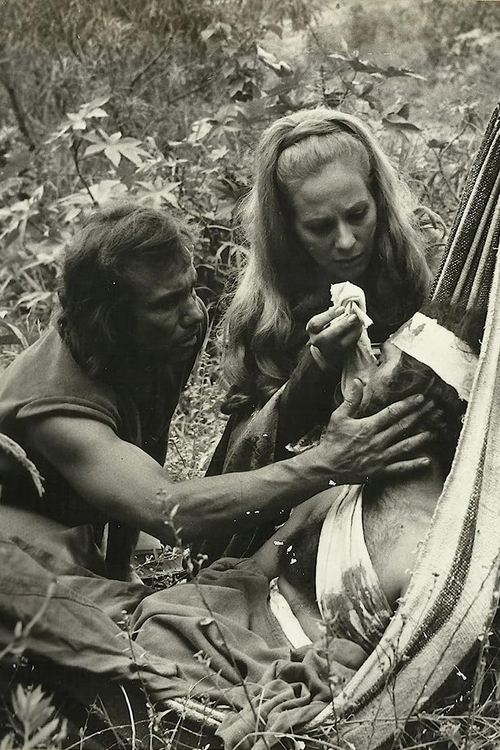
Certain broadcasts transcend mere entertainment and come to define an era of their medium. A Muralha, the Brazilian drama serial shown on TV Excelsior between July 1968 and March 1969, is one such program. Drawn from a respected work of literature and carried by an extraordinary ensemble of performers, it continues to serve as a key reference point for anyone tracing the rise of the telenovela as a cultural force.
A Turning Point for Brazilian Television
By the time A Muralha first aired in July 1968, television in Brazil was still maturing as an art form. Daily serial drama was gaining ground, and stations were turning to literary sources to give their programming greater weight and credibility. TV Excelsior, then among the country's most prominent broadcasters, threw its weight behind a production designed to rise above the ordinary.
The gamble succeeded. Across one season, the show delivered 210 episodes before wrapping up in March 1969. Sustaining a daily program at that scale required extraordinary commitment from everyone involved behind and in front of the camera, and the serial is frequently cited as evidence that the small screen could treat serious literature with respect while still attracting a broad audience.
What the Story Is About, Without Spoilers
A Muralha is fundamentally a family saga set against the backdrop of Brazil's past. Its narrative revolves around the Olinto clan, a large household whose bonds, rivalries and loyalties drive the action. Echoing the wall referenced in the title, the family operates as both shelter and prison, offering protection to its members while holding them within its bounds.
Since the serial draws on a novel by Dinah Silveira de Queiroz, it possesses a literary richness that set it apart from much of the programming around it. The breadth of the source work gave the drama space to unfold at its own pace, letting relationships mature and conflicts deepen over the course of its lengthy run.
Season Layout and Broadcast Rhythm
The serial was structured as one uninterrupted season totaling 210 installments, following the daily-broadcast pattern that defined the classic telenovela. This was the norm for Brazilian serial fiction of the period, and it dictated the storytelling style: suspenseful endings, gradually escalating disputes and shifting family relationships brought viewers back each day.
Broadcasting began in July 1968 and finished in March 1969, at which point the story reached its end. Long before the age of binge-viewing, it was crafted around a daily habit, with every episode serving both as a chapter of its own and one tile in a far bigger picture.
The Cast: Legends on Screen Together
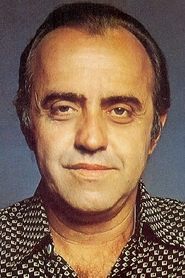
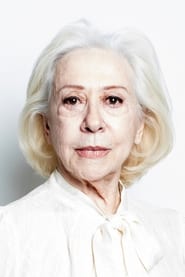
Very few productions of that period assembled a lineup as distinguished. Leading the company was Mauro Mendonça in the role of Dom Braz Olinto, the patriarch at the center of the tale, opposite Fernanda Montenegro, widely regarded as one of Brazil's greatest actresses, as Mãe Cândida Olinto. Together they gave the saga its emotional and dramatic foundation.
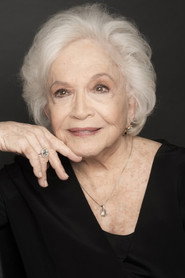
The ensemble surrounding them reads like a roll call of Brazilian acting greatness. Rosamaria Murtinho featured as Isabel Olinto, Edgard Franco as Tiago Olinto, Arlete Montenegro as Cristina de Godói, and Nathália Timberg as Basília Olinto. Gianfrancesco Guarnieri played Leonel Olinto, Nicette Bruno took the part of Margarida Pedroso Olinto, Maria Isabel de Lizandra appeared as Rosália Olinto, and Paulo Goulart completed the principal lineup as Bento Coutinho. A great number of these actors would go on to shape Brazilian theatre and film for generations, which makes the serial a remarkable early record of their gifts.
Behind the Scenes: Writers and Directors
Ivani Ribeiro, a towering name in the development of the Brazilian telenovela, created the series. She transformed the novel by Dinah Silveira de Queiroz into the rigorous framework of daily television, and the partnership between the two writers supplied the production with both literary ambition and serialized drive.
At the helm were directors Sérgio Britto and Gonzaga Blota, figures linked to the foundational period of drama on Brazilian TV. Navigating the technical limitations of broadcasting in the late 1960s, they contributed to forging the visual and narrative conventions that subsequent telenovelas would inherit.
Network and Broadcast History
TV Excelsior produced and aired A Muralha, a station that left a considerable mark on Brazilian television before it ultimately shut down. The serial ran from 1968 into 1969 and, once its 210 installments were complete, formally concluded. No further seasons followed, which fits the telenovela model, in which a story is built toward a definitive ending rather than open-ended continuation.
As a product of its time, the program stands as a record of a particular chapter in broadcasting, when stations were committing serious resources to domestic drama and bringing respected literature to the screen.
Tone, Themes and Style
Consistent with its literary source, A Muralha carries a dramatic, novelistic tone. Loyalty to family, obligations passed down through generations, and the friction between personal wishes and collective responsibility sit at the core of its appeal. The Olinto home serves as a miniature society, with every character representing a distinct stance toward the weight of tradition.
In visual and structural terms, the serial embodies 1960s telenovela practice: studio-based staging, dialogue at the forefront, and a measured, book-like rhythm. Modern audiences used to faster storytelling may perceive it as unhurried, yet that very tempo is what allows its emotional force to build steadily across the long run.
Who Should Watch It
This serial will appeal most to those drawn to television history, vintage Brazilian drama, or the development of the telenovela format. Admirers of Fernanda Montenegro and the other iconic names in the company will treasure the chance to see them at an early stage of their careers.
It also suits patient audiences fond of family chronicles and literary adaptations, especially viewers interested in how novels were converted into daily serials in the days before streaming and prestige television. For scholars investigating the roots of Brazilian broadcasting, it is indispensable material.
Availability and Viewing Options
Given its late-1960s origin, A Muralha is harder to find than current programming. Audiences in the US are advised to look through present-day streaming libraries and classic TV collections, since licensing arrangements for older foreign dramas shift often.
Where streaming proves difficult, retrospectives and archival material presented by Brazilian television scholars occasionally make episodes or related documents available, and written accounts of the series offer another route into its story and importance.
Frequently asked questions
What is A Muralha about?
It is a Brazilian drama telenovela built around the Olinto family, based on a novel by Dinah Silveira de Queiroz. Across its novelistic length, it examines loyalty, tradition and conflict within a household.
When did A Muralha air and how many episodes are there?
It debuted in July 1968 on TV Excelsior and finished in March 1969 after one season consisting of 210 episodes, adhering to the daily schedule characteristic of telenovelas from that period.
Who created A Muralha?
Ivani Ribeiro created the series, adapting the novel by Dinah Silveira de Queiroz. Directing responsibilities were split between Sérgio Britto and Gonzaga Blota.
Who stars in A Muralha?
Mauro Mendonça appears as Dom Braz Olinto and Fernanda Montenegro as Mãe Cândida Olinto, joined by Rosamaria Murtinho, Nathália Timberg, Gianfrancesco Guarnieri, Nicette Bruno, Paulo Goulart and more.
Is A Muralha still on the air?
No. Its single season ended in 1969. Conceived as a self-contained story in the telenovela tradition, it concluded its narrative rather than extending into additional seasons.
















Comments (0)
Log in or create a free account to comment, rate and write reviews.