
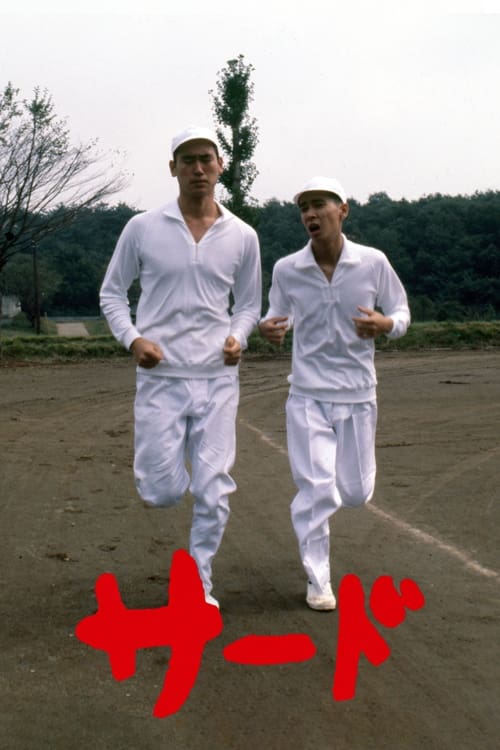
Certain films make little noise on arrival yet stay with you well past the final frame. Third Base, a Japanese drama released in 1978 under the direction of Yōichi Higashi, belongs to that category. Scripted by the renowned author Shūji Terayama, it follows a young man living without purpose until his aimlessness leads him into a devastating situation. The picture stands as a notable piece of late-1970s independent filmmaking in Japan.
Drifting Through Life, Paying the Price
At the story's center is a young man called Third, portrayed by Toshiyuki Nagashima. He holds no job, harbors no particular goals, and shows little interest in shaping a future. His days pass in the company of two young women who occasionally earn money through informal sex work, and at times he serves as an intermediary in those dealings.
This fragile existence falls apart after a clash with a young gangster spirals out of control, leaving Third responsible for the man's death. How he copes with what he has done — and what it reveals about someone who had never taken his own prospects seriously — becomes the heart of the picture.
Steering clear of spoiling the ending, it is fair to describe Third Base as a film more concerned with aftermath than with the deed itself: the burden carried by a person forced to confront, for the first time, the seriousness of a life he had never bothered to examine.
The Performers on Screen
Nagashima anchors the picture in the role of Third, capturing both the character's emotional distance and the vulnerability hidden beneath it. His work gives the protagonist enough dimension that viewers can grasp why those around him put up with him, even as his behavior grows harder to defend.
A colorful supporting ensemble surrounds him. Tsuguaki Yoshida appears as 2b, while Aiko Morishita and Akiko Shikata take on roles tied to the newspaper club and the tennis club. Yūko Katagiri stands out as the Woman with the Red Sweater, and Chiyoko Shimakura lends warmth to her portrayal of Third's mother.
Experienced character performers strengthen the film further: Taketoshi Naitō appears as a judge and Toru Minegishi as a yakuza, grounding both the legal and underworld dimensions of the narrative. Hajime Nishizuka and Yutaka Nemoto complete the cast.
The Creative Team Behind It
By the late 1970s, Yōichi Higashi had already made his name in Japanese film, recognized for work blending social commentary with a lyrical, personal touch. For this project he collaborated with Shūji Terayama, a towering and unconventional figure in Japanese letters whose roots in poetry and experimental theater lent his screenwriting a singular flavor.
Art Theatre Guild, the company long linked to Japan's boldest independent productions, handled the film. That background is evident in how comfortably the movie dwells on difficult material and treats a shabby, marginal slice of society with genuine seriousness.
Behind the scenes, the craft contributions are equally important: Koichi Kawakami's cinematography supplies the film's visual texture, Keiko Ichihara's editing establishes its rhythm, and Michi Tanaka composed the original score. Katsuhiro Maeda served as producer.
Mood, Meaning and Approach
Fundamentally, Third Base examines aimlessness — the moment when a life lived without purpose suddenly generates a consequence that can never be reversed. The title nods to baseball, a sport built on positions and waiting, and the hero's nickname hints at a person parked at the margins of the action rather than its center.
The film walks a line between the ordinary texture of daily drifting and the weight of the crime that arrives midway through. Higashi avoids turning the violence into spectacle; instead, the story traces how a single act echoes outward through families, institutions, and the delicate bonds Third has formed.
In style, the picture sits within a lineage of Japanese independent drama that prizes mood and character over plot machinery. Audiences who respond to that sensibility will find much to admire in its measured pace and quietly watchful gaze.
Is This Film for You?
The movie will resonate most with anyone curious about Japanese filmmaking in the 1970s, especially the independent titles tied to Art Theatre Guild. Admirers of Terayama's writing will be curious to see how his voice meshes with Higashi's direction.
It also suits viewers who favor character studies dealing with youth, disaffection, and accountability. Anyone anticipating a brisk crime thriller should recalibrate: this is a patient, reflective work where the drama springs from people rather than twists.
Viewing Options
Audiences in the United States can stream Third Base through online platforms, making it easy to watch from home. Because availability shifts across services and over time, checking current listings is the surest way to find where it is currently offered.
As a 1978 title from a Japanese independent studio, it will not be carried universally, yet its presence in the American market places it well ahead of many contemporaneous films in terms of accessibility.
What to Watch Next
For those who connect with Third Base, 1970s Japanese drama offers abundant further exploration. Art Theatre Guild's slate from that era includes many character-driven works mixing social realism with formal daring, making the label's catalog a fruitful route for inquisitive viewers.
Stories of idle youth and the repercussions of violence surfaced repeatedly in Japanese cinema of the period, and Higashi's other films are a logical follow-up for anyone drawn to his style here. Terayama's own forays into directing provide another, quite distinct angle on the same imagination that produced this screenplay.
Frequently asked questions
What is the plot of Third Base?
The story follows Third, a purposeless young man who keeps company with two women engaged in informal sex work and occasionally mediates for them. When a run-in with a young gangster ends in the gangster's death at Third's hands, the film turns to the fallout from that act.
Who was behind the camera for Third Base?
Yōichi Higashi, an established Japanese director, helmed the film from a screenplay by the influential writer Shūji Terayama. Art Theatre Guild produced it, and it reached theaters in 1978.
What is the runtime of Third Base?
The film runs 102 minutes. It is a Japanese-language drama made in Japan and released in 1978.
Who appears in Third Base?
Toshiyuki Nagashima heads the cast in the role of Third, joined by Tsuguaki Yoshida, Aiko Morishita, Akiko Shikata, Yūko Katagiri, Chiyoko Shimakura, Taketoshi Naitō, and Toru Minegishi, plus others.
How can I watch Third Base in the United States?
US audiences can access the film via streaming services. Since platform availability changes over time, it is wise to consult current listings to locate it.














Comments (0)
Log in or create a free account to comment, rate and write reviews.