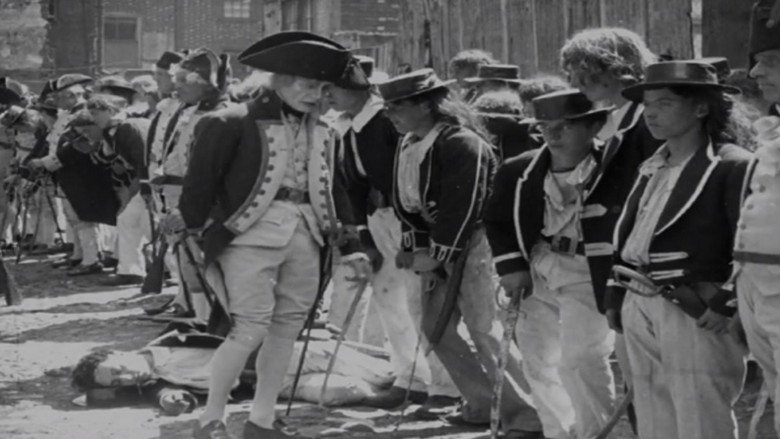
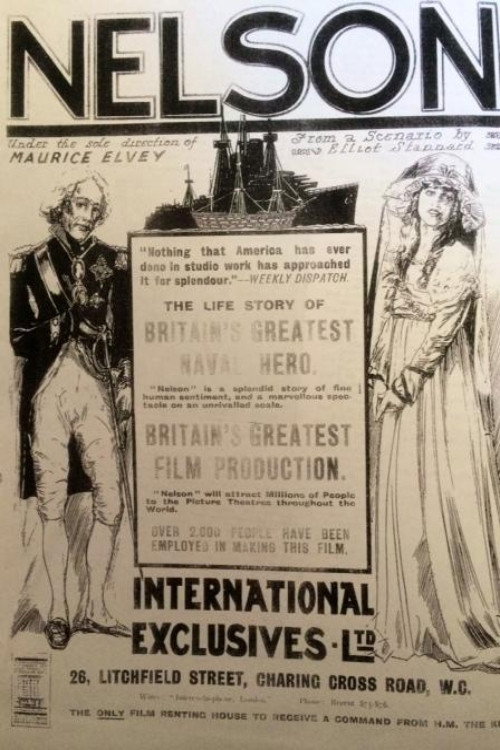
Decades before sweeping historical epics became standard big-screen fare, British filmmakers took on one of their era's boldest challenges: a full-length cinematic portrait of Admiral Horatio Nelson. The picture premiered in 1918, at a time when moviegoers were eager for tales of national heroes, and it aimed to present both the celebrated legend and the private individual beneath it.
What Is Nelson About?
Classified as a drama with romance woven throughout, the film chronicles the life of one of Britain's most renowned naval figures. Instead of zeroing in on one particular battle or moment, it adopts a wider lens, covering Nelson's entire life story.
The screenplay draws on Robert Southey's novel, guiding audiences from Nelson's childhood through his ascent to fame at sea. Beyond the naval action, considerable attention is paid to his private world, above all his bond with Lady Hamilton, a romance that scandalized and fascinated contemporaries alike.
Without spoiling the plot's turns, audiences can anticipate a narrative that balances duty against affection, showing how the personal decisions of a public icon became woven into his lasting legend.
The Cast and Their Performances
In the lead role, Donald Calthrop embodies Horatio Nelson, a character requiring both the grandeur of a national icon and the tenderness of a man navigating a tangled romantic life. Calthrop was a well-known performer of his day, and this part positioned him at the center of one of the period's major productions.
Playing across from him is Malvina Longfellow as Lady Hamilton, who animates the film's love story. Ivy Close takes the part of Mrs. Nesbit, and Allan Jeayes appears as Sir William Hamilton, completing the intimate circle at the story's core.
The supporting players enrich the historical backdrop. Ernest Thesiger, whose career would stretch well into the talking-picture age, appears as William Pitt. Edward O'Neill portrays the King of Naples, Teddy Arundell plays Captain Berry, and Eric Barker depicts Nelson in his boyhood, letting the film depict the admiral's early years. Rounding out the ensemble are Judd Green and Edmund Freemantle.
Director, Writer and Production
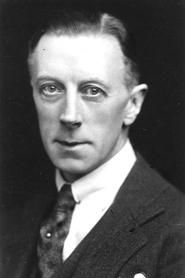
Guiding the production was Maurice Elvey, among the busiest directors working in British silent film. Renowned for his output and his range across different kinds of stories, Elvey took on a large-scale biographical feature that represented a major challenge for its time.
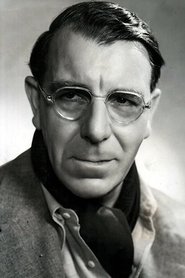
Eliot Stannard, a central figure in early British screenwriting, prepared the script, adapting Robert Southey's novel for the screen. The literary source gave the project weight, grounding its depiction of the admiral in a familiar published account of his life.
Financing came from Master-International Exclusives together with Apex Film Company Limited, with the picture produced as a British-American collaboration. Running roughly two hours, it was a lengthy feature for 1918, underscoring the ambition of presenting an entire life story on screen.
Themes, Tone and Style
Being a silent-era work, the picture communicates through imagery, title cards and expressive acting in place of spoken lines. Its mood mixes patriotic drama with personal romance, a pairing that fits a subject whose battlefield victories and private affairs were both widely known.
At its heart, the film examines the pull between duty and love, the forging of a hero, and how intimate connections shape a public reputation. Its two-nation origins, spanning the United States and the United Kingdom, mirror how broadly the Nelson story appealed, reaching audiences far outside Britain.
For today's audiences, the film also offers a glimpse of how late-1910s moviemakers handled historical biography: expansive in reach, sincere in spirit, and willing to portray a national icon as an ordinary human being.
Who Will Enjoy Nelson?
The picture will resonate most with those fascinated by silent film and the early history of British cinema. Its duration and rhythm are firmly rooted in its period, so curiosity and patience pay off more than a preference for contemporary pacing.
History buffs, especially anyone interested in naval affairs or the Napoleonic age, will recognize the figures brought to life here, among them Nelson, Lady Hamilton and William Pitt. Admirers of period romance will likewise find plenty to enjoy in the film's handling of one of history's best-known love affairs.
Students and scholars of cinema may find it particularly valuable as an early instance of the feature-length biopic, a form that would expand dramatically in the years to come.
Where to Watch Nelson in the US
Audiences in the United States can find Nelson on streaming services. Like many films of this age, its availability may shift over time and from one platform to another, so checking current listings beforehand is advisable.
Given the film's vintage, its picture quality may not match modern standards, but for silent-cinema fans that is part of the draw: it offers the chance to encounter early British historical filmmaking much as viewers in 1918 did.
Similar Titles Worth Exploring
Anyone keen on screen versions of Nelson's story may wish to look for other adaptations of the admiral's life, a subject filmmakers on both sides of the Atlantic have returned to repeatedly.
Those who appreciate the film's mix of biography and romance might also be drawn to later historical dramas about naval leaders and national heroes, a lineage that traces back to productions of exactly this kind. And to better understand the film's artistry, watching additional titles directed by Maurice Elvey provides a wider view of British silent cinema at its most ambitious.
Frequently asked questions
When was the movie Nelson released?
Nelson premiered on 2 January 1918. It is a silent biographical drama made as a British-American co-production by Master-International Exclusives and Apex Film Company Limited.
Who plays Horatio Nelson in the 1918 film?
Donald Calthrop stars as Horatio Nelson. Malvina Longfellow portrays Lady Hamilton, and the supporting cast features Ernest Thesiger as William Pitt and Eric Barker as Nelson as a child.
Who directed Nelson (1918)?
Maurice Elvey, one of the most prolific filmmakers of the British silent era, directed the picture, working from Eliot Stannard's screenplay adapted from Robert Southey's novel.
How long is the movie Nelson?
The runtime is approximately 126 minutes, a considerable length for its era and a full-scale telling of its subject's life and romances.
Is Nelson suitable for viewers who don't usually watch silent films?
It can be, particularly for those drawn to history or early filmmaking. Its rhythm and visual approach are products of 1918, so first-time silent viewers should treat it as a historical artifact as much as a drama.






Comments (0)
Log in or create a free account to comment, rate and write reviews.