
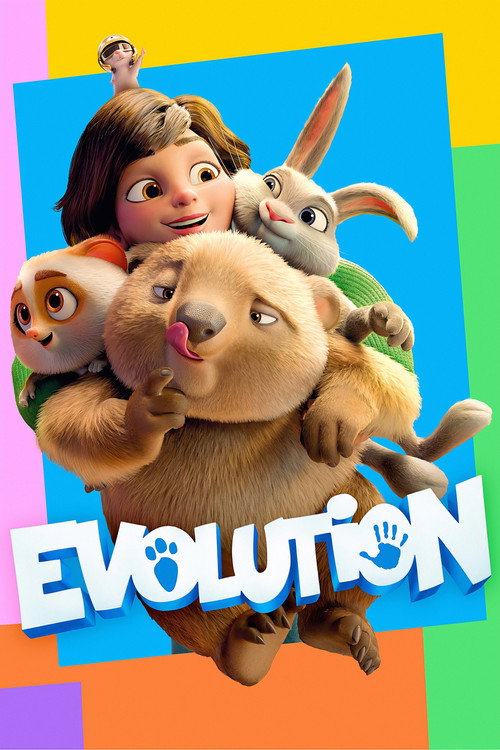
Family animation has long been drawn to experiments gone haywire, and Evolution embraces that tradition wholeheartedly. This Basque-language feature, produced in Spain, asks what might happen if a mysterious otherworldly material began rewriting the genes of a single unlucky family. What follows is a fast-paced 94-minute comedy about self-discovery, cooperation, and animals finding their voices, landing in 2026 with a voice ensemble of Spanish and Basque talent and a directing duo that clearly relishes mayhem.
The Story of Evolution, Explained Without Spoilers
The setup is refreshingly straightforward: Zoe, a young girl, lives alongside a menagerie of unusual pets. When an alien material merges her genetic makeup with theirs, the line separating person from beast starts to dissolve. Human beings begin acting like creatures, while the animals display strikingly human behavior.
What begins as a household mishap soon balloons into a globe-spanning adventure. Zoe, her altered companions, and an expanding group of allies must learn to collaborate even though they no longer share the same biological vocabulary. The stakes are appropriately grand for a family picture: the planet is in danger, and only a united effort can rescue it.
Rather than venturing into grim science fiction, the movie mines the swap for humor, keeping it welcoming for children while slipping in a few knowing jokes for grown-ups.
Voice Cast and Acting Highlights
The film assembles a large troupe of Spanish voice performers. At the center is Elena Jiménez, who plays Zoe, the girl whose genetics ignite the entire plot, and her delivery carries the story's blend of astonishment and pandemonium.
Surrounding her, the animal characters brim with individuality. Claudia Caneda lends her voice to Peggy, Juan Amador Pulido Fernández handles Gordon, and Luis Posada brings Rufus to the screen. Andrea Villaverde performs as Blinky, and Iker Bengoetxea Goya tackles two roles at once, voicing both Womby and Kyle. Completing the lineup are Rodrigo Martín Sacristán as TJ, Silvia Sarmentera as Ronnie, Vera Bosch Moreno as Donna, and José María Larrú Cuevas as Sr. Ramírez.
Because so many characters slide between species, the vocal performances shoulder much of the humor, and the ensemble's comic timing is key to what makes the film work.
Behind the Camera: Directors, Writers, and Studios
At the helm are Julio Soto Gúrpide and Zayra Muñoz Dominguez, with Soto Gúrpide additionally penning the screenplay in partnership with José Tatay Bouzas. Story and screenplay duties are shared with Miguel Morán and Adela Gutiérrez, resulting in a compact, collaborative writing group.
On the production side, three Spanish companies—The Thinklab, 3 Doubles Producciones, and Beta Fiction Spain—joined forces, with Adriana Malfatti Chen acting as both executive producer and producer, working alongside Eneko Gutiérrez Sola. Muñoz Dominguez also serves as editor, sharpening the picture into a lean 94 minutes.
Alfred Tapscott composed the score, with his music reinforcing the movie's buoyant, energetic rhythm. It is also worth noting that the dialogue is in Basque, an uncommon choice for animation with international reach, lending the film a strong regional character within Spain's animation industry.
Tone, Themes, and Artistic Approach
Beneath the antics, Evolution is fundamentally about seeing the world through another's eyes. With people and animals literally exchanging traits, the film can gently mock both camps, and its guiding message centers on collaboration: individuals who barely comprehend one another must discover shared footing to confront a common threat.
The mood stays breezy and funny from start to finish, calibrated for family viewing. The transformation chaos delivers a steady stream of visual comedy, while the alien-material premise lends a science-fiction sheen that never turns scary or heavy.
As a fully animated production, the film can stretch its metamorphoses as far as the humor demands, and its mix of animation, comedy, and family adventure makes it a simple entry point for children while moving quickly enough to hold parents' attention.
Who Should Watch It
Families are the obvious audience here. Little ones will delight in the talking beasts and the slapstick of people acting like household pets, while older children and parents can appreciate the deeper question of what defines humanity.
Anyone curious about animation made outside the big American studios should take notice too, as the film reflects the expanding output of Spanish animation, created across three Spanish studios and performed in Basque.
If your family loves creature comedies built around a save-the-world mission and an unmistakable lesson about teamwork, this picture checks every box.
How to Stream Evolution in the US
Evolution premiered on February 6, 2026, and American viewers can now access it via digital platforms. Like most animated titles of this sort, it is generally listed on leading streaming and digital rental services, so browse the catalog of your usual platform to see where it currently sits.
Since availability tends to change over time, a direct title search on your go-to service is the surest way to confirm it is streaming in your area before planning your movie night.
Other Movies You Might Like
If the combination of body-swapping and household pets grabs you, family animation offers plenty of follow-up viewing. Pictures built on transformation humor, chatty animal ensembles, and kids partnering with creatures all share common ground with Evolution.
Seek out animated comedies in which everyday domestic life runs into the extraordinary—whether via animal leads, scientific accidents, or visitors from outer space. The Spanish and wider European animation scene also rewards deeper exploration, having delivered a consistent run of family features with distinct regional character and voice talent.
With its mix of sci-fi absurdity and warm-hearted cooperation, Evolution pairs naturally with any movie night devoted to transformation comedy.
Frequently asked questions
What language is Evolution in?
Evolution was produced in Spain with dialogue performed in Basque, a notable distinction among European family animated features. Julio Soto Gúrpide and Zayra Muñoz Dominguez directed it, while The Thinklab, 3 Doubles Producciones, and Beta Fiction Spain produced.
When did Evolution come out?
It reached audiences on February 6, 2026. The film runs 94 minutes—an efficient length for young viewers—and is categorized as an animated comedy suitable for the entire family.
Who voices Zoe in Evolution?
Elena Jiménez provides the voice of Zoe, the girl whose DNA is combined with that of her exotic pets by an alien substance. The wider cast features Claudia Caneda as Peggy, Luis Posada as Rufus, and Andrea Villaverde as Blinky.
Is Evolution suitable for kids?
Absolutely. It is a family comedy with a gentle, humorous tone, focused on people and animals trading traits and discovering how to cooperate. The 94-minute length and animated format make it very approachable for children.
Where can I watch Evolution in the US?
Following its February 2026 debut, Evolution can be viewed by US audiences on digital platforms. Look for it on major streaming and digital rental services, keeping in mind that catalogs change over time.












Comments (0)
Log in or create a free account to comment, rate and write reviews.