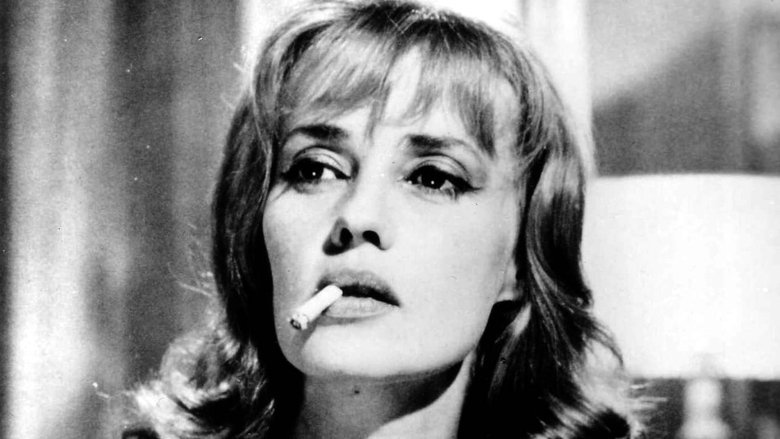
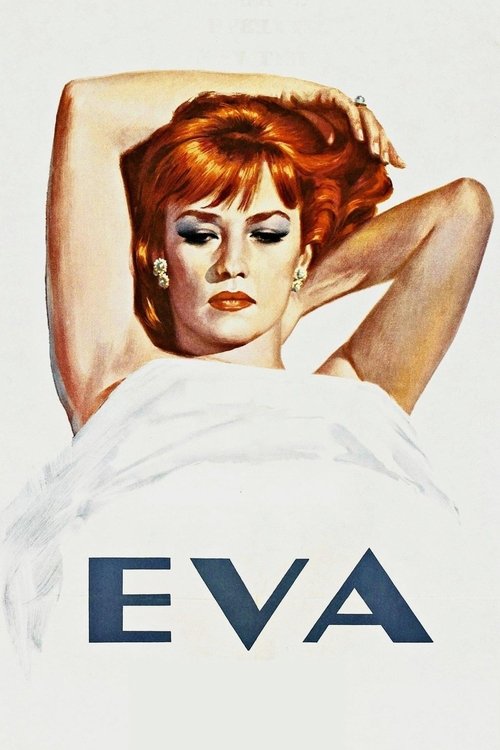


Few movies announce their menace as boldly as Eva does with its tagline: "They called her the 8th deadly sin!" This 1962 release, helmed by Joseph Losey and produced jointly by Italy and France, takes the classic machinery of noir and sets it loose among Venice's sunlit waterways. There, a prosperous novelist watches his charmed existence get dismantled piece by piece by a single irresistible and calculating woman. More than six decades on, it stands as one of early-sixties European cinema's harshest depictions of obsession.
What Eva Is About — The Premise Without Spoilers
Tyvian Jones has written a bestseller and now enjoys the sort of acclaim most authors can only fantasize about. Based in Venice, he glides from gala to gala, collects professional praise, and has a loyal fiancée, Francesca Ferrara, ready to marry him. By any measure, his tomorrow looks golden.
Then Eva Olivier enters the picture — a seductive Frenchwoman whose charm comes wrapped in mystery. Tyvian is smitten on the spot, wedding arrangements notwithstanding. What develops is not so much a love affair as a festering compulsion: Eva cares about cash, not commitment, and she is in no hurry to be won over.
Instead of cutting his losses, Tyvian chases her with an intensity that steadily corrodes his work, his personal ties and his common sense. The picture traces just how much a man will sacrifice for someone who, all signs suggest, plans to strip him bare and offer nothing in return.
Standout Cast and Performances
Everything hinges on the two central players, and neither disappoints. Jeanne Moreau — among the most influential actresses of her generation — renders Eva Olivier with an icy, impenetrable composure that renders her both hypnotic and disquieting. The script never softens Eva to make her likable, and Moreau wisely leaves her character's true motives just out of reach, exactly as the part requires.
Across from her, Stanley Baker gives Tyvian Jones a heavy, brooding presence, tracking a man whose self-assurance decays into raw need as events unfold. Baker, celebrated for rugged, unsentimental parts, grounds Tyvian's collapse so it reads as inevitable rather than theatrical.
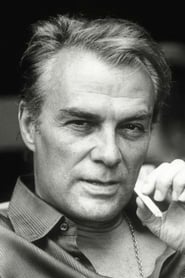
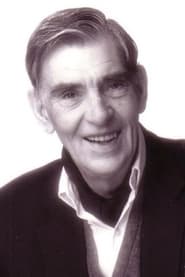
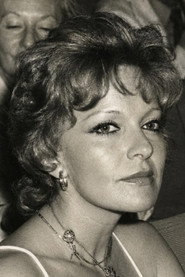
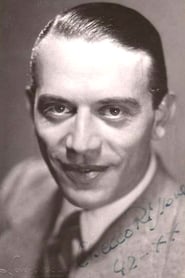
Around the leads, the ensemble fills out the world with skill. Virna Lisi appears as Francesca Ferrara, the fiancée whose tenderness throws Eva's coldness into relief. James Villiers takes the part of screenwriter Alan McCormick, while Lisa Gastoni shows up as the Red-Headed Russian. Giorgio Albertazzi plays Sergio Branco Malloni, a film director, though his name never appears in the on-screen credits. Riccardo Garrone, Checco Rissone, Enzo Fiermonte and Nona Medici complete the company.
Joseph Losey Behind the Camera
Born in America, Joseph Losey eventually redirected his career toward European filmmaking, and Eva belongs to the richest phase of that continental period. His hallmark qualities — restraint, precision, and a sharp eye for how class and appetite poison people — align seamlessly with this story.
Hugo Butler and Evan Jones penned the adaptation, working from a novel by James Hadley Chase, an author famed for tough, morally pitiless crime writing. That lineage accounts for the film's noir backbone: the fatal woman, the man headed for ruin, and the conviction that destiny is simply a bill awaiting payment.
Paris-Film Production and Interopa Film mounted the picture, with Raymond Hakim, Robert Hakim and Giorgio Baldi producing. Gianni Di Venanzo and Henri Decaë supply cinematography that renders Venice glamorous yet quietly threatening. Michel Legrand's music lends the film a refined, mournful undertone, and the cutting by Reginald Beck and Franca Silvi sustains tight rhythm over the 100-minute running time.
Themes, Tone and Style
Beneath the surface, Eva examines sexual fixation and the enduring myth of the femme fatale. The descriptors attached to the production — cruel intentions, gold digger, home wrecker, downfall — map its moral landscape: a man possessing everything wagers it on a woman who never offered him a thing.
The mood is acrid and clear-eyed. Unlike many contemporaneous dramas that coddle their heroes, Eva lays Tyvian open, and the film appears just as fascinated by his vanity as by Eva's malice. There's a neat irony in seeing a writer famed for authenticity destroyed by his own cravings.
The visual strategy is inspired: Venice, a city that practically defines romance, becomes the arena for emotional wreckage. Radiant outdoor scenes and graceful interiors clash pointedly with the ugliness of the central bond, lending the picture a singular, uneasy loveliness. Filmed in English as an Italian-French venture, it also documents the rootless, international crowd of artists and expatriates drifting through the lagoon city.
Who Will Enjoy Eva
This is a rewarding choice for anyone devoted to classic European art film and prickly character studies. Devotees of Jeanne Moreau will encounter one of her most glacially precise performances, and those familiar with Joseph Losey's subsequent output will spot his recurring preoccupations with status, shame and wounds of one's own making.
Noir buffs will likewise appreciate watching femme fatale tropes migrate from rain-slicked American boulevards to Venetian squares. Anyone hoping for breakneck plotting or neat closure should adjust accordingly: the rewards here are tonal and psychological, arriving through gradual attrition rather than dramatic reversals. Audience scores are modest, reflecting a divisive picture — hypnotic to some, grueling to others — though viewers on its wavelength often judge it a quiet treasure.
Where to Watch Eva
Audiences in the United States can stream Eva with a subscription on multiple platforms. It's currently offered on HBO Max, the Criterion Channel, and the HBO Max Amazon Channel. Its presence on the Criterion service feels appropriate for a film held in such esteem by admirers of sixties international cinema — though streaming lineups shift, so a quick check of current listings is advisable.
Similar Titles Worth Exploring
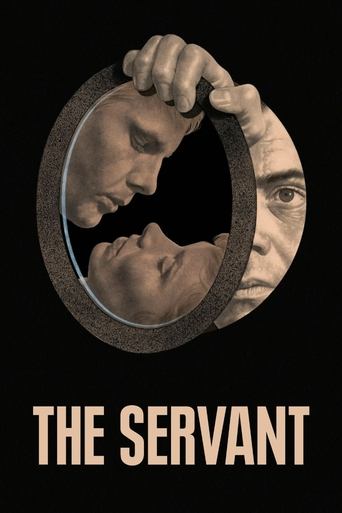
Should Eva land with you, a number of companion pieces make sensible next stops. Losey's sixties partnerships with dramatist Harold Pinter — The Servant and Accident — probe class, resentment and manipulation with a comparably frigid gaze, and 1964's The Pumpkin Eater further displays his mature continental style.
Jeanne Moreau's own catalog is the other obvious path: her collaborations with French New Wave filmmakers established her as the era's consummate screen enigma, and pairing those turns with Eva shows how completely she owned the fatal-woman archetype.
Those drawn to the source material can turn to James Hadley Chase's hard-boiled fiction for more of that same unforgiving psychology on the page. And anyone wanting a wider tour of fatal-attraction stories against opulent European settings will find the Italian-French co-productions of the early 1960s fertile ground.
Frequently asked questions
Who directed the movie Eva (1962)?
Joseph Losey, the American-born director who moved to Europe and built a reputation for cool, psychologically incisive dramas, helmed the film. Hugo Butler and Evan Jones wrote the screenplay, adapted from James Hadley Chase's novel.
Who stars in Eva alongside Jeanne Moreau?
Stanley Baker portrays Tyvian Jones, the writer whose existence comes apart after he encounters Moreau's Eva Olivier. The supporting lineup features Virna Lisi as Francesca Ferrara, plus James Villiers, Lisa Gastoni, Riccardo Garrone and, uncredited, Giorgio Albertazzi as a film director.
Where is Eva set and how long is it?
The story unfolds in Venice, Italy, where a famous novelist's glittering life is thrown into disarray by an enigmatic woman. The drama runs about 100 minutes and was made as an Italian-French co-production, shot in English.
Where can I stream Eva in the US?
American viewers can find Eva on subscription platforms including HBO Max, the Criterion Channel, and the HBO Max Amazon Channel. Since streaming catalogs change, confirm current availability before settling in.
Is Eva based on a book?
It is. The script adapts a novel by British writer James Hadley Chase, a master of hard-boiled crime fiction. Chase's grim, unsparing sensibility shapes the film's account of obsession, greed and ruin in a glamorous European setting.









Comments (0)
Log in or create a free account to comment, rate and write reviews.