
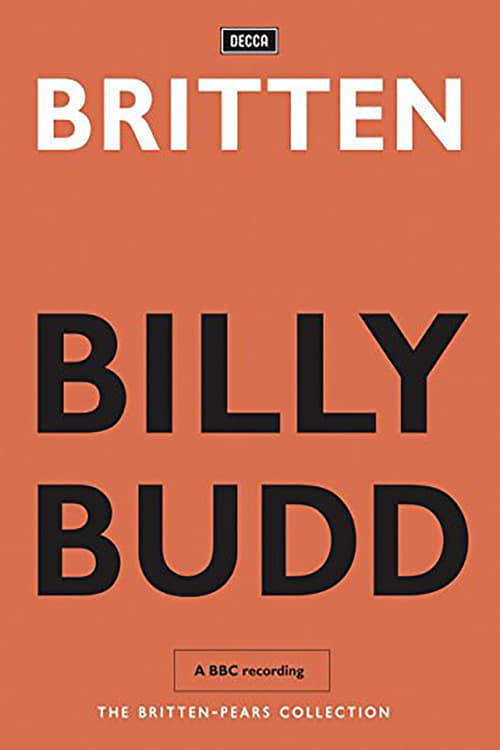
Some stage works seem born for the camera, and Benjamin Britten's Billy Budd is one of them—an opera already saturated with the weather, discipline, and moral tension of naval life. The BBC's 1966 screen version, which stretches past two and a half hours, presents the work in austere monochrome, matching a cast of Britain's leading opera singers to a tale that has unsettled readers ever since Melville committed it to the page.
What Is Billy Budd About?
The drama turns on a simple, devastating collision: innocence meeting malice. Billy, the young seaman at the center of the story, serves on a Royal Navy warship and radiates a natural decency that lifts the spirits of everyone around him. Yet that very goodness draws the hostile eye of John Claggart, the ship's master-at-arms, whose hatred of what Billy embodies drives the tragedy forward.
Drawing on Melville's novella and shaped for the stage by Britten alongside his closest creative associates, the narrative stays locked inside the vessel's cramped world, forcing the captain to balance law, obligation, and his own conscience. The question at its core—whether authority can honor moral truth when the two come into conflict—has kept the work alive for decades.
Steering clear of spoilers, the film retains the opera's tightening noose of accusation and verdict, closing on an ending that audiences and scholars have argued over ever since.
A Cast of Britten's Finest Interpreters
A key strength of this production is its casting: nearly every principal singer had a deep history with Britten's music. Peter Pears, the composer's closest artistic collaborator, sings Captain Vere, the officer whose recollection frames the whole tale and whose conscience bears its heaviest burden. Pears lends Vere a haunted inwardness that goes far beyond the usual portrait of command.
Baritone Peter Glossop supplies the title role with the strength and unguarded warmth the character demands, while Michael Langdon's Claggart stands as one of the coldest, most controlled evildoers in modern opera. Whenever the two share the stage, the tension is palpable.
The ranks below are filled just as capably. John Shirley-Quirk takes Mr. Redburn, Kenneth MacDonald appears as Red Whiskers, and veterans such as Bryan Drake, David Kelly, David Bowman, Dennis Wicks, and Robert Tear complete the crew, lending the ship a believable sense of a living, working community.
Behind the Camera: Direction and Production
Basil Coleman took on the perennial dilemma of opera on screen: honoring the score while creating something that plays as film, not merely a taped performance. His approach leans on closeness and mood, letting the monochrome imagery throw the gloom below decks into relief against the glaring light of the upper deck.
For the BBC, producer Cedric Messina approached the piece as genuine television drama rather than a routine relay of a stage show. That seriousness is evident in the film's generous running time and unhurried rhythm, which allow the score and story to unfold at the opera's own pace.
Shooting in black and white—long after color had become the norm—was a purposeful artistic choice. It matches the tale's moral severity, rendering the ship a landscape of grays where virtue and wrongdoing shade into one another uncomfortably.
Themes, Tone, and Style
Beneath the naval uniforms, Billy Budd is a work of moral philosophy. Its preoccupations—purity, envy, the clash between written law and true justice, and the weight carried by those obliged to pass judgment—run through Britten's music, which moves between vigorous maritime writing and passages of remarkable psychological depth.
The prevailing mood is grave and taut, punctuated by short stretches of crewmate warmth before events darken again. As the piece is sung from start to finish, its tempo belongs to the music, and viewers who settle into that rhythm will be richly rewarded.
The monochrome photography lends the film a severe, almost documentary timelessness. The vessel itself becomes a protagonist: a self-contained floating society, complete with its own rules, ranks, and perils, captured in images that feel at once historical and immediate.
Who Will Enjoy This Film?
For devotees of opera—and of Britten above all, whose stage works stand at the center of the last century's repertoire—this production is unmissable. Readers devoted to Melville will also find the source's spirit honored with striking faithfulness.
Fans of slow-building dramas of conscience, in which characters face impossible moral pressure, will discover plenty to admire even without knowing the score in advance. Commitment is needed, though: at 158 minutes, sung throughout, this is a work to immerse yourself in rather than sample.
Those studying British television will value it further as a specimen of the BBC's ambitious cultural output of the period, when the network devoted substantial means to filming landmark stage pieces.
Where to Watch Billy Budd
Audiences in the United States can find Billy Budd on streaming services specializing in classic British television and opera. Offerings shift between platforms and over time, so consulting up-to-date listings is the surest way to locate it.
As a BBC production cherished by opera fans, it also surfaces periodically in curated collections and home-video releases devoted to staged works on film. Whichever way you watch, its length and monochrome imagery deserve a full-sized screen rather than a phone or tablet.
Similar Titles Worth Exploring
If this film grips you, Britten's remaining operas are the obvious next destination. Pieces like Peter Grimes inhabit similar ground—the outsider, the verdict, the community that crushes what it fails to comprehend—and several have enjoyed notable screen adaptations.
Outside Britten, screen versions of operas drawn from literary classics form a rewarding field of their own, as do the stark, morally shadowed black-and-white British dramas of the 1960s. Book lovers might circle back to Melville too, whose writings on the sea reach far beyond his celebrated whaling novel.
And for viewers who favor spoken drama over sung, stories of naval duty and conscience—set aboard vessels where a small community must govern itself—deliver the same compressed, claustrophobic force that drives Billy Budd.
Frequently asked questions
Is Billy Budd an opera or a movie?
Both, in effect: it is a 1966 BBC television film of Benjamin Britten's opera, which in turn derives from Herman Melville's novella. Everything on screen is sung, performed by leading British opera singers of the day.
Who plays Billy Budd in the 1966 film?
Baritone Peter Glossop takes the title part, appearing alongside Peter Pears as Captain Vere and Michael Langdon as John Claggart—singers all closely tied to Britten's music.
How long is Billy Budd (1966)?
The running time is 158 minutes, a little over two and a half hours. Because the work is an opera, its rhythm follows the music, so plan for a full evening of viewing.
Was Billy Budd filmed in black and white?
Yes. The BBC shot the film in monochrome as a conscious stylistic decision, underscoring the story's stark moral climate and the shadowed world of the warship.
Do I need to know the opera to enjoy the film?
Not at all. The tale of an upright young sailor and the forces marshaled against him is straightforward to follow, though knowing Britten's score adds an extra layer of enjoyment.




Comments (0)
Log in or create a free account to comment, rate and write reviews.