
Yū Numazaki (沼崎悠) is a Japanese actor who worked steadily in both film and television for over twenty-five years, starting in the early 1980s and continuing into the late 2000s. Seldom cast in headline roles, he instead established himself as a reliable supporting player, showing up in detective stories, crime features and serialized television, with credits ranging from theatrical whodunits to science-tinged TV hits.
Early Life and Background
Numazaki entered the world on May 25, 1953, in Tokyo. Being raised in the capital meant living at the heart of Japan's entertainment business, an industry that during the 1970s and 1980s churned out vast quantities of theatrical features and weekly small-screen drama.
Little has been recorded about his childhood, education or how he broke into acting — a common situation for supporting performers of his era. What can be confirmed is that by the start of the 1980s he had begun appearing regularly on camera, assembling his career one project at a time.
Career Beginnings and Debut
His documented screen history opens in 1982, when he appeared in the theatrical feature The Highest Honour in the part of Captain Nomura. It was a weighty way to start: a role in a cinema release set in an earlier era, demanding that he stand alongside seasoned performers.
From the outset, a pattern emerged. Instead of being offered ordinary leading-man parts, he was repeatedly assigned figures in uniform or in positions of command — captains, detectives, physicians and directors would come to define his on-screen identity.
The 1980s: Crime Films and Mystery Cases
The 1980s formed the core of Numazaki's cinema output. He showed up as Detective Iwata in Danchizuma no sakebi (1983), then as Detective Yabe in Aijin Bank Satsujin Jiken (1984). In 1987 he was credited simply as a Detective in Deluxe Salon Car Engagement Tour Murders, and in 1990 he took the role of Aizawa in Luxury Yacht: First Love Tour Murder Case.
Viewed together, these credits reveal a distinct specialty. Many fall within Japan's murder-mystery tradition, where glamorous backdrops — an opulent yacht, a plush salon car, a group excursion — frame a criminal investigation. In such stories the detective anchors the narrative, guiding spectators through the puzzle, and Numazaki filled that function repeatedly, indicating that filmmakers had confidence in his ability to convey believable, composed authority.
Several of these features also belong to Japan's long-standing custom of mystery stories built around travel and tourism, a durable format that flourished in both cinemas and on television.
The 1990s: Television Work and Genre Series
With the turn of the decade, Numazaki's activity moved increasingly onto television. His most unusual credit of the era arrived in 1998, when he portrayed Dr. Yuichiro Takamine in Tetswan Tantei Robotack — note: the correct title is Tetsuwan Tantei Robotack — a tokusatsu detective program featuring a robot hero. The role took him far from his crime-film territory, mixing science-fiction elements with detective-genre conventions.
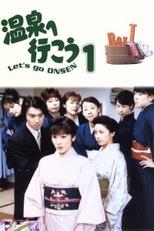
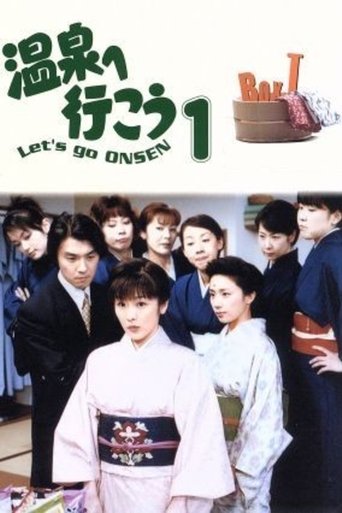
Two more TV projects followed in 1999. He joined Let's Go to Onsen, a program whose very name evokes Japan's cherished hot-spring travel culture, and he also played a Detective in Little Citizen Ken, revisiting the law-enforcement archetype familiar from his film years.
The decade underscored his versatility: within a short span he could be seen in a robot detective show aimed at younger audiences, a hot-spring travel program and a conventional detective drama — three tonally distinct worlds handled by one performer.
The 2000s: Breakthrough Visibility and Later Roles
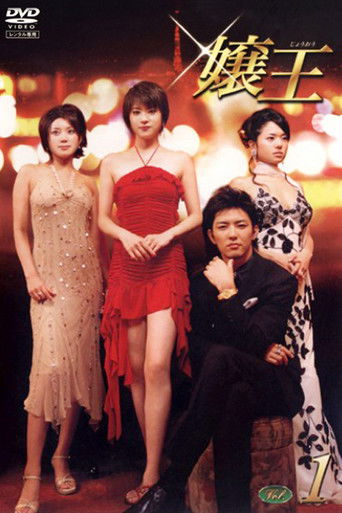
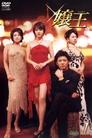
His greatest public recognition arrived in the middle and latter part of the 2000s, thanks to appearances in two of the period's most prominent dramas. In 2005 he was cast as Fujisaki Kosuke in Jyouou, a series set amid host clubs and nightlife, whose glamorous, adult-oriented atmosphere defined the show. The part placed him within one of the decade's signature television properties.
In 2007 he took the role of Sohei Kitano in Galileo, the enormously popular mystery drama adapted from Keigo Higashino's novels, following a physicist who helps unravel seemingly unsolvable crimes. Joining that production meant participating in one of Japanese television's most-watched mystery franchises.
That same year he also appeared as Director Suzuki in That Idiot Swan: A Romance on a 30,000-Yen Allowance, a romantic comedy whose plot revolves around money, romance and social mismatch. Together with Jyouou and Galileo, this credit closed out a career that had carried him from theatrical mysteries to some of the most recognizable drama brands of the era.
For many viewers, this late stretch — especially the Galileo appearance — was what made his face recognizable, even though his name stayed familiar mainly to devoted followers of Japanese drama.
Frequent Collaborators
Throughout his career, Numazaki repeatedly crossed paths with a familiar circle of industry colleagues. Records show two shared titles each with director Minoru Matsushima, writer Kyoko Hara and actress Wakiko Kano.
Such repeated pairings are typical of Japanese TV production, where directors, screenwriters and trusted character players frequently reunite on successive projects. The pattern points to Numazaki being regarded by production teams as a dependable, professional performer who could join an ensemble smoothly.
Style, Range and Screen Persona
His filmography shows an actor who gravitated toward men of authority and standing. Detective parts recur throughout — Detective Iwata, Detective Yabe, and unnamed Detective roles in two separate productions — alongside a captain, a doctor and a director. The pattern suggests he projected the calm competence such characters require.
His range shouldn't be overlooked, either. The distance between a murder mystery set on a luxury yacht and a robot-detective program for children is vast, yet he handled both convincingly. His 2000s television work broadened things further, moving from Jyouou's nightlife milieu to the intellectual puzzles of Galileo and the romantic comedy of That Idiot Swan.
In a business driven by weekly schedules and large supporting casts, performers like Numazaki supply the connective tissue of Japanese drama. His trajectory illustrates the enduring worth of the dependable character actor.
Recognition and Legacy
Formal records of awards or honors for Numazaki are scarce, which is unsurprising for supporting players whose efforts are scattered across many productions rather than concentrated in marquee roles. His recognition instead came in the form of steady employment: a run lasting from 1982 to 2007, covering five films and six television series, testifies to lasting professional confidence in his work.
His contribution lies in the texture he brought to Japanese screen entertainment. Whether watching 1980s mystery features or 2000s television dramas, viewers encounter his performances as part of what makes those productions feel authentic and lived-in.
Newcomers to his work might begin with Galileo (2007), his most broadly seen credit and a gateway into one of Japan's favorite mystery series. Jyouou (2005) provides a contrasting sample of his glossy prime-time drama work. Tetsuwan Tantei Robotack (1998) displays his genre flexibility within a tokusatsu framework. On the film side, The Highest Honour (1982) marks his first screen appearance, while Luxury Yacht: First Love Tour Murder Case (1990) typifies the travel-mystery format he frequently occupied.
Frequently asked questions
Who is Yū Numazaki?
Yū Numazaki (沼崎悠) is a Japanese actor from Tokyo, born May 25, 1953. Working between 1982 and 2007, he accumulated five film and six television credits, most often portraying detectives and other authority figures in mysteries and dramas.
What is Yū Numazaki best known for?
General audiences most readily recognize him as Sohei Kitano in the 2007 hit mystery drama Galileo. Enthusiasts of older Japanese screen entertainment also remember his 1980s murder-mystery films and the 1998 series Tetsuwan Tantei Robotack.
Did Yū Numazaki appear in Galileo?
Yes — he portrayed Sohei Kitano in the 2007 television mystery series Galileo, which stands among the most widely viewed credits of his career.
What kinds of roles did Yū Numazaki usually play?
Authority figures dominated his résumé, above all detectives — a part he filled in Danchizuma no sakebi, Aijin Bank Satsujin Jiken, Deluxe Salon Car Engagement Tour Murders and Little Citizen Ken. He also portrayed a captain, a doctor and a director.
When did Yū Numazaki's career begin and end?
His recorded screen activity started in 1982 with The Highest Honour and concluded in 2007, the year he appeared in both Galileo and That Idiot Swan: A Romance on a 30,000-Yen Allowance.














Comments (0)
Log in or create a free account to comment, rate and write reviews.