
While Werner Hahn never became a name recognized far beyond Germany, the trajectory of his on-screen work mirrors one of the most eventful stretches in the country's history. Active between 1971 and 1992, he collected credits in television and cinema that run from the peak years of East German broadcasting through genre filmmaking and into the comedic landscape of post-reunification Germany. Anyone digging into German productions of that era will find his modest list of appearances a rewarding subject for study.
Who Was Werner Hahn?
Werner Hahn worked as an actor on German screens across the 1970s, 1980s, and into the early 1990s. The record of his career covers roughly two decades and consists of three theatrical films plus a single television series credit. Though that number seems slight by today's industry norms, in the German media environment of those years even a few appearances could place a performer in front of a nationwide audience.
The appeal of his filmography lies in the variety of what he appeared in: an installment of one of Germany's most enduring crime series, a historical feature, a drama released at the dawn of the 1980s, and a comedy sequel that arrived just after the two German states merged. Viewed as a whole, his credits sketch the shifting landscape of German entertainment through decades of political upheaval.
For modern audiences investigating late twentieth-century German-language film and TV, performers like Hahn supply the connective tissue. Character actors of his kind gave these productions their sense of authenticity, and revisiting their work offers a richer picture of the period.
Early Life and Background
Publicly available information about Hahn's upbringing is sparse. His birth details confirm his German origins and situate his youth within the generation shaped by mid-century Germany.
Little else has been recorded about his family, schooling, or path into acting. This gap is typical for supporting performers of his day, whose on-screen output tended to be far better documented than their private lives. Any full biography would have to rest almost entirely on his professional credits.
A 1971 Debut on Polizeiruf 110
Hahn's first documented screen job came in 1971, when he appeared on Polizeiruf 110 in the role of Werner Hegenbarth. For a German actor of the time, this was a notable way to start. Polizeiruf 110 ranked among the defining crime anthologies of German television, launching in the early 1970s and running for decades—first within the East, later as a format shared across the reunited country.
Being cast during the show's earliest run meant contributing to a program that immediately ranked among the most watched and best regarded on German screens. The anthology format, built around criminal cases and the investigators who crack them, rewarded actors with grounded, believable parts, and Hahn's participation in its debut era put him among the many performers who shaped its early character.
Launching a career on such a demanding, understated series proved his ability to deliver restrained, naturalistic work.
Feature Films: Tecumseh and Dangerous Games
In 1972, one year after his television debut, Hahn took a role in the theatrical film Tecumseh. The picture belonged to the era's tradition of large-scale historical filmmaking in Germany, and joining it required Hahn to work in a very different mode from the police procedural—period settings, extensive production design, and a slower narrative rhythm than episodic TV.
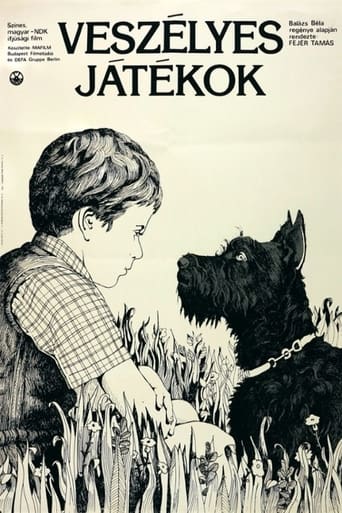
A decade later, in 1980, he appeared in Dangerous Games, adding another feature to his resume. Arriving as a new decade opened, this project connected him with a strain of German cinema drawn to darker and more psychologically layered material. The film's title hints at the suspenseful drama typical of that period's output, and with it Hahn's filmography touched yet another genre.
Together, these two features bookend the 1970s and illustrate the standard dual-track career—television plus cinema—followed by many German screen performers of his generation.
The Last Credit: Go Trabi Go 2
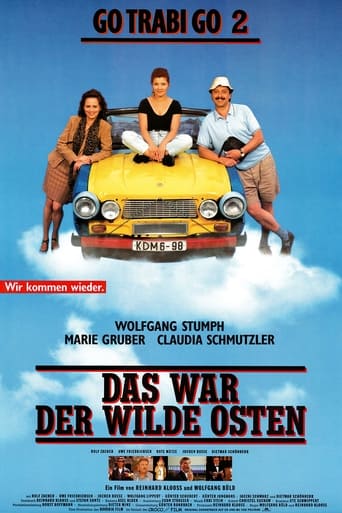
Hahn's final documented screen work arrived in 1992 with Go Trabi Go 2: Those Were the Days of the Wild East, where he was cast as a worker. The film continues the story begun in the popular comedy Go Trabi Go, and its subtitle makes its theme plain: the confusion and absurdity of eastern Germany in the years immediately following reunification.
For someone whose career opened in the early 1970s, closing it in a comedy that poked fun at the transition period made for an apt ending. The Go Trabi Go pictures captured a distinct cultural moment, one in which audiences wanted to laugh at the dizzying changes transforming daily life, and Hahn's small part placed him inside that snapshot.
The film also functions as a bookend for his career as a whole: it began while Germany was divided and concluded shortly after reunification, giving his filmography an arc that echoes the era itself.
Collaborators and Working Relationships
One name stands out in the record of Hahn's professional partnerships: Günter Schubert, a fellow German actor who shared credits with Hahn on two of his projects. In the German industry of that period, regional production hubs and recurring ensembles meant performers routinely crossed paths on several productions, so repeated pairings like this were common.
Schubert, like Hahn, was a working character actor of the era, and their repeated casting points to a professional rapport grounded in dependability and familiarity. For viewers, catching these recurring pairings is part of the fun of revisiting older German film and television, where the same faces reappear across formats and decades.
Apart from this documented connection, the record names no other lasting creative partnerships—a reflection of how limited Hahn's documented filmography is rather than necessarily of his actual working life.
Style, Range, and Recognition
The projects Hahn chose suggest his key strength was adaptability across formats. He shifted between the procedural realism of a long-running crime anthology, the grandeur of historical cinema, the suspense of a 1980 drama, and the satire of a post-reunification comedy. Each genre calls on a different set of skills, and his readiness to move among them indicates a flexible performer.
His Polizeiruf 110 role exemplifies the naturalistic approach that dominated German television acting in the early 1970s, an aesthetic built on understatement and truthfulness. His later turn in the Go Trabi Go sequel, by contrast, placed him in a broad comedic register as a working-class figure in a film built on gentle satire.
Regarding formal honors, no awards or nominations appear in the available record for Hahn. That is unsurprising for character and supporting actors of his era, whose careers were sustained by steady work rather than trophies. His real recognition lies in the lasting presence of the productions he joined, several of which still belong to the German screen canon.
Legacy and Where to Start
According to the record, Hahn's screen work concluded in 1992, with no further documented film or television roles afterward. His legacy therefore rests on a compact set of credits that nonetheless spans an extraordinary slice of German history—from the divided nation of the early 1970s to the reunified country of the early 1990s.
Viewers wanting to discover his work should begin with Polizeiruf 110, the 1971 television appearance that started his career and remains tied to one of German television's longest-lived institutions. It offers the clearest picture of Hahn working within a realistic, grounded format.
Next, Tecumseh from 1972 demonstrates his involvement in the period's ambitious historical cinema. Dangerous Games, released in 1980, offers a tonal contrast and a glimpse of his work as a new decade began. Finally, Go Trabi Go 2: Those Were the Days of the Wild East from 1992 rewards a viewing both as comedy and as a cultural record of post-reunification Germany, with Hahn among its cast. Taking these titles in order amounts to a compact tour of two decades of German screen entertainment, seen through the work of a dependable character actor.
Frequently asked questions
Who is Werner Hahn?
Werner Hahn is a German actor whose recorded screen activity covers 1971 through 1992. He is best remembered for an early role on the crime series Polizeiruf 110 and for appearing in films such as Tecumseh, Dangerous Games, and Go Trabi Go 2.
What was Werner Hahn's first screen role?
His earliest documented appearance was in 1971 on the television series Polizeiruf 110, playing a character named Werner Hegenbarth. The series stood among the flagship crime anthologies of German television.
What movies did Werner Hahn appear in?
His documented film work comprises Tecumseh (1972), Dangerous Games (1980), and Go Trabi Go 2: Those Were the Days of the Wild East (1992), where he played a worker in the post-reunification comedy sequel.
Did Werner Hahn win any awards?
The available record lists no awards or nominations for Werner Hahn. His recognition stems mainly from his connection to durable, well-regarded German productions such as Polizeiruf 110.
Who did Werner Hahn frequently work with?
The record names Günter Schubert as his most frequent collaborator; the two actors shared credits on two of Hahn's projects over the course of his career.




Comments (0)
Log in or create a free account to comment, rate and write reviews.