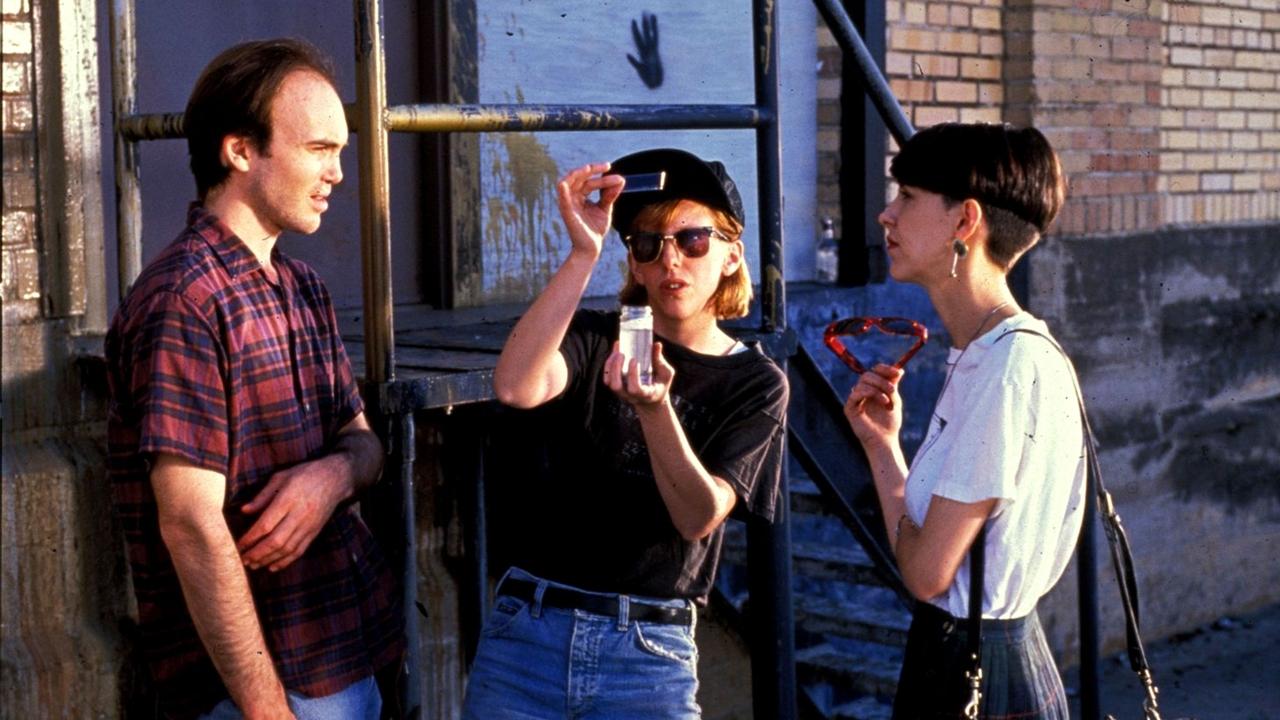
Scott Marcus holds a modest yet noteworthy spot in the story of American independent film. Though his list of screen appearances is short, one of them lands in a genuinely pivotal movie: Slacker, the 1990 release that became a defining work of low-budget, conversation-heavy filmmaking. Anyone tracing the origins of the indie boom will find his name worth a look.
Who Is Scott Marcus and Why Does He Matter?
Marcus is an American actor with a documented filmography of exactly two features, one from 1988 and one from 1990. Measured against careers built on dozens of credits, that total looks tiny. What gives it weight is the company: his later and more famous appearance arrived in Slacker, a picture that turned into a touchstone of American independent cinema and a template for many filmmakers who came after.
He fits a recognizable type of performer: someone whose visibility stems less from a long resume than from a connection to a culturally important title. For cinephiles and historians of the indie scene, catching him in these pictures is part of their appeal. His short career also underscores how many people who contributed to cherished films stay largely unknown except to the most observant audiences.
This profile collects what is publicly on record about his work, serving as an entry point for anyone who has watched his films and wants to learn more about the faces in them.
Early Life and Background
The public record on Marcus's personal history is thin. What is known is that he was born in the United States and that his professional acting activity, as documented, got underway in the late 1980s.
Compared with more extensively covered performers, Marcus lacks a deep archive of interviews, press items, or published biography. That gap is typical for character players and one-time participants in independent film, where media attention usually goes to directors and leads. Consequently, nearly everything that can be said about him has to be drawn from the films rather than from surrounding paperwork.
For readers, that means evaluating his career the way one evaluates many indie filmographies: through the work itself, which more than holds up.
Career Beginnings and Debut
Marcus's first documented turn on screen arrived with Talking to Strangers, a 1988 feature in which he took the part of the Bully, a character woven into the film's early dramatic fabric.
Launching with a small character role is a time-honored route into acting, and the late 1980s offered a promising climate for it. American independent film stood on the verge of a breakout period, regional production scenes were gathering steam, and directors were increasingly open to unconventional and locally sourced performers. Marcus's debut sits squarely in that world: a character part in a modest production, the sort of opportunity that existed largely beyond the studio machinery.
Taking on an antagonist role first time out also revealed a measure of screen presence, the capacity to make an impression even in an unsympathetic part.
The Breakthrough: Slacker
Two years on, Marcus surfaced in Slacker, released in 1990, in a role billed as the Ultimate Loser. Built as a drifting sequence of encounters among oddball characters in Austin, Texas, the film granted each participant a distinct, self-contained moment, and Marcus's segment ranks among its memorable beats.
Slacker grew into something far bigger than a regional oddity. It galvanized the American indie movement of the 1990s, prompted a wave of similarly constructed ensemble pictures, and even supplied a label for a generation. For everyone on screen, appearing in it meant a lasting tie to a genuine landmark. For Marcus, whose screen work otherwise amounts to a single earlier film, it stands as his most widely viewed performance and the part he remains identified with.
The picture's loose, talk-driven style called for a specific performance mode: natural, unforced, and at ease with extended stretches of dialogue. That Marcus more than holds his own in that setting speaks to how well he matched the material.
Notable Roles and Projects
Since Marcus's documented output totals two features, any survey of his career is necessarily brief, covering one stretch of years around the turn of the 1990s.
1988 brought Talking to Strangers, his first appearance, cast as the Bully. The role put him in a confrontational, antagonistic mode, the sort of part that frequently anchors a film's opening conflict.
1990 brought Slacker, with Marcus as the Ultimate Loser. It is this second role that has lasted. The film's ongoing popularity means new audiences keep finding his performance long after release, and the character's striking, self-mocking tag keeps him recognizable in conversations about the movie's roster of figures.
No additional film or television credits appear in his recorded career, which makes Slacker the natural starting place for his work.
Style and Range
Judging Marcus's range from just two documented roles means reading between the lines of what remains. Even so, the record hints at a kind of versatility: an aggressive character part in his debut, then a spot in a free-flowing ensemble piece two years later.
Both parts fall into character acting, portraying defined types rather than conventional leads. His Slacker turn in particular embodies the film's trademark approach: observational, conversational, and grounded, with the camera treating every figure, however peripheral, as deserving attention. That method favored actors who could sound and act like ordinary people instead of polished stars, and Marcus's work fits that description.
His career, short as it was, reflects a moment when American independent film opened its doors to performers from outside the usual channels, prizing authenticity over gloss.
Recognition and Legacy
No awards or formal honors are recorded for Marcus. Given the brevity of his career, that is unsurprising, and it holds for most of Slacker's ensemble as well, whose shared accomplishment was celebrated above any single performance.
His legacy, to the extent one exists, comes through association. Slacker persists as a foundational text of 1990s American independent cinema, studied, cited, and revisited by generations of film fans and makers. Everyone who shows up in it, however briefly, belongs to that history. Marcus's Ultimate Loser remains part of the film's cast of characters, while Talking to Strangers marks the first step of a short but real screen career.
For viewers, the lesson is straightforward: even a two-film filmography can leave a trace when one of its entries carries the weight that Slacker does.
Where to Start with Scott Marcus's Work
With just two films on record, the viewing sequence is simple, though each offers something distinct.
Begin with Slacker (1990), the essential entry point and the film that secures Marcus's place in film history. His turn as the Ultimate Loser stands among the movie's vivid character moments, and the picture itself is a landmark worth watching on its own terms.
Then go back to Talking to Strangers (1988), his debut, to catch his first screen appearance as the Bully. Watching the pair in reverse chronological order traces a short career from its most famous moment back to its start.
Taken together, the two films give a full portrait of a performer who emerged at the dawn of the indie era, took part in one of its defining works, and remains woven into its story.
Frequently asked questions
Who is Scott Marcus?
Scott Marcus is an American actor whose film work dates to the late 1980s and early 1990s. His two documented screen appearances are Talking to Strangers (1988), playing the Bully, and Slacker (1990), playing the Ultimate Loser.
What is Scott Marcus best known for?
He is best remembered for Slacker (1990), the landmark independent film, in which he was credited as the Ultimate Loser. The picture's enduring standing makes it his most widely seen performance.
How many movies has Scott Marcus been in?
His recorded filmography covers two features: Talking to Strangers, released in 1988, and Slacker, released in 1990. His documented career includes no television credits.
Did Scott Marcus win any awards?
No awards or formal honors are on record for Marcus. His recognition comes chiefly from his connection to Slacker, a film regarded as a milestone of American independent cinema.
Where should I start watching Scott Marcus's films?
Start with Slacker (1990), his defining and best-known appearance, then move on to Talking to Strangers (1988), his debut, to see his first screen role as the Bully.




Comments (0)
Log in or create a free account to comment, rate and write reviews.