
Robert De Anda is an American actor linked to two contrasting screen productions from the first half of the 1970s: a theatrical political drama and a landmark network detective series. Although his documented credits number only two, they connect him to major productions of a pivotal moment in American entertainment, and that association continues to attract attention from viewers exploring vintage film and television.
Who Is Robert De Anda and Why Does He Matter?
Among the supporting players of 1970s American screen entertainment, Robert De Anda fits a recognizable pattern: a performer whose appearances are remembered and searched for, even though his public visibility stayed limited. His verified filmography contains exactly one movie and one television series, both falling between 1972 and 1973.
Those two years were a rich period for American screens. Cinema was moving toward realism and politically conscious narratives, while broadcast television was turning out crime dramas that would endure for generations. De Anda worked in both fields, appearing opposite prominent figures of the day.
His case illustrates that a short list of credits can still hold lasting appeal. One appearance in a significant production is often enough to preserve a performer's name in databases and fan conversations long afterward.
Early Life and Background
Public sources offer little detail on Robert De Anda's early life. What is established is that he was born in the United States, and his professional activity is firmly anchored in the early 1970s.
Verified information about his childhood, schooling, or route into acting is not available, so any claims beyond that would be guesswork. What is clear is that by the beginning of the decade he was already cast in professionally produced Hollywood projects, implying some level of preparation or training before his first appearance.
This kind of sparse record is typical for supporting performers of the era, who were frequently documented solely through their onscreen credits rather than through interviews or press attention.
Career Beginnings and Screen Debut
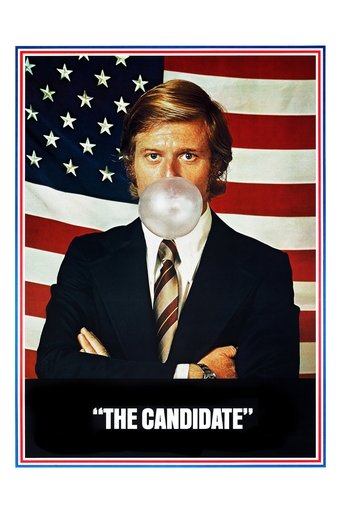
The first documented entry in De Anda's screen career is the 1972 film The Candidate, where he portrayed a character named Jaime. The movie offered a pointed examination of political campaigning, and it placed the newcomer inside a production with serious creative credentials.
Starting out in a politically engaged drama rather than an easy genre vehicle is a distinctive way to begin a career. The part called on him to perform within an ensemble, and it gave him his initial professional credit at a time when American moviegoers were particularly drawn to films tackling current social issues.
His next recorded appearance took him to television, the era's other dominant medium, in one of the decade's most famous series.
Breakthrough: Kojak and Network Television
In 1973, De Anda turned up on Kojak, the well-known police procedural headlined by Telly Savalas as Lieutenant Theo Kojak, the lollipop-sucking New York detective. De Anda's character in the series was named Mando.
A guest appearance on Kojak meant something in the early 1970s. The program was a ratings winner and a cultural fixture, admired for its gritty urban atmosphere, crisp writing, and Savalas's forceful central performance. Guest slots on a show of that stature generally went to reliable working actors who could hold their own against a dominant lead, and the exposure put De Anda before a nationwide audience.
Whatever label one gives it, the Kojak appearance stands as the television credit most commonly attached to De Anda's name and the doorway through which many viewers discover him.
Notable Roles and Projects
Since De Anda's recorded filmography covers only two years, any decade-by-decade survey reduces to one early-1970s chapter. Even so, the two credits together sketch the entertainment world of that era.
The first is The Candidate (1972), a theatrical release in which he played Jaime. The film belongs to the early-1970s movement of American dramas that scrutinized public institutions with a wary eye, and his involvement put him in that current from the outset.
The second is Kojak (1973), in which he appeared as Mando. The series set the standard for police drama of its day, with its New York backdrop and street-level storytelling. Shifting from a big-screen political drama to a top-rated crime show within a single year illustrates the variety of assignments a working actor of the period could face.
No credits from later years appear in the available records, leaving these two appearances as the complete account of his screen work.
Style and Range Across Genres
Despite the small filmography, the gap between De Anda's two known projects hints at his adaptability. The Candidate called for involvement in talk-heavy, ensemble-driven political drama, where the tone stayed restrained and realism was central. Kojak, on the other hand, demanded the brisk, grounded delivery that network crime shows valued, frequently in scenes shaped by interrogations, street-level friction, and procedural pace.
Moving between those two modes within one year suggests a performer with flexibility. The early 1970s rewarded actors who played things straight and natural, and both of De Anda's credits sit firmly in that realist camp rather than in comedy, fantasy, or spectacle.
Beyond that, firm conclusions about his personal acting style are difficult to draw from the surviving record. His standing rests less on a distinctive technique than on the caliber of the productions he joined.
Recognition, Recent Work, and Legacy
The available sources record no major awards or industry accolades for Robert De Anda, and broader recognition of his career is limited. His present-day reputation depends almost entirely on the prominence of his two credited projects rather than on honors of any kind.
Likewise, no recent or forthcoming work exists on record. His documented activity ends in 1973, and any later professional developments fall outside the verified record. Readers curious about his current circumstances should be wary of unconfirmed online claims.
His legacy, modest as it is, sits within the archive of early-1970s American screen entertainment. For film historians and devotees of vintage television, performers like De Anda supply the texture of the era: the supporting faces who made landmark productions feel lived-in and authentic. Where to begin? The Candidate (1972) presents his film debut in a sharp political drama, while Kojak (1973) shows him in the medium where he reached the largest audience. Those two titles, together with a look at Kojak's early episodes for context, form a full tour of his screen work.
Frequently asked questions
Who is Robert De Anda?
Robert De Anda is an American actor active in the early 1970s. His documented credits include playing Jaime in the 1972 film The Candidate and Mando in the 1973 television series Kojak.
What did Robert De Anda play in Kojak?
In 1973, De Anda appeared on the classic police series Kojak as a character called Mando. The show starred Telly Savalas as Lieutenant Theo Kojak and ranked among the most popular crime dramas of its time.
What was Robert De Anda's first movie?
His first recorded feature film is The Candidate, released in 1972, a political drama in which he played a character named Jaime. It marks the start of his documented screen career.
How many films and shows did Robert De Anda appear in?
Per available records, his screen career comprises one movie, The Candidate (1972), and one television series, Kojak (1973). No later credits appear in authoritative sources.
Where can I start with Robert De Anda's work?
The easiest starting points are his two credited projects: The Candidate (1972) for his film debut and Kojak (1973) for his most widely seen television role. Together they make up his entire documented filmography.

Comments (0)
Log in or create a free account to comment, rate and write reviews.