Cinema's history is written not just by its icons but by the countless supporting players whose names endure through only a credit or two. Prabhat Mitra falls squarely into that category. Active in the early 1940s, he is known today almost entirely through one documented appearance on screen: Uttarayan, released in 1941, which remains the surviving trace of a career otherwise lost to time.
Why Prabhat Mitra Still Matters to Film Historians
For anyone interested in cinema's formative decades, figures like Prabhat Mitra reveal how the industry really operated. Each celebrated classic depended on a large cast of working actors who filled out scenes, carried smaller parts, and gave productions their texture. Mitra was among these journeymen, and his lone surviving credit points to how many careers of that period survive only in fragments today.
His importance rests not on a lengthy filmography but on what that credit signifies. Uttarayan, from 1941, is the only title firmly tied to his name in existing records. For archivists, scholars, and admirers of old films, entries like this serve as useful data points, helping to chart who was active, when, and in what kinds of productions.
There is also a plain human fascination with such figures. The distance between what audiences once watched and what history saved is vast. Piecing together even a partial portrait of an actor like Mitra is a form of film archaeology, and it starts with the facts that can be confirmed.
Early Life and Background
Trustworthy biographical information about Prabhat Mitra's early years is hard to come by. No birth date or birthplace appears in the records, and nothing verified about his family, schooling, or upbringing has survived in the sources that note his screen work.
Such gaps are common. Performers of the early 1940s, especially those in smaller roles, frequently entered and exited the profession with scant documentation. Studio publicity of the day spotlighted marquee names, while trade papers covered stars far more closely than the profession's rank and file.
What is certain is that by 1941 Mitra was working as a screen actor, which means he must have found his way into the film world at some point earlier. How that happened, and what route led him to a set, remains a question for future research rather than established fact.
Career Beginnings and the Road to the Screen
For all practical purposes, Prabhat Mitra's documented career starts with his appearance in Uttarayan in 1941. No earlier credits exist in the available data, and none afterward either. His recorded filmography thus contains a single movie, with no television appearances listed.
That thin record leaves several possibilities open that students of early cinema will recognize. A performer's indexed credits and his real output seldom matched; many actors of the era worked in films that were never catalogued, in regional productions that drew little press, or in parts too minor to be noted. Mitra's actual screen activity may well have been wider than the surviving record indicates.
Still, honesty about the limits of knowledge matters. The lone credit might reflect a short career, a one-time appearance, or merely one fragment of a larger story that time has misplaced. A fuller account would demand archival digging beyond what current records allow.
Uttarayan (1941): The Known Work
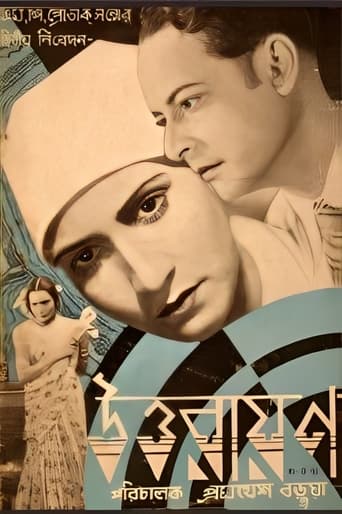
Uttarayan, which came out in 1941, is the production through which Prabhat Mitra's name endures. He is listed as an actor in the film, although the details of his role are not specified in the records at hand.
The year 1941 placed the film at a difficult juncture for cinema around the world. The early 1940s brought upheaval, and film industries everywhere were coping with disrupted markets, changing audiences, and the strains of the period. Productions of the time often worked with modest means and tight schedules, relying on dependable ensemble players to keep narratives moving.
The title Uttarayan refers in Indian tradition to the sun's northward journey, an auspicious stretch linked with renewal. Whether the film drew on that meaning thematically cannot be established from the records, and guessing further would exceed what can be verified. What counts for Mitra's story is straightforward: this picture is why his name appears in film reference works at all today.
For viewers who come across Uttarayan, Mitra's performance is the tangible proof of his craft. Everything else about him must be treated with suitable caution.
Style, Range, and What the Record Suggests
With just one documented credit, firm judgments about Prabhat Mitra's acting style or genre range are impossible. No reviews, interviews, or detailed contemporary accounts of his performances appear in the records consulted for this profile.
What can be noted generally is the character of ensemble acting in the early 1940s. Performers of that time worked in an industry still shaping its visual and storytelling conventions, often under tough production conditions. Supporting players had to be adaptable, since one performer might be needed across dramas, mythologicals, social pictures, and comedies over the course of a career.
Any deeper evaluation of Mitra's particular gifts would require watching Uttarayan itself and tracking down period coverage of the film. Until such material comes to light, the truthful answer to questions about his style is that the evidence has not survived, or has yet to be found.
Awards and Recognition
The available data records no awards or formal honors for Prabhat Mitra. This fits the wider shape of his career: one film credit from 1941, in an age when institutional recognition for supporting and character performers was uncommon in any case.
Formal film prizes as understood today were still in their infancy worldwide during the early 1940s, and most went to lead actors and directors. For a working performer like Mitra, acknowledgment would more likely have taken the form of steady work, the respect of colleagues, and the regard of audiences who watched him on screen.
Readers should therefore not read the absence of listed awards as proof of an overlooked talent; it reflects how incomplete the historical record is and how differently the industry defined success in that era.
Legacy and Where to Start
Prabhat Mitra's legacy is bound up with the fragility of film history itself. Innumerable performers of the early twentieth century left behind no interviews, no biographies, and barely a paper trail. That Mitra is remembered at all owes to the indexing of Uttarayan, the 1941 production that anchors his name in film reference material.
For those wishing to engage with his work, the route is simple, if narrow: Uttarayan is the essential, and in practice the only, starting point. Viewing it, where a print can be found, offers the sole direct encounter with his acting that the record permits.
Beyond that one title, curious viewers can broaden their understanding by exploring early-1940s cinema more widely. Films of that era share production methods, performance habits, and industry circumstances that shaped what Mitra and his peers did on screen. Context is no substitute for evidence, but it makes the surviving fragment more meaningful.
Three recommendations for a viewing path:
1. Uttarayan (1941) — the defining, and only documented, entry in Mitra's filmography. 2. Other films from 1941 — to see the industry conditions under which he worked. 3. Restored archival releases from the early 1940s — to understand how films of his era were made and preserved.
His story is a small one in the record, but it is precisely such stories that give film history its depth.
Frequently asked questions
Who was Prabhat Mitra?
Prabhat Mitra was a screen performer whose verifiable career is anchored by the 1941 film Uttarayan. Detailed biographical information about him is sparse, and his surviving film record amounts to that one movie credit.
What is Prabhat Mitra's most famous film?
Uttarayan, released in 1941, is the title associated with Prabhat Mitra's name. It stands as the only documented entry in his filmography and the chief reference point for his work.
When and where was Prabhat Mitra born?
The available records contain no birth date or birthplace for Prabhat Mitra. Details of his early life, family, and education have not survived in the sources covering his screen work.
Did Prabhat Mitra win any awards?
No awards or formal honors are recorded for Prabhat Mitra. This reflects both the gaps in the historical record and the fact that formal film prizes seldom honored supporting actors in the early 1940s.
Did Prabhat Mitra work in television?
No television credits exist for Prabhat Mitra. His documented output consists solely of one film, Uttarayan from 1941, with no television series appearances listed in the available records.

Comments (0)
Log in or create a free account to comment, rate and write reviews.