Douglas Durst is an American film producer tied to a compact set of projects released in the late 2000s. While his recorded filmography is short, it covers topics of genuine substance, ranging from the nation's fiscal situation to the story of a well-known New York City thoroughfare. For anyone interested in the people who back documentary and independent film, Durst makes for a worthwhile subject.
Douglas Durst: Who He Is and Why He's Worth Knowing
Within the film industry, Douglas Durst is chiefly identified as a producer, yet the credit audiences are most likely to recognize is his on-screen appearance. His documented activity falls entirely within 2008 and 2009, a two-year stretch during which he took part in three feature films in three distinct roles: appearing as himself, producing, and executive producing.
What sets Durst apart is the character of the films he supported. Instead of pursuing commercially driven genre pictures, his credits favor documentary and nonfiction work, addressing themes such as America's fiscal policy and the cultural legacy of Manhattan's 42nd Street. Viewers drawn to films that examine public issues will find his name relevant.
Beyond these three films, publicly accessible film records offer little additional career information. This article confines itself to what is verified, so certain biographical details necessarily remain uncovered.
Early Life and Background
Standard film industry databases that log Durst's professional credits do not contain detailed personal information about him, such as his birth date or birthplace. These sources record his producing work and his appearance on screen, but they omit the private background often documented for more widely profiled figures.
Such gaps are common among producers with a small number of projects. Actors leave extensive records of their faces and filmographies, while producers typically stay behind the scenes, and those with briefer recorded careers tend to generate less documentation. Anyone researching Durst's personal history should approach unverified claims found elsewhere skeptically.
How Douglas Durst Entered Film Production
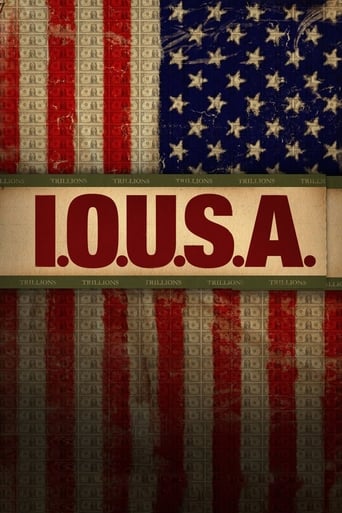
Durst's documented film activity starts in 2008, the year that anchors all three of his known credits. His most prominent contribution that year came through the documentary I.O.U.S.A., which explores the United States' mounting national debt and what it could mean for the nation's economic outlook.
Notably, his role on that film is listed as "Self," indicating he appears in front of the camera rather than merely behind it. This implies he had a personal stake in either the subject or the production significant enough for the filmmakers to feature him as a participant rather than keep him as an unseen supporter.
In the same year, he earned a producing credit on Giving It Up, giving his debut year two features in two different roles. In 2009, he added an executive producer credit, completing the three-project group that constitutes his recorded filmography.
Key Films: I.O.U.S.A., Giving It Up, and 42nd Street
I.O.U.S.A. (2008) is the anchor of Durst's filmography. The documentary confronts a matter of clear national consequence: America's rising debt and its implications for coming generations. Films like this frequently spark broader public debate about fiscal policy, and appearing in one reflects genuine involvement with the issues at hand.
Giving It Up (2008), where Durst worked as a producer, shows the other dimension of his activity. Producers on such films manage the countless logistical and financial details that carry a project from page to screen, a behind-the-scenes role that seldom makes news but is indispensable to completing a film.
42nd Street: River to River (2009), with Durst as executive producer, returns to nonfiction and to a distinctly New York theme. The title signals the film's subject: Manhattan's famous 42nd Street, followed from one river to the next. In the executive producer capacity, Durst would have exercised higher-level oversight, shaping the project's direction and resources. Viewed as a whole, these three credits depict a producer drawn to nonfiction and to subjects tied to American public affairs and New York's history.
Production Approach and On-Screen Presence
Since Durst's credits center on production rather than performance, describing a production style makes more sense than describing an acting style. The common thread across his three known films is a leaning toward material grounded in reality. Two of the three are nonfiction, and even his on-screen credit places him as himself in a documentary setting.
This pattern points to a producer at ease with subject-driven filmmaking, where the argument or historical record is the draw rather than star appeal or spectacle. Documentaries on economics and urban history require committed backers, since they seldom offer the financial rewards of mainstream genres, making that support a deliberate choice.
His versatility across genres is difficult to judge from just three credits. What is clear is that within his brief recorded period, he moved among on-screen participation, hands-on producing, and executive oversight, showing comfort with several different aspects of the production process.
Awards and Honors
No awards or nominations appear for Douglas Durst in publicly available film records. That absence doesn't automatically mean his projects lacked recognition; late-2000s documentaries on fiscal topics did reach wide audiences and fuel public conversation. Still, the standard records of his work list no specific honors for Durst personally.
For a producer with such a short filmography, this is unsurprising. Producing recognition usually accumulates over larger bodies of work, and Durst's documented output covers just two years and three films. His contribution is therefore best understood through the films themselves rather than through any list of accolades.
Final Credits and Lasting Impact
Durst's documented film career closes with 42nd Street: River to River in 2009. Standard records show no subsequent film or television credits and no projects in development. Whether he kept working in roles that don't produce screen credits or left production altogether is not on record.
His legacy lies in a compact portrait of late-2000s documentary and independent filmmaking. The films he was involved with tackle questions that persist today: how the United States handles its debt, and how New York City's physical and cultural past is captured on film.
For those wishing to see his work, I.O.U.S.A. (2008) is the natural first stop, being the film he appears in and the one addressing the broadest public-interest topic. 42nd Street: River to River (2009) is the obvious next choice for fans of New York City history, and Giving It Up (2008) completes the full view of his producing output.
Frequently asked questions
Who is Douglas Durst?
Douglas Durst is an American film producer whose verified credits include the 2008 documentary I.O.U.S.A., where he appears as himself, plus producing and executive producing work on films from 2008 and 2009.
What films has Douglas Durst worked on?
His recorded filmography spans three films: I.O.U.S.A. (2008), in which he appears as himself; Giving It Up (2008), on which he is credited as producer; and 42nd Street: River to River (2009), where he acted as executive producer.
What is I.O.U.S.A. about?
I.O.U.S.A. is a 2008 documentary exploring America's national debt and its possible consequences for the country's economic future. Douglas Durst appears in it as himself, not merely in a behind-the-scenes capacity.
Has Douglas Durst won any awards?
Publicly available film records show no awards or nominations for Douglas Durst. Any recognition he has received is associated with the projects themselves rather than documented personal honors.
Is Douglas Durst still making films?
His documented film work ends with 42nd Street: River to River in 2009. Standard film industry records list no later credits or forthcoming projects, so his present activities are not publicly known.



Comments (0)
Log in or create a free account to comment, rate and write reviews.