

Daniel D'Or has carved out a niche in independently produced science fiction, a corner of the film world that grew steadily from the mid-1990s. Moving between producing, directing and writing, he built a slate of futuristic features before creating Starhunter, the space-set television show that stands as his signature achievement. For anyone interested in cult sci-fi and the people who sustain it, his three-decade career is worth tracing.
Early Life and Background
Little verified information exists about D'Or's personal history. He never followed the well-documented paths of studio-backed filmmakers, and details such as his birth date, hometown, family or schooling are hard to pin down in public sources.
What is clear is where his career takes off: in the mid-1990s, amid a wave of independently financed science fiction pictures. That starting point launched a professional life that, despite interruptions and reinventions, has continued into the 2020s.
The absence of biographical material says something in itself. D'Or is the kind of filmmaker whose projects, not his personal story, define him, and whose following grew from the cult appeal of his work rather than from mainstream exposure.
Career Beginnings: The 1990s Production Years
D'Or first appeared on screen credits as a producer of Replikator, a science fiction film released in 1994. It established the pattern for his early output: small budgets, futuristic concepts, and resourcefulness standing in for big effects.
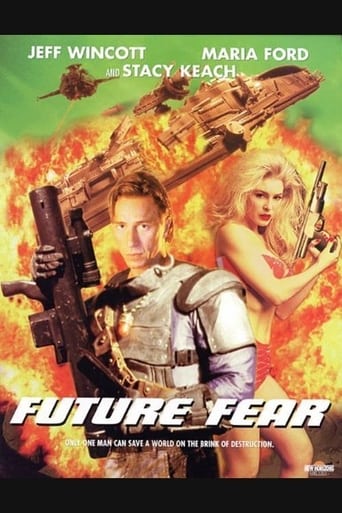
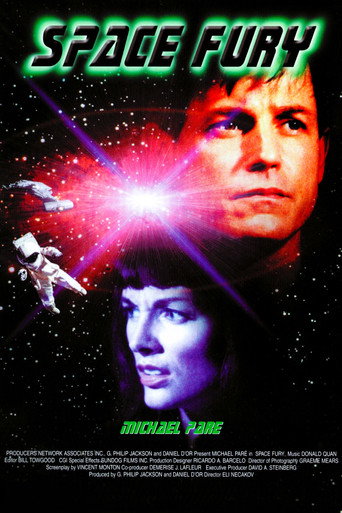
He remained highly active as a producer through the decade's second half. In 1997 three of his features arrived: 2103: The Deadly Wake, Future Fear and Falling Fire, with the last also counting among his first directing jobs. The Shepherd followed in 1998, and 1999 brought two more productions, Space Fury and Cybermaster: Shepherd II.
These years made D'Or a dependable presence in independent genre circles, a hands-on producer capable of carrying futuristic ideas through to completion and, increasingly, of directing them himself.
Breakthrough: Starhunter
The new millennium delivered the project he is still identified with. Starhunter, which debuted in 2000, was a television series set across the outer solar system, and D'Or created it. At a moment when space TV belonged mostly to a few heavily financed franchises, the show found its own identity through a rougher, scrappier approach.
Television gave D'Or something his features never could: room for characters and plots to breathe over multiple episodes. It also brought him into contact with performers he would work with again, among them Clive Robertson, Claudette Roche and Dawn Stern, all of whom share multiple credits with him.
Though the series never reached the fame of its larger-budget rivals, it attracted a real cult audience, one strong enough that the property would be reworked close to twenty years later.
The 2000s: Directing and Expanding the Slate
After Starhunter, D'Or kept dividing his efforts between producing and directing. In 2001 he helmed Battle Queen 2020, a sci-fi feature in the post-apocalyptic mode common to direct-to-video genre films of that period.
The following year, 2002, he produced Drop Dead Roses, a title hinting at a move away from straight science fiction toward darker comedy. It turned out to be his final screen credit for a long while.
That extended silence stands out as one of the more puzzling chapters of his filmography. After roughly ten years of steady work, D'Or withdrew from production, and while his films kept circulating among genre viewers, he himself stayed largely invisible.
Return and Recent Work: Starhunter ReduX and Beyond
D'Or resurfaced in 2018 with Starhunter ReduX, a reworking of his best-known series on which he served as director. The project showed how much affection the original still commanded, and mirrored a wider trend of restoring and reimagining cult television for new viewers.
His latest credit is Mr. Nelson on the North Side, a 2024 film he directed. Markedly different in tone from his science fiction origins, it signals a director willing to step outside the space stories that established him.
With credits running from 1994 through 2024, covering ten movies and two TV series, D'Or has now sustained a career across thirty full years, a rare achievement for an independent genre filmmaker.
Frequent Collaborators
His filmography shows a small, loyal group of repeat collaborators, typical of independent production where dependable relationships outweigh marquee names. Six performers each appear with him on two titles: Stephen Marcus, Dawn Stern, Clive Robertson, Michael Paré, Murray Melvin and Claudette Roche.
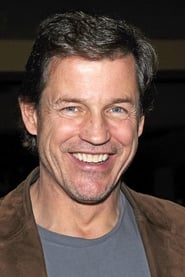
Michael Paré, a familiar face from 1980s film who became a fixture of genre features, reflects D'Or's preference for actors seasoned in independent sci-fi and action. Robertson and Roche tie directly to the Starhunter years, where the ensemble helped shape the show's character.
This habit of reusing the same actors lent his projects a consistent feel and points to a filmmaker who prized familiarity and trust over constantly refreshing his casts.
Style, Range and Recognition
Over thirty years, D'Or's output has remained anchored in speculative fiction: artificial life, grim futures, survival on the solar system's edge. His producing credits reveal a fondness for high-concept ideas realized on tight budgets, while his directing, from Falling Fire through Battle Queen 2020 to Starhunter ReduX, prioritizes mood and genre atmosphere over slickness.
Still, his range exceeds the sci-fi label. Drop Dead Roses and the 2024 film Mr. Nelson on the North Side suggest interests reaching past futuristic spectacle, pointing to a maker at ease across tones.
Formal awards recognition is scarce in the public record; his work has been appreciated mainly by cult audiences rather than by industry bodies. That path is typical of independent genre filmmaking, where a devoted viewership and staying power often count for more than prizes.
Legacy and Where to Start
D'Or's standing rests on two foundations: the steady stream of 1990s genre productions and the lasting cult status of Starhunter. He embodies a generation of filmmakers who built imaginative worlds on shoestring resources, work that has outlasted many costlier rivals thanks to home video and word of mouth.
Newcomers would do well to begin with Starhunter from 2000, the series that defines him and remains his most substantial achievement. Starhunter ReduX from 2018 pairs naturally with it, demonstrating how the material was reworked under D'Or's own direction.
Outside the series, Falling Fire from 1997 displays his early directing, Battle Queen 2020 from 2001 captures his feature-length genre instincts, and 2103: The Deadly Wake from the same period offers a sample of his producer-led futuristic storytelling. These five titles together form a complete picture of a cult cinema craftsman.
Frequently asked questions
Who is Daniel D'Or?
Daniel D'Or is a filmmaker active in independent genre cinema since 1994, working as a producer, director and creator. He is best known for creating the science fiction series Starhunter, first released in 2000.
What is Starhunter?
Starhunter is a space-set TV series created by Daniel D'Or, launched in 2000. It gained a cult following and was later reworked as Starhunter ReduX in 2018, with D'Or directing the new version.
What movies has Daniel D'Or directed?
His directing work includes Falling Fire (1997), Battle Queen 2020 (2001), Starhunter ReduX (2018) and the 2024 film Mr. Nelson on the North Side, his most recent credit to date.
Is Daniel D'Or still active in filmmaking?
Yes. Following a lengthy hiatus after his 2002 credit Drop Dead Roses, he came back with Starhunter ReduX in 2018 and directed the 2024 feature Mr. Nelson on the North Side.
Has Daniel D'Or won any awards?
Awards recognition for Daniel D'Or is limited in publicly available sources. His standing comes chiefly from cult appreciation of Starhunter and his 1990s genre productions rather than formal industry honors.











Comments (0)
Log in or create a free account to comment, rate and write reviews.